Bohème vs Bohemia: How Geographical Confusion Gave Birth to Cultural Slang
The word “bohemian” carries a strange double life. On one hand, it refers to Bohemia, a real historical region in Central Europe with a deep political, artistic, religious, and cultural legacy. On the other hand, it describes a person or lifestyle associated with creativity, nonconformity, artistic poverty, unconventional dress, free thinking, and resistance to ordinary social rules. The bridge between those two meanings is not geography, but confusion. More specifically, it is a French misunderstanding about the origins of the Romani people that transformed the name of a Central European region into one of the most enduring cultural labels in the modern world.
That confusion gave birth to the French idea of la bohème, a romanticized world of wandering artists, poets, musicians, students, radicals, and dreamers who lived outside the rules of polite society. Over time, the term moved far beyond 19th-century Paris. Today, “bohemian” can describe everything from an artistic lifestyle to a fashion aesthetic, from a neighborhood identity to a personality type. Yet behind the modern word is a much older and more complicated story—one that begins not in a Parisian café, but in the mountains, river valleys, castles, universities, and contested kingdoms of Bohemia.
What Is Bohemia?
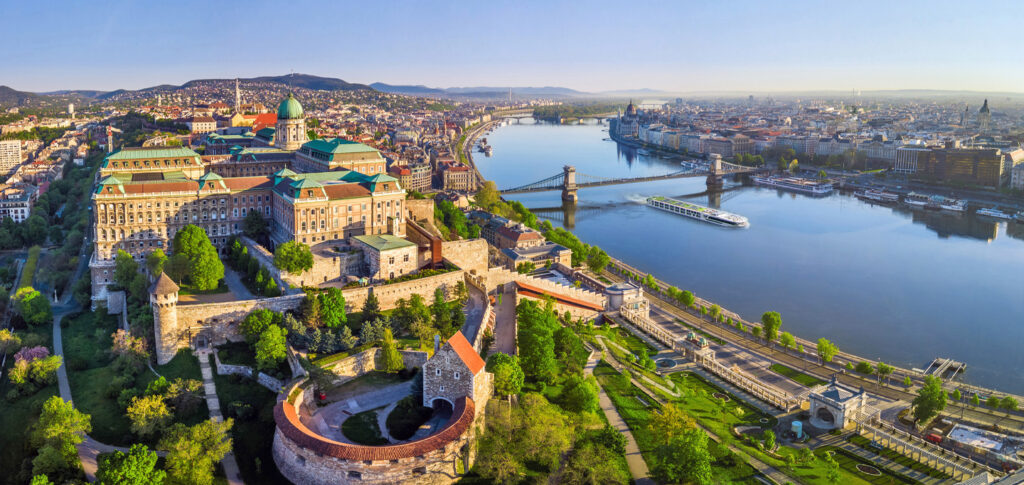
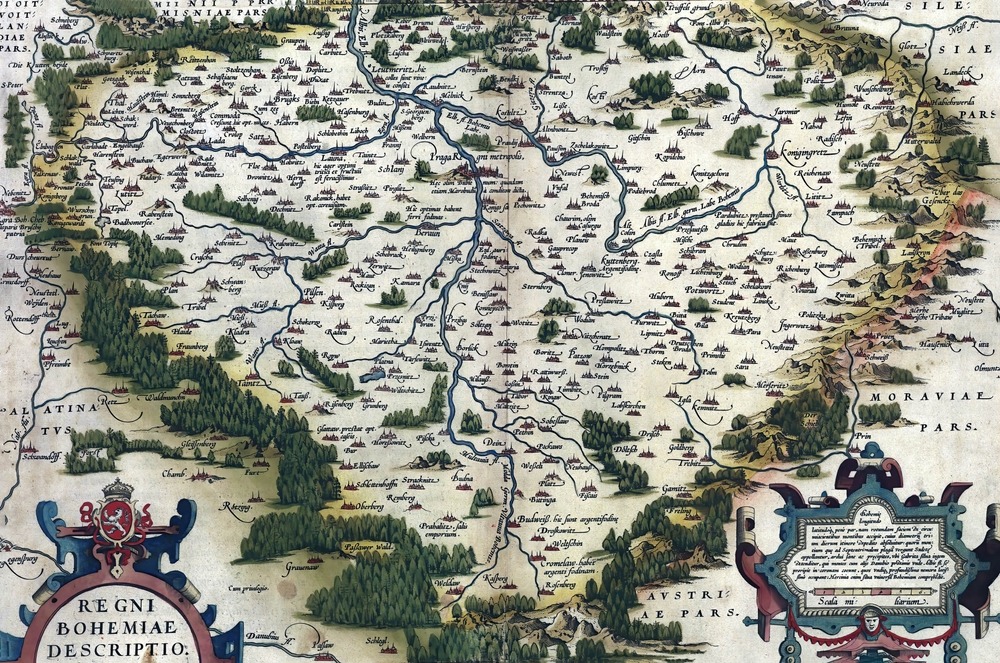
Bohemia is a historical region in Central Europe that forms much of the western portion of today’s Czech Republic. It is bordered historically by Austria to the south, Bavaria to the west, Saxony and Lusatia to the north, Silesia to the northeast, and Moravia to the east. For centuries, Bohemia was not a vague cultural idea, but a defined land with borders, rulers, cities, religious conflicts, trade routes, and a powerful place in European politics.

Geographically, Bohemia is often described as a basin surrounded by mountains and highlands. This natural enclosure helped give the region a distinct identity. The Bohemian Forest, the Ore Mountains, the Sudetes, and other upland areas shaped its borders and gave the land a sense of geographic separateness. Within that landscape, rivers such as the Vltava and Elbe connected towns, supported agriculture, and helped make Prague one of the great cultural capitals of Central Europe.
Bohemia’s history stretches back through Celtic, Germanic, and Slavic settlement. The name itself is linked to the Boii, a Celtic people associated with the region in antiquity. Later, Slavic peoples, including the Czechs, became central to the region’s identity. By the medieval period, Bohemia had become a duchy and then a kingdom, with Prague emerging as a major political and cultural center. Over time, Bohemia became a kingdom within the Holy Roman Empire and later a province of the Habsburg Austrian Empire.
Prague and the Golden Age of Bohemia
No discussion of Bohemia is complete without Prague. The city became one of Europe’s great capitals under Charles IV, the 14th-century king of Bohemia and Holy Roman Emperor. During his reign, Prague flourished as an imperial, intellectual, religious, and architectural center. Charles University, founded in 1348, became one of the earliest universities in Central Europe, giving Bohemia a lasting connection to scholarship, theology, law, and political debate.
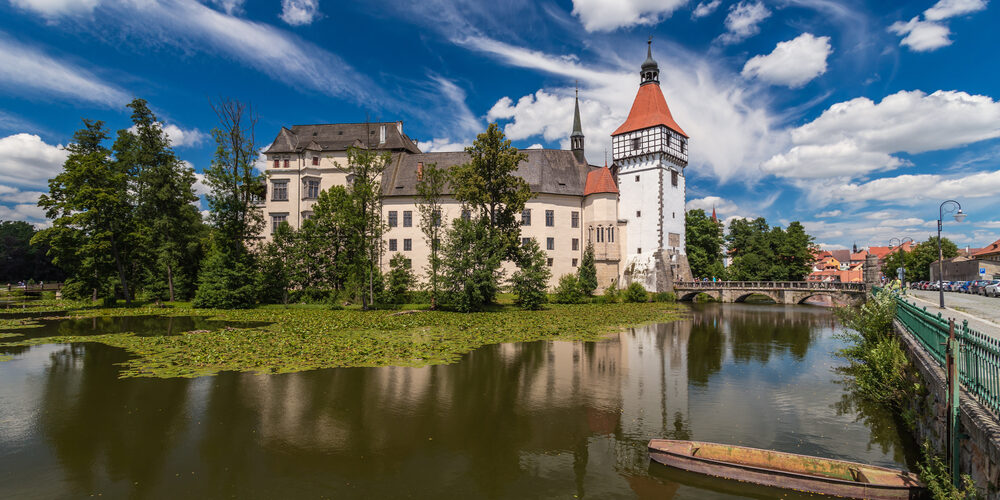
The region’s Gothic churches, royal courts, stone bridges, castles, and manuscript culture reflected a kingdom that was deeply connected to the wider currents of European civilization. Bohemia was not a peripheral or mysterious wilderness. It was a sophisticated center of power, learning, architecture, and religious thought.
That sophistication makes the later slang use of “bohemian” especially ironic. The cultural meaning that developed in France had little to do with actual Czech history or the settled people of Bohemia. The real Bohemia was a land of dynasties, reform movements, imperial politics, and urban culture. The imagined “bohemian” of French slang was something else entirely: a romantic outsider, a wanderer, a rebel against bourgeois comfort.
Bohemia, Religion, and Rebellion
Bohemia’s history also includes some of Europe’s most important religious and political struggles. In the early 15th century, the Czech reformer Jan Hus criticized corruption in the Church and became a major figure in the religious movements that preceded the Protestant Reformation. After Hus was executed in 1415, his followers helped launch the Hussite Wars, a series of conflicts that made Bohemia a center of religious resistance and reform.
The Hussite movement gave Bohemia a reputation for intellectual and spiritual defiance. It also made the region a place where questions of religious authority, national identity, and political autonomy became deeply intertwined. Centuries later, Bohemia again stood at the center of European upheaval when tensions between Protestant nobles and Catholic Habsburg power helped spark the Thirty Years’ War in 1618.
These episodes reveal the real Bohemia as a place of historical gravity. It was not merely a name borrowed by French writers. It was a region whose people wrestled with empire, faith, language, sovereignty, and identity long before “bohemian” became a synonym for artistic rebellion.
From Bohemia to Bohème: The French Misunderstanding
The transformation of Bohemia into bohème began with a historical mistake. In France, the word bohémien came to be used for the Romani people, who were wrongly believed to have entered France through Bohemia. This misunderstanding mattered because the Romani were viewed by many settled Europeans as wandering outsiders. Their mobility, distinct traditions, and separation from mainstream society made them the subject of fascination, prejudice, fear, and romanticization.
French society often projected onto the Romani people ideas of freedom, lawlessness, mystery, music, sensuality, and refusal to obey conventional norms. Those ideas were not neutral. They were shaped by stereotypes and by a long European history of discrimination against Romani communities. But in the French imagination, the word bohémien gradually expanded beyond a mistaken ethnic label. It began to describe anyone perceived as living outside ordinary society.
That shift is the key to the entire story. A geographic name became an ethnic mislabel. The ethnic mislabel became a social metaphor. The social metaphor became an artistic identity.
The Birth of La Bohème
By the 19th century, la bohème had become strongly associated with poor, young, unconventional artists and writers living in Paris. These were people who often occupied the margins of respectable middle-class life. They might be poets, painters, musicians, students, journalists, actors, political radicals, or dreamers. They were imagined as living in cheap rooms, gathering in cafés, chasing art rather than money, and treating poverty as both hardship and badge of authenticity.
The term became especially famous through Henry Murger’s Scènes de la vie de bohème, a collection of stories about struggling artists in Paris. Murger’s work helped define the literary image of bohemian life and later inspired Puccini’s opera La bohème.
The French bohème was not simply poverty. It was poverty given style, wit, and artistic purpose. It was the romance of the garret, the café table, the unpaid rent, the unfinished poem, the passionate affair, and the belief that art mattered more than comfort. In this world, failure could be noble if it was suffered in the name of creativity. Hunger could be aestheticized. Rebellion could be turned into charm.
That romantic image was powerful. It gave artists a mythology of themselves. It suggested that to live outside the rules was not merely to be unsuccessful, but to belong to a higher, freer, more imaginative order of life.
Bohème as Rebellion Against Bourgeois Society
The 19th century was also the age of the bourgeoisie: the rising middle class, commercial respectability, property, social manners, professional careers, and domestic stability. Bohemianism developed partly as a protest against that world. The bohemian artist stood in contrast to the respectable citizen. Where bourgeois culture valued security, the bohemian embraced uncertainty. Where polite society valued reputation, the bohemian valued authenticity. Where capitalism turned art into a product, the bohemian treated art as a calling.
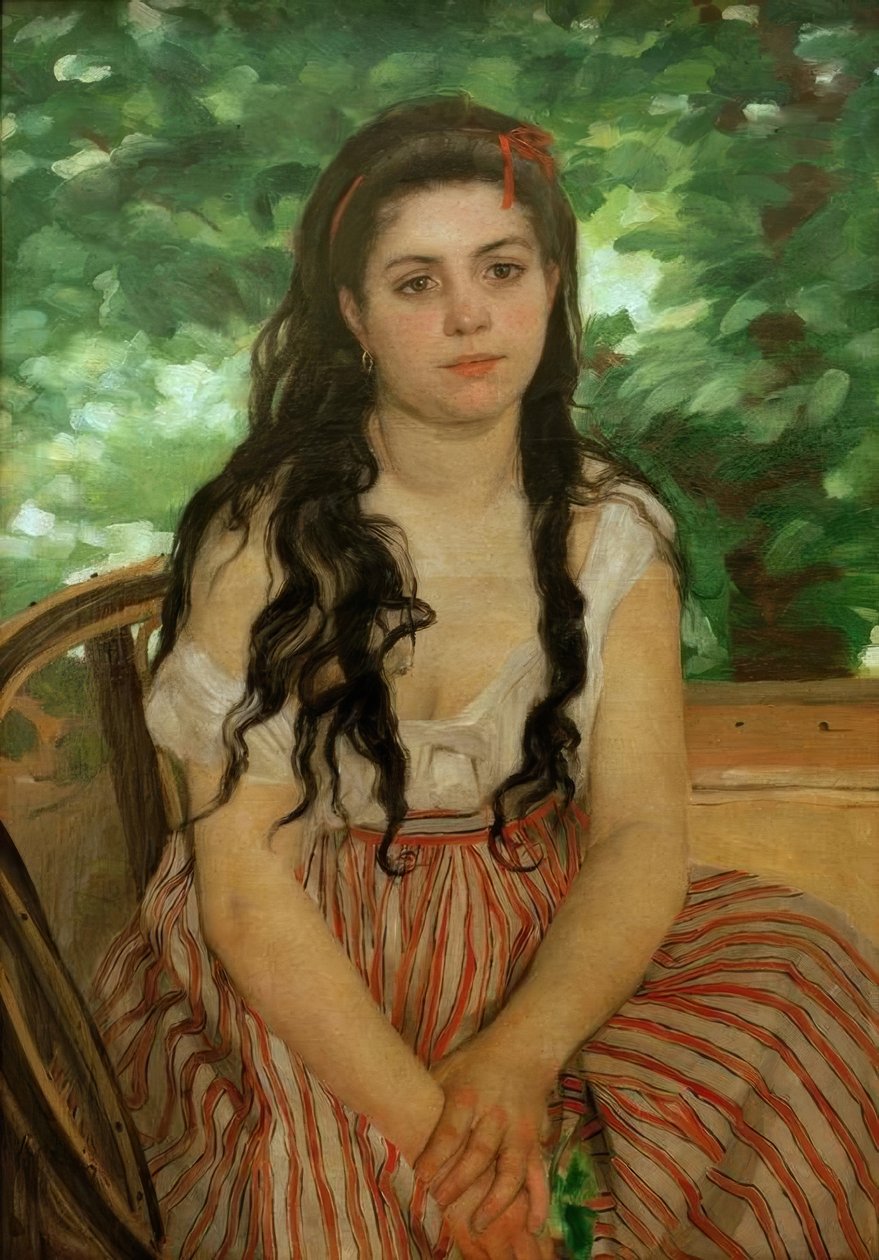
Of course, the reality was often messier than the myth. Many bohemians wanted recognition, publication, patrons, and income. Some moved in and out of respectable life. Some were genuinely poor; others came from comfortable backgrounds and adopted bohemian postures. But the idea endured because it expressed a real tension in modern culture: the tension between creative freedom and social conformity.
How “Bohemian” Entered Modern English
The French idea of bohème eventually spread into English as “bohemian.” By the 19th century, the word was being used in English-speaking countries to describe artists, writers, journalists, and others who lived unconventional lives. The term no longer referred primarily to someone from Bohemia. Instead, it described a way of being.
This is where the word’s double meaning became fully established. A “Bohemian” with a capital B could still mean a person from Bohemia. A “bohemian” with a lowercase b increasingly meant a person who rejected convention, especially in artistic or intellectual life.
That lowercase meaning became culturally dominant. A bohemian might be poor, but not merely destitute. A bohemian might be eccentric, but not merely strange. A bohemian might be political, sensual, artistic, spiritual, anti-materialist, or socially experimental. The word suggested a life lived against the grain.
Bohemianism in Modern Culture
Today, “bohemian” has become one of the most flexible cultural labels in the English language. It can describe a serious artistic tradition, a fashion style, an interior design trend, a travel identity, a music scene, or a personal attitude.
In fashion, “bohemian” or “boho” often suggests flowing fabrics, layered textiles, embroidery, fringe, natural fibers, vintage pieces, loose silhouettes, and a relaxed disregard for formal polish. In interior design, it may refer to eclectic rooms filled with rugs, plants, books, handmade objects, global textiles, and mismatched furniture. In music and art, it still suggests experimentation, emotional intensity, and independence from commercial formulas.
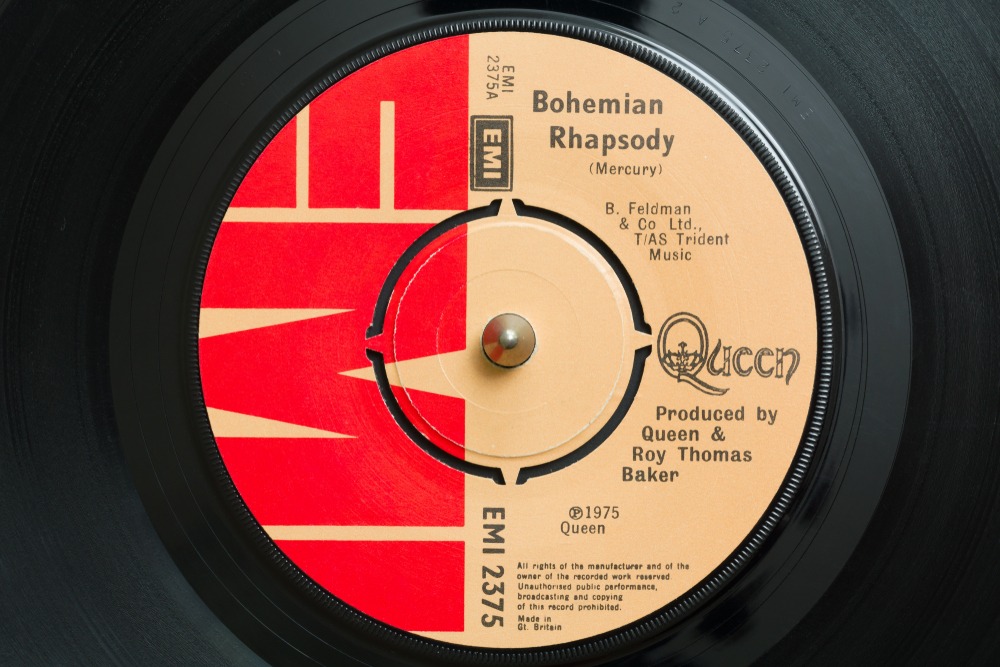
One of the most famous modern uses of the word appears in Queen’s 1975 song “Bohemian Rhapsody.” The title itself captures the word’s loose modern meaning: something dramatic, unconventional, artistic, emotionally extravagant, and difficult to place inside a normal category. The song moves through ballad, opera, hard rock, and theatrical confession without following the standard structure of a popular single. In that sense, “Bohemian Rhapsody” does not simply use the word as decoration. It embodies the bohemian idea by refusing ordinary rules. It is excessive, strange, personal, operatic, playful, tragic, and rebellious all at once.
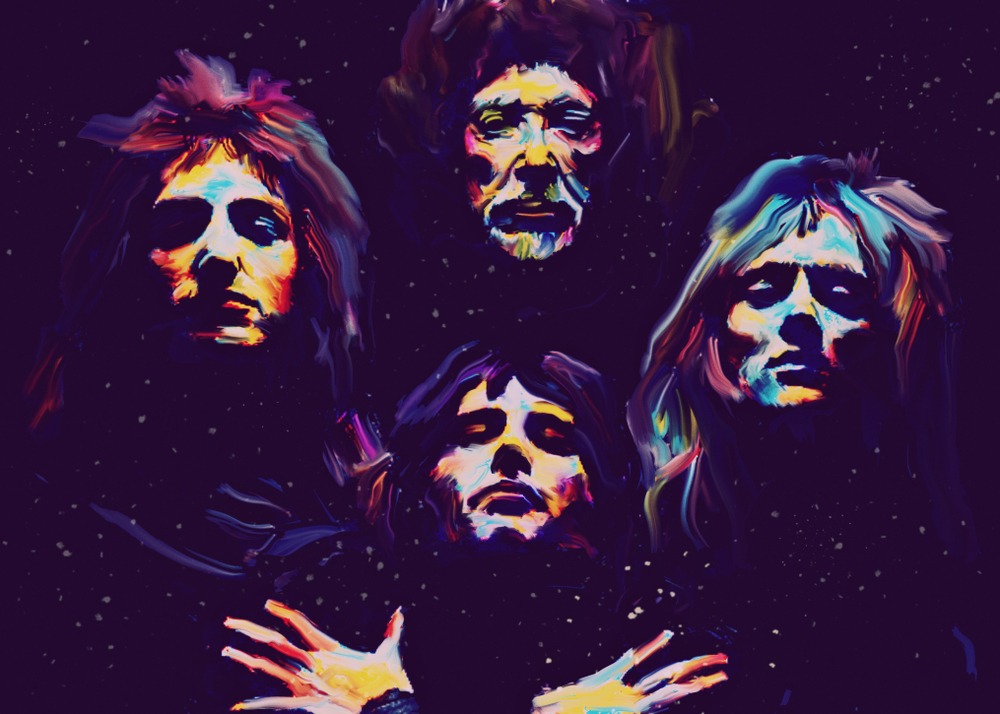
The song also helped detach “bohemian” even further from its geographic origins. For millions of listeners, “Bohemian” became associated less with Bohemia or even 19th-century Paris, and more with artistic freedom, emotional intensity, and genre-breaking creativity. Queen’s use of the word showed how deeply the term had entered modern imagination. By the late 20th century, “bohemian” could mean not only a type of person or lifestyle, but a creative mode: bold, hybrid, theatrical, and impossible to reduce to a single form.
But modern “bohemian” culture is complicated. What once described outsiders and struggling artists has often been absorbed into consumer culture. The bohemian look can now be purchased. The anti-materialist aesthetic can become a luxury brand. A lifestyle once associated with poverty and rebellion can be repackaged as boutique comfort.
That contradiction is not new. Bohemianism has always lived between authenticity and performance. It has always attracted both genuine outsiders and people who liked the idea of outsider status. The modern “boho” aesthetic may be far removed from 19th-century Parisian garrets, but it still draws on the same fantasy: life as freer, more artistic, less constrained, and more emotionally alive.
The Irony of the Word
The deepest irony is that modern “bohemian” identity has almost nothing to do with historical Bohemia. The real Bohemia was a kingdom, a region, a homeland, a cultural landscape, and a political force. The French bohème was an imaginative social category born from mistaken assumptions about Romani migration. The modern “bohemian” is the descendant of that misunderstanding.
Yet the error proved culturally fertile. A false geography produced a real vocabulary. A mistaken origin story created a word that generations of artists used to understand themselves. The term survived because it named something people recognized: the desire to live beyond rigid social scripts.
In that sense, “bohemian” is not historically accurate, but it is culturally revealing. It shows how language often develops not through precision, but through association, prejudice, imagination, and repetition. Words carry mistakes forward. Sometimes those mistakes harden into slang. Sometimes slang becomes identity.
Why the Difference Still Matters
Understanding the difference between Bohemia and bohème matters because it restores dignity to both sides of the story. Bohemia deserves to be understood as a real place with its own history, not merely as the accidental source of a lifestyle word. Its castles, reformers, rulers, artists, cities, and landscapes belong to the history of Central Europe.
At the same time, bohème deserves to be understood as a cultural invention shaped by 19th-century France, urban poverty, artistic ambition, and social rebellion. It was not truly about Bohemia. It was about Paris, modernity, art, class, and the dream of living freely.
The modern word “bohemian” sits at the intersection of those histories. It is geographically confused, socially loaded, artistically powerful, and commercially overused. It began as a misunderstanding, became a metaphor, and eventually turned into a global cultural style.
A Mistake That Became a Movement
“Bohème” and “Bohemia” are linked by language, but separated by history. Bohemia is a real Central European region with a rich and complex past. La bohème was a French cultural idea born from the mistaken belief that the Romani people came from Bohemia. From that error emerged a new meaning: the bohemian as artist, outsider, wanderer, rebel, and romantic nonconformist.
The word’s journey is a reminder that language is not always tidy. A place name can become a stereotype. A stereotype can become slang. Slang can become art. Art can become identity. And identity can eventually become fashion, philosophy, and lifestyle.
The story of “bohemian” is therefore not only a story about a word. It is a story about how cultures imagine outsiders, how artists turn marginality into meaning, and how a geographic confusion helped create one of the most enduring symbols of creative freedom in modern life.