History of Santa Fe, New Mexico
Santa Fe, the capital of New Mexico, is one of the oldest and most culturally significant cities in the United States. At over 400 years old, Santa Fe’s layered history is steeped in Native American heritage, Spanish colonization, Mexican independence, American expansion, and contemporary artistic revival—all of which contribute to its enduring mystique.
Indigenous Beginnings
Long before the arrival of Europeans, the area now known as Santa Fe was inhabited by Ancestral Puebloans. Settlements in the region date back to around 900 CE, and Pueblo communities thrived along the Rio Grande Valley for centuries. The Tewa people still refer to Santa Fe as “Ogha Po’oge”, meaning “White Shell Water Place.”
Spanish Colonization
In 1607, Spanish settlers established a military outpost in the area, and in 1610, Don Pedro de Peralta officially founded the Villa Real de la Santa Fe de San Francisco de Asís, or “Royal City of the Holy Faith of Saint Francis of Assisi.” This made Santa Fe the oldest capital city in the U.S. and the oldest European settlement west of the Mississippi River.
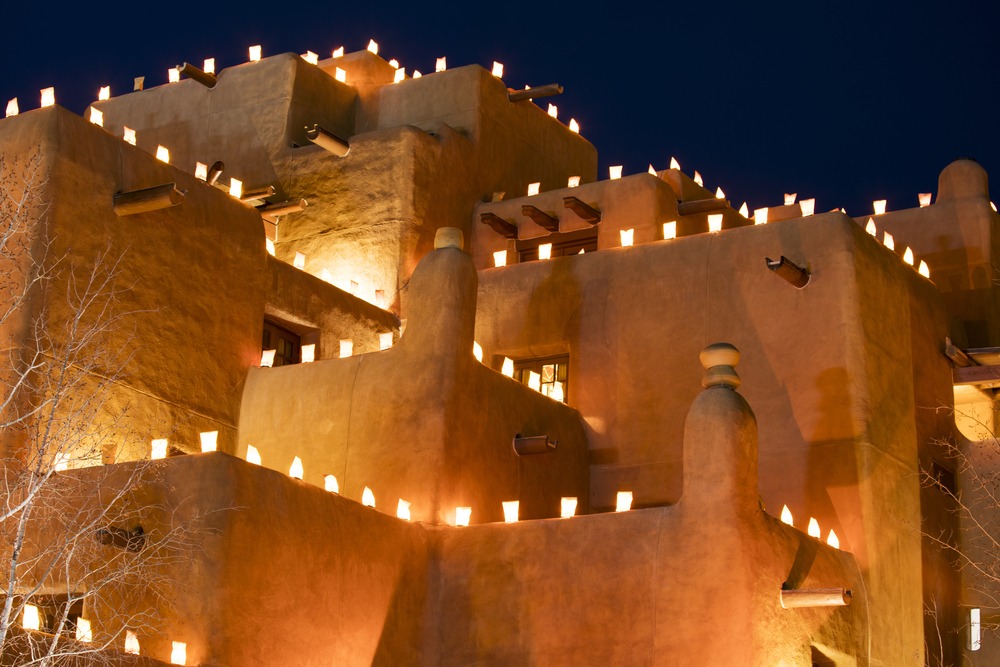
The Spanish introduced adobe architecture, Catholic missions, and European governance—elements still visible in Santa Fe’s iconic streetscapes today. However, tensions with Indigenous communities escalated until the Pueblo Revolt of 1680, when the Pueblo peoples successfully expelled Spanish colonists for 12 years. Spain reestablished control in 1692, but the revolt left a lasting legacy of cultural resilience.
Mexican and American Rule
Following Mexico’s independence from Spain in 1821, Santa Fe became the capital of the Mexican territory of Nuevo México. It also became the western terminus of the Santa Fe Trail, a vital trade route connecting Missouri to the Southwest.
In 1846, during the Mexican-American War, U.S. troops under General Stephen Kearny took control of the city without a fight. Two years later, under the Treaty of Guadalupe Hidalgo, Santa Fe officially became part of the United States.
Territorial Growth and Statehood
Santa Fe served as the capital of the New Mexico Territory and was a center of political and military activity throughout the 19th century. In 1912, when New Mexico became the 47th U.S. state, Santa Fe was designated its official capital.
Cultural Renaissance and Modern Identity
Throughout the 20th century, Santa Fe became known for its preservation of Spanish-Pueblo architecture and its status as a haven for artists, writers, and creatives. The city cultivated a reputation for arts, culture, and spirituality, attracting residents and visitors from around the world. Today, Santa Fe is a UNESCO-designated Creative City, a hub of Native American traditions, Hispanic heritage, and global contemporary art.
Top 25 Attractions in Santa Fe, New Mexico
1. Santa Fe Plaza
The historic heart of the city, surrounded by museums, shops, and restaurants, and often hosting festivals and live music.
2. Palace of the Governors
Built in 1610, this is the oldest public building in the U.S. and now serves as part of the New Mexico History Museum.
3. Loretto Chapel
Famous for its “miraculous staircase” with no visible support, this Gothic-style chapel is a must-see marvel.
4. Cathedral Basilica of St. Francis of Assisi
A Romanesque Revival cathedral built in the late 1800s that stands as a spiritual and architectural icon.
5. Canyon Road
A meandering half-mile of more than 100 art galleries, studios, and boutiques in a charming adobe setting.
6. Georgia O’Keeffe Museum
Dedicated to the life and work of the iconic American modernist painter who called New Mexico home.
7. Museum of International Folk Art
One of the world’s largest folk art collections, showcasing global cultures through crafts, textiles, and traditions.
8. New Mexico Museum of Art
Housed in a stunning Pueblo Revival building, this museum celebrates regional and contemporary art.
9. Santa Fe Railyard Arts District
A revitalized district with contemporary galleries, a farmers’ market, performance spaces, and cultural events.
10. Meow Wolf’s House of Eternal Return
An immersive, multimedia art experience that blends fantasy, sci-fi, and interactivity in a massive walk-through installation.
11. San Miguel Chapel
Often cited as the oldest church in the U.S., this adobe mission dates to the early 1600s and still holds services today.
12. El Rancho de las Golondrinas
A living history museum south of town that recreates 18th-century colonial life with costumed interpreters and seasonal festivals.
13. Santa Fe Opera House
A world-renowned open-air opera venue set in the hills north of town with sweeping sunset views.
14. Museum Hill
A cultural complex with four major museums and a botanical garden, all offering spectacular views and world-class exhibitions.
15. Santa Fe Botanical Garden
Located on Museum Hill, this garden highlights native and drought-tolerant plants in a peaceful setting.
16. Santa Fe Farmers’ Market
One of the best in the nation, featuring local produce, crafts, and cuisine in the Railyard District.
17. Randall Davey Audubon Center
A nature preserve and education center offering birdwatching, hiking, and historic home tours.
18. Ten Thousand Waves
A Japanese-inspired spa nestled in the foothills, offering hot tubs, massage, and wellness retreats.
19. Museum of Indian Arts and Culture
Dedicated to Native American culture, archaeology, and artistry with impressive permanent and rotating exhibits.
20. Nedra Matteucci Galleries
A private gallery housing major works of Southwestern art and sculpture in a serene garden setting.
21. Santa Fe National Cemetery
A quiet and honored resting place for veterans with views of the Sangre de Cristo Mountains.
22. Santa Fe National Forest & Hyde Memorial State Park
Just a short drive away, these parks offer hiking, picnicking, fall foliage, and winter snowplay.
23. De Vargas Street House (“Oldest House”)
Believed to be one of the oldest surviving adobe structures in the U.S., it dates to the 1600s.
24. Railyard Performance Center
A lively venue for dance, theater, and performance art in a progressive cultural setting.
25. The Cathedral Park and Cross of the Martyrs
A scenic overlook and memorial with panoramic views of the city, especially striking at sunset.
Conclusion
Santa Fe is a city that doesn’t just preserve its history—it lives it. From ancient pueblo villages and Spanish colonial missions to contemporary galleries and immersive art installations, Santa Fe is a vivid tapestry of past and present. Whether you’re walking the centuries-old streets of the Plaza, meditating in the quiet of a mountain chapel, or exploring the wild colors of Meow Wolf, you’ll discover why Santa Fe is known as “The City Different.” With its unique blend of heritage, creativity, and natural beauty, Santa Fe offers an unforgettable experience that speaks to the soul.
Santa Fe, New Mexico
Santa Fe,
New Mexico United States (US)