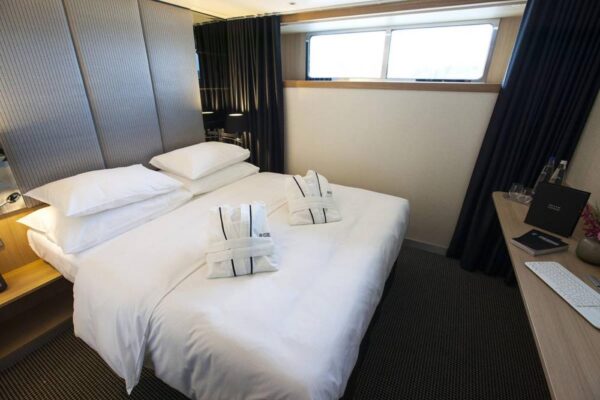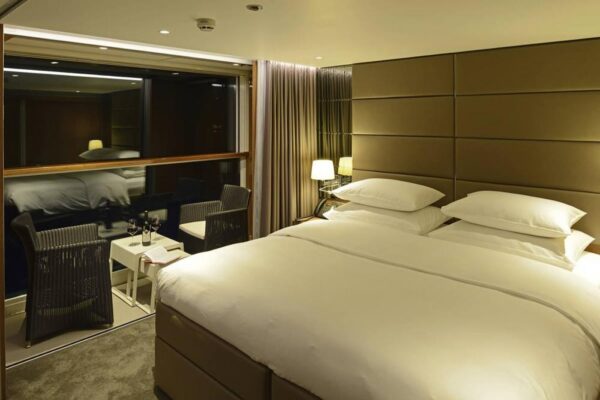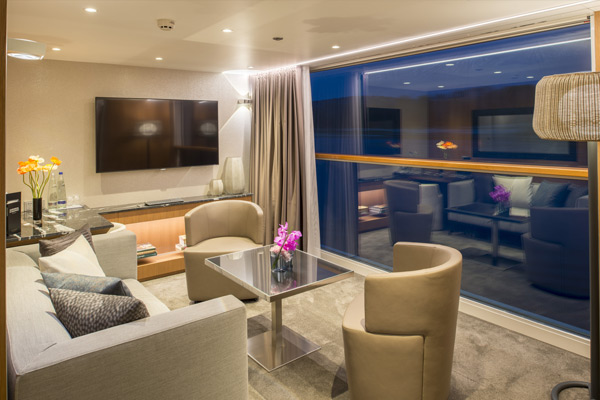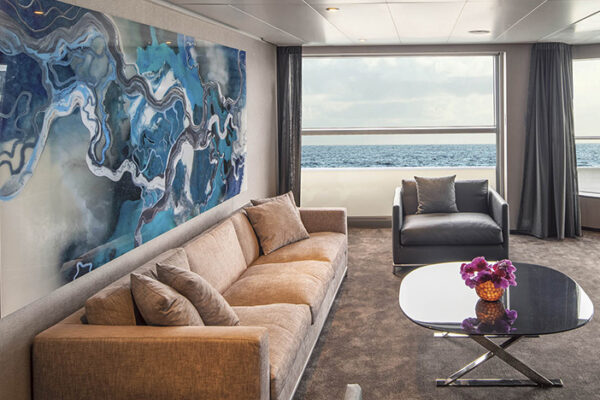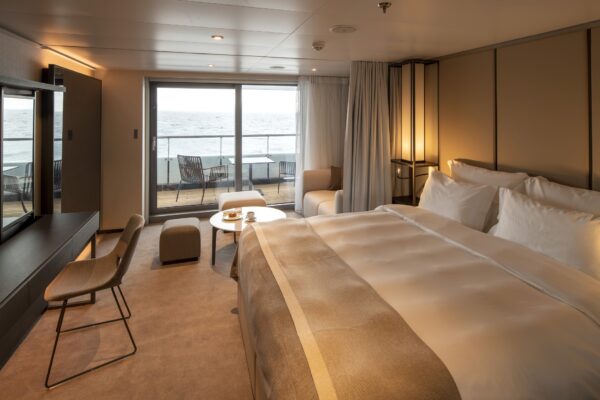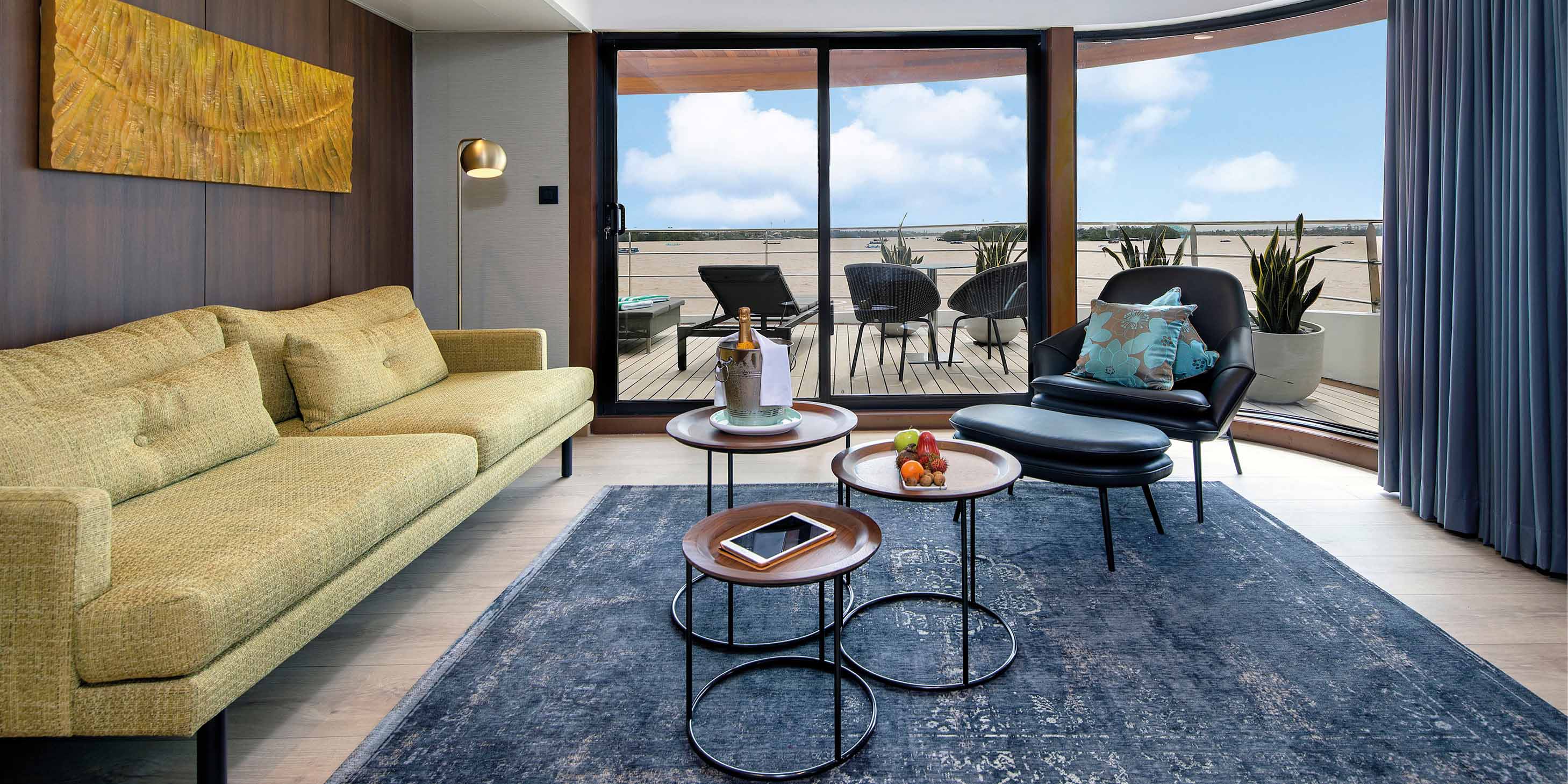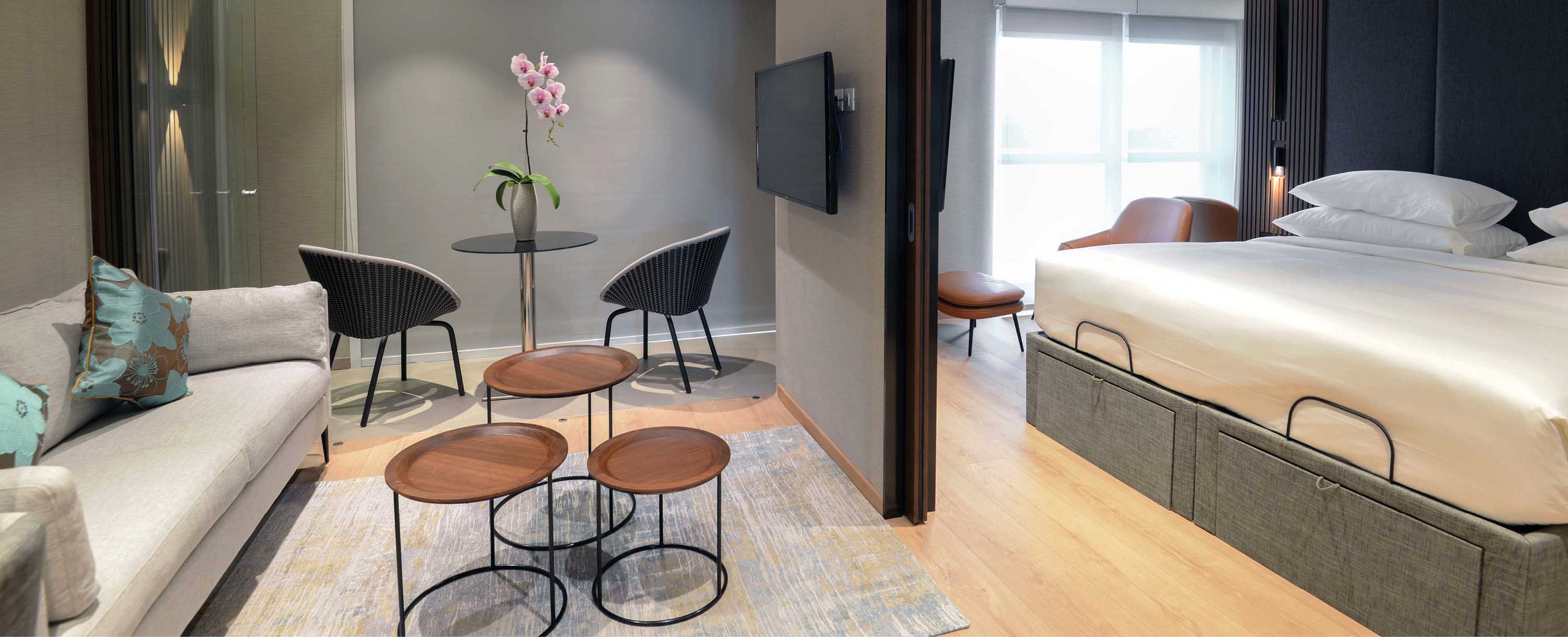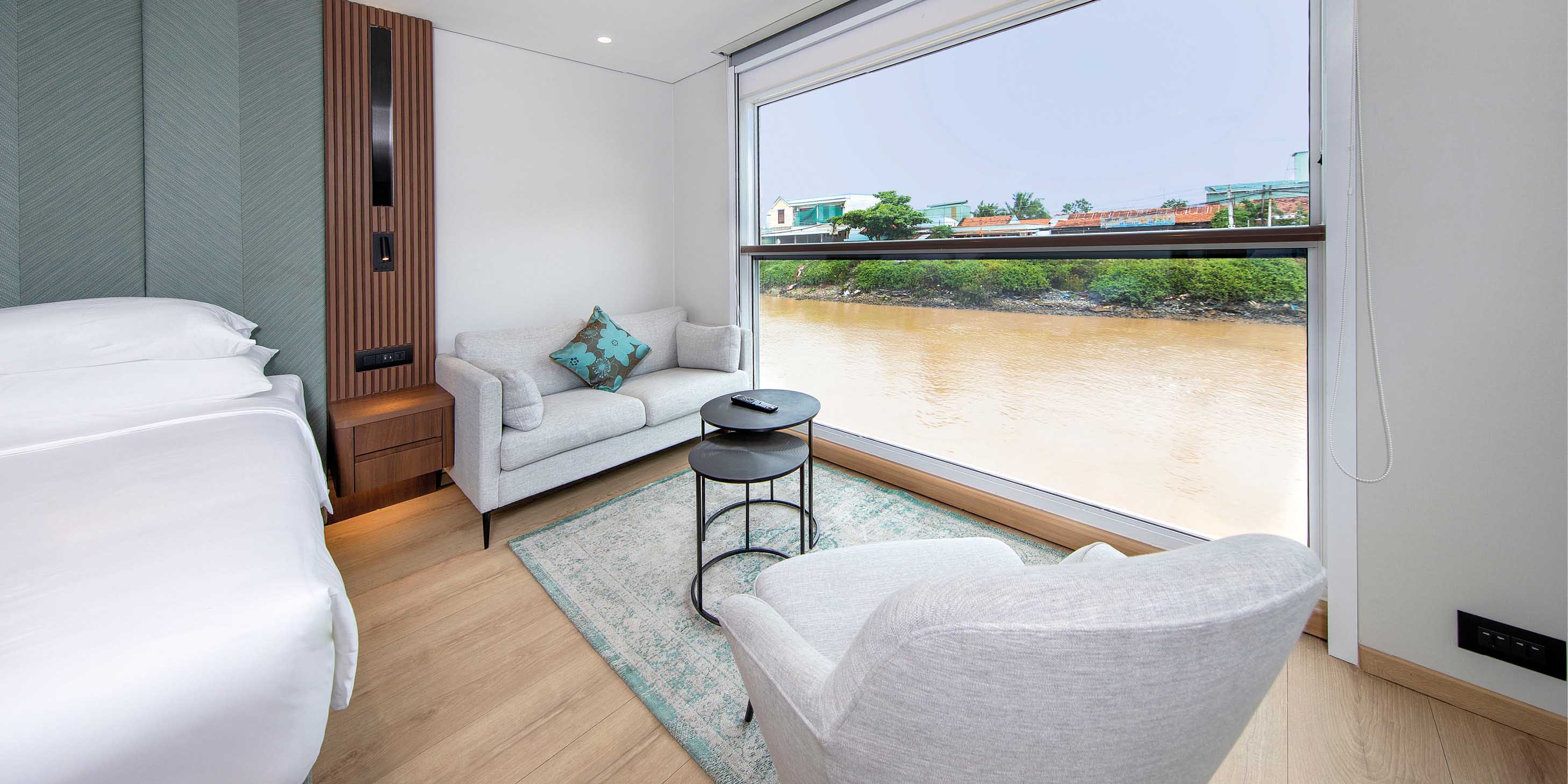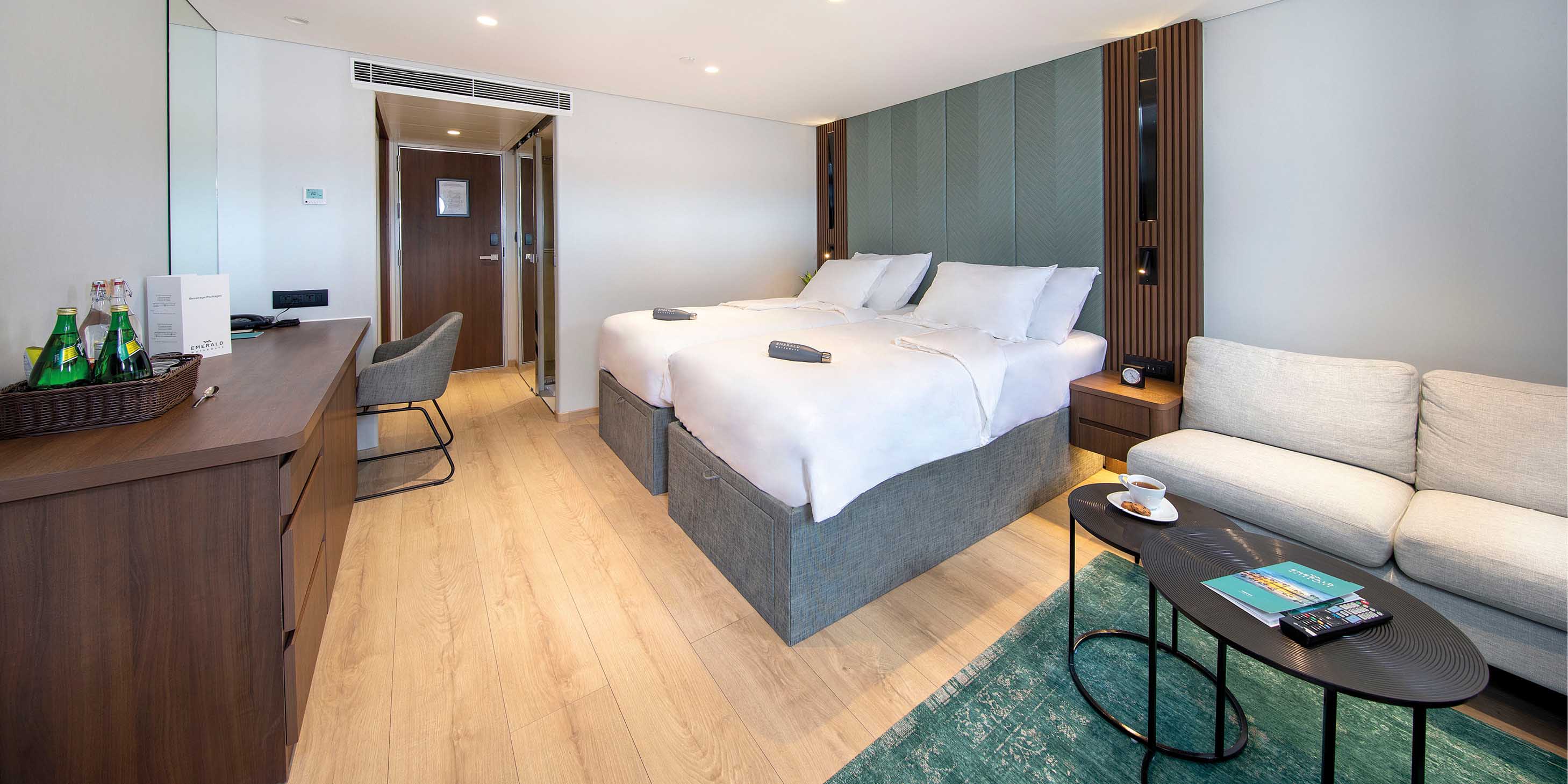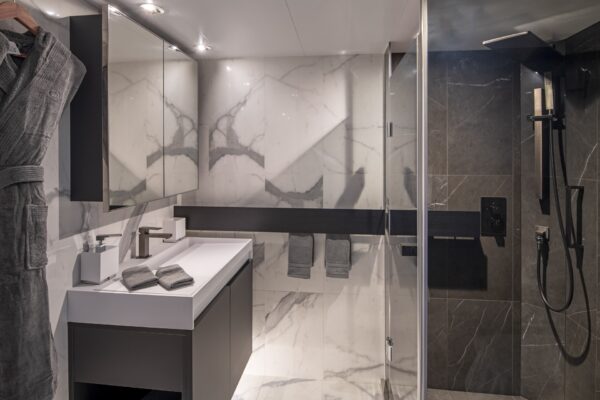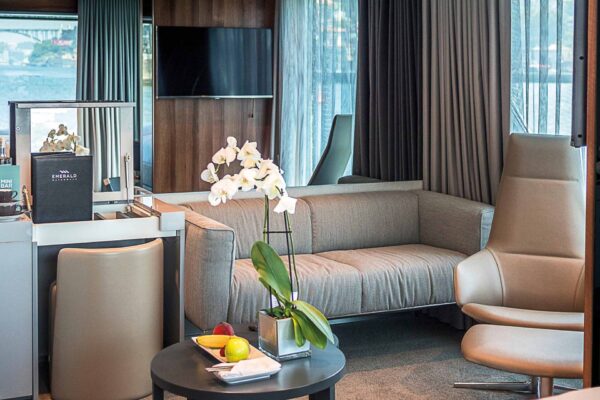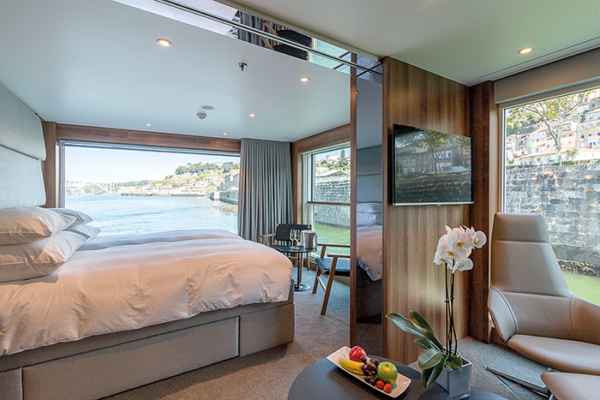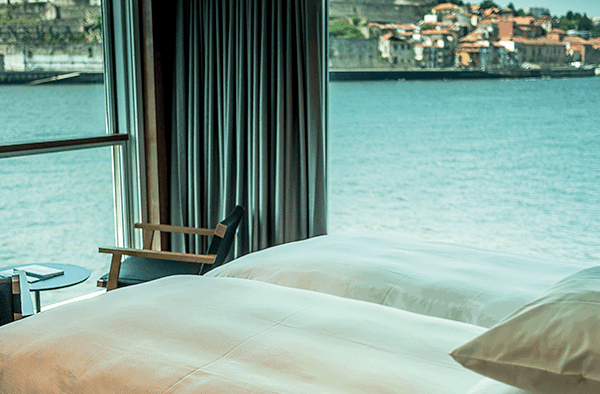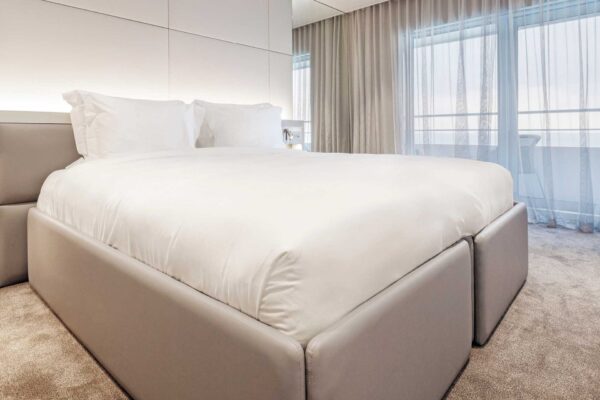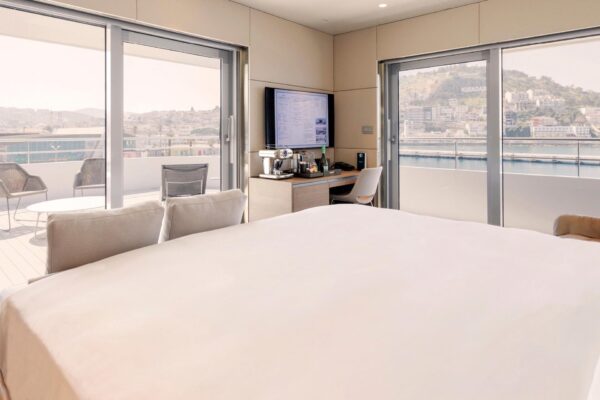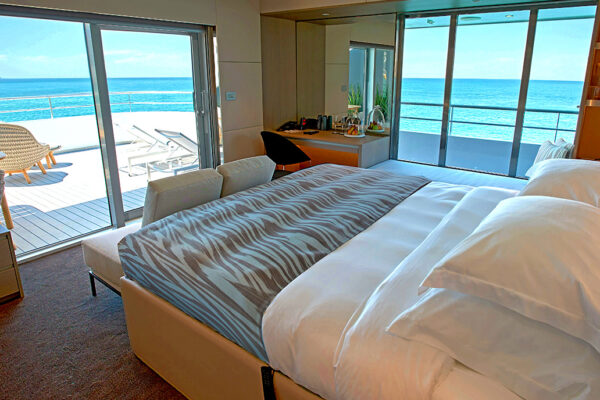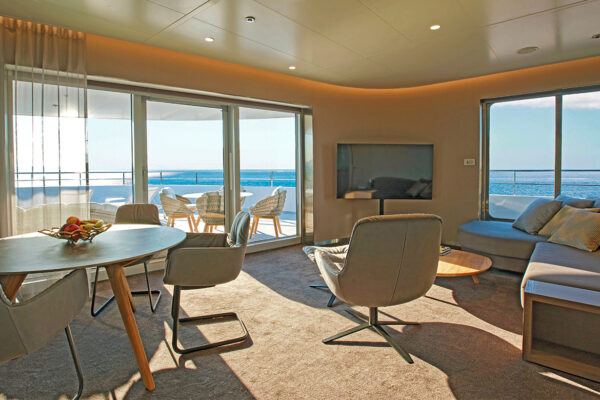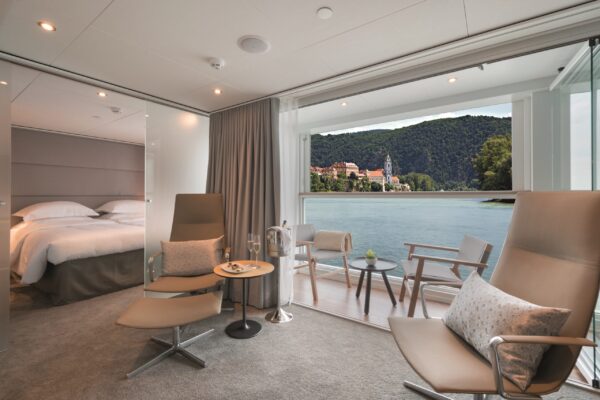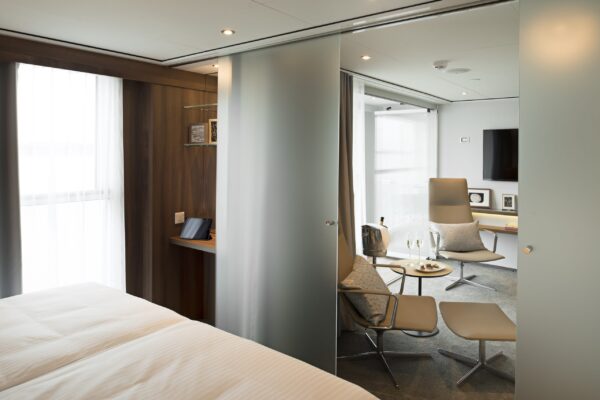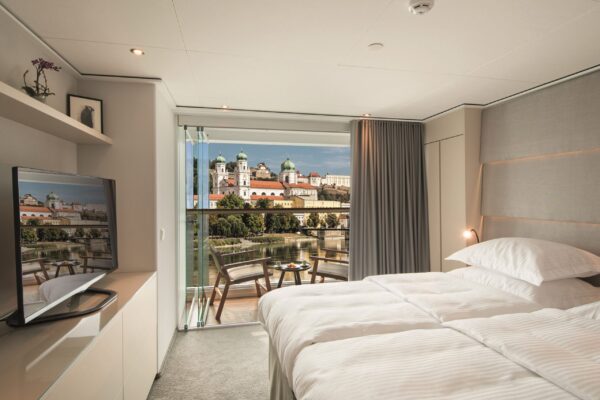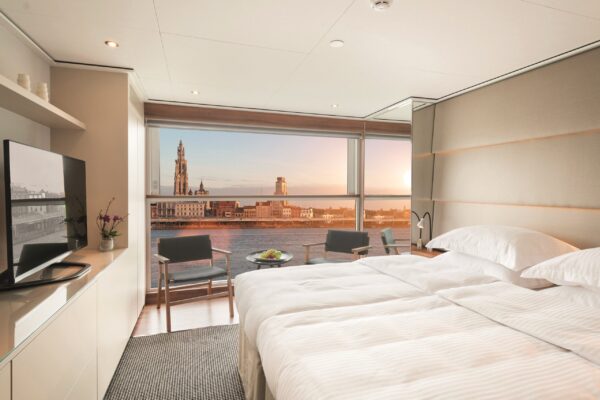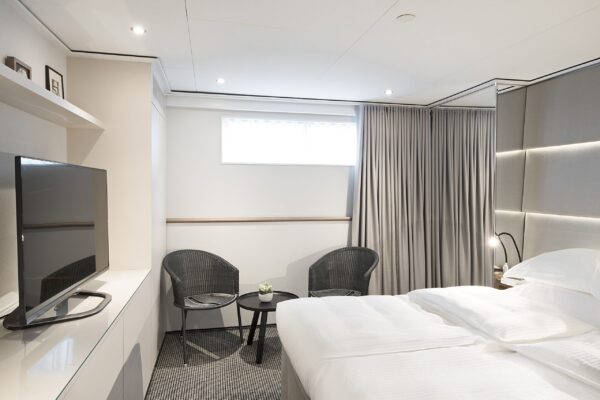


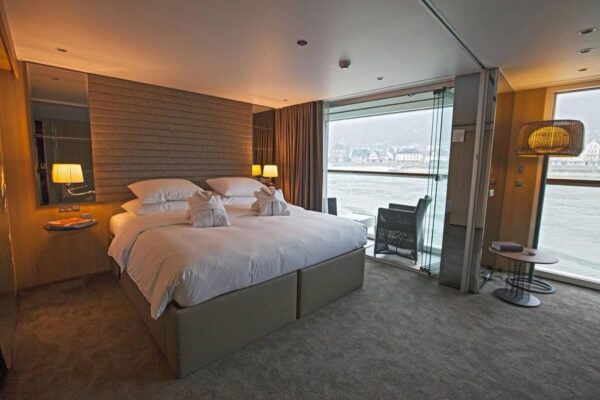
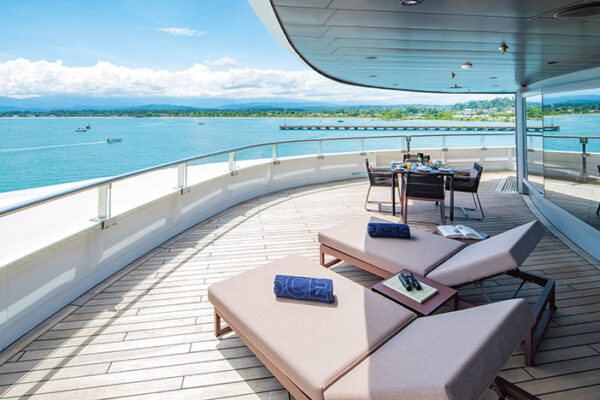

These grand suites include a host of special features and services. Curl up in your lounge with a kindle e-book from your in-suite library and sip your favorite aperitif, personally delivered by your butler – all before enjoying an intimate dining experience, in the plush and private surroundings of your suite. Even from the comfort of your bedroom, you’ll never miss a photo opportunity – access the outside world through your drop-down balcony window, with the gentle touch of a button, and with your in-suite binoculars.
Kujataa & South Greenland: Where Viking Roots Meet Arctic Culture
Nestled along the lush fjords of southern Greenland, Kujataa — formally known as Kujataa Greenland: Norse and Inuit Farming at the Edge of the Ice Cap — stands as one of the most remarkable additions to the UNESCO World Heritage List. Inscribed in 2017, this vast cultural landscape encompasses multiple sites including Qassiarsuk, Igaliku, Sissarluttoq, Tasikuluulik, and Qaqortukulooq, each preserving tangible evidence of human resilience, agricultural innovation, and cultural exchange at the margins of the Arctic world.
Unlike the icy extremes typically associated with Greenland, Kujataa is strikingly green and pastoral. Rolling hills, fertile valleys, and sheltered fjords reveal a place where Norse settlers introduced European farming traditions over a thousand years ago, later adapted and sustained by Inuit communities. This combination makes Kujataa exceptional not only within Greenland, but among World Heritage landscapes globally.
The First Norse Settlements: Erik the Red and Brattahlíð
The story of Kujataa begins in the late 10th century with Erik the Red, the Norse explorer who established Greenland’s first European settlement after exile from Iceland. Along the calm waters of Tunulliarfik Fjord, Erik founded his estate at Brattahlíð, now known as Qassiarsuk. From this base, he encouraged further settlement by promoting the land’s agricultural potential.
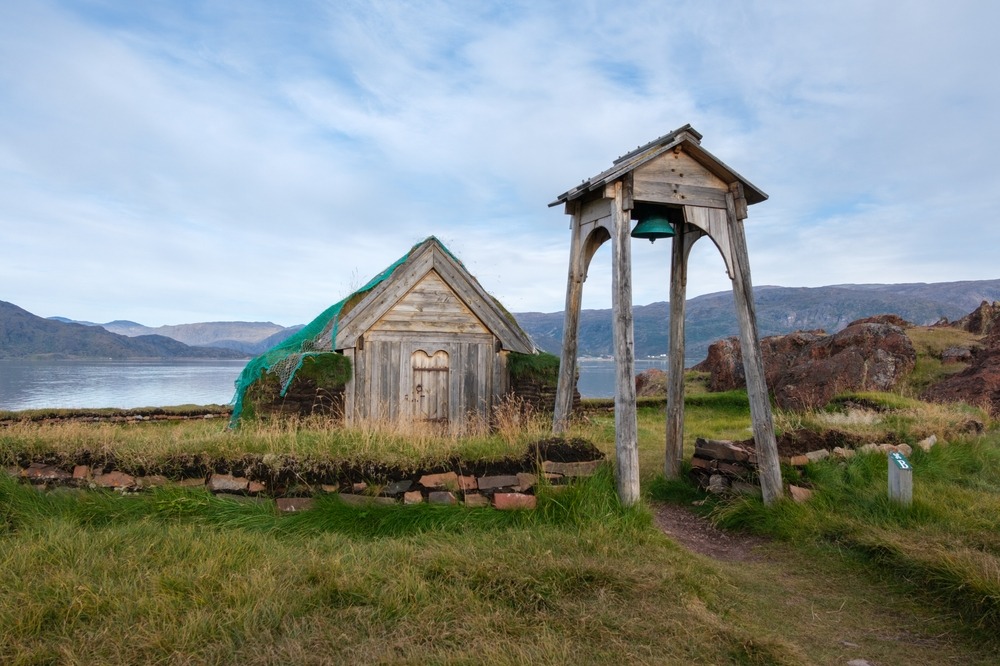
Today, Qassiarsuk preserves the archaeological remains of Brattahlíð, including the foundations of longhouses, barns, and storage buildings that once supported Norse sheep and cattle farming. Visitors can also see a reconstruction of Tjodhild’s Church, believed to be among the earliest Christian churches in the Western Hemisphere, symbolizing the introduction of Christianity to Greenland.
Modern Qassiarsuk remains a living farming community. Sheep graze the same hillsides cultivated by Viking settlers, creating a rare continuity of land use that spans more than a millennium.
Sissarluttoq and the Norse Manor Landscape
Sissarluttoq represents one of the most significant Norse manor sites within Kujataa. Excavations have revealed extensive stone foundations and turf structures, offering insights into medieval construction techniques and domestic organization. These ruins demonstrate how Norse settlers adapted European architectural traditions to Arctic conditions, using local materials to withstand harsh winters.
Across Kujataa, Norse sites coexist with later Inuit farming and hunting locations, illustrating a cultural succession rather than abrupt abandonment. This layered history is central to the site’s UNESCO designation.
Hvalsey Church and the Norse Legacy Near Qaqortoq
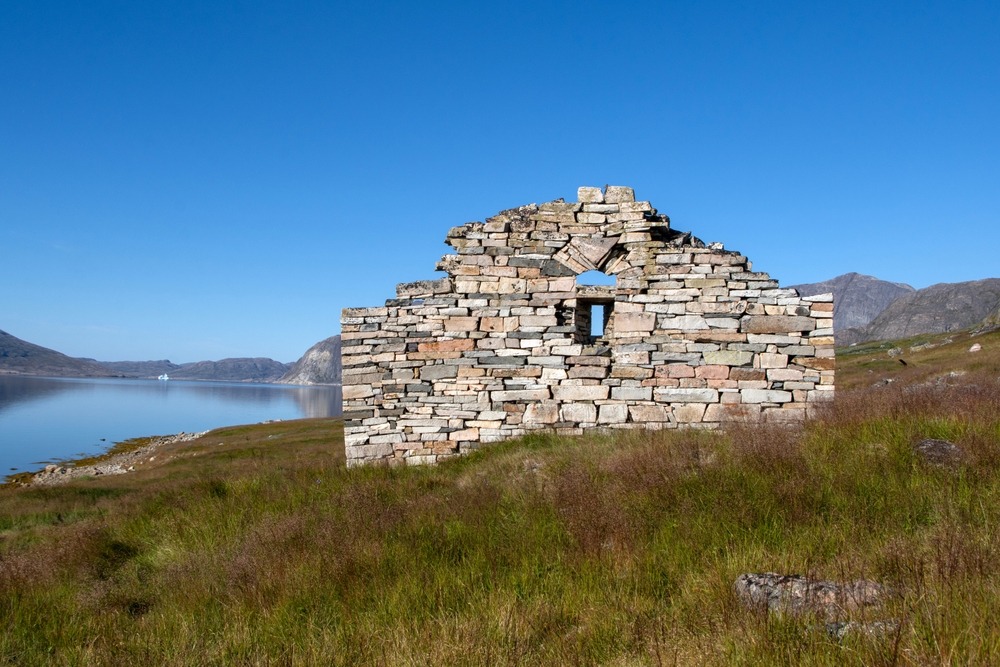
Near the modern town of Qaqortoq lie the ruins of Hvalsey Church, the best-preserved Norse structure in Greenland. Built of stone rather than turf, the church remains remarkably intact and stands as a powerful symbol of Norse permanence in the region.
Hvalsey is historically significant as the location of the last written record of the Norse Greenlanders — a wedding documented in 1408. Reaching the site by boat across dramatic fjords enhances the experience, with the church ruins appearing suddenly against the stark Arctic landscape.
Leif Eriksson: Exploration Remembered
Leif Eriksson, son of Erik the Red and widely regarded as the first European to reach North America, spent his youth in Brattahlíð. In Qassiarsuk, a monument commemorates Leif Eriksson’s legacy, linking the quiet farming settlement to one of history’s most significant voyages of exploration.
Additional markers throughout South Greenland honor the Norse explorers whose journeys across the North Atlantic reshaped global history centuries before Columbus.
Café Thorhildur: A Quaint Heart of Qassiarsuk
Café Thorhildur offers one of the most charming and memorable visitor experiences in South Greenland. Operated by local farmers, the café blends hospitality, heritage, and modern comfort in a relaxed setting overlooking the fjord.
Guests can enjoy hearty dishes made with local lamb, homemade soups, desserts, and ice cream, as well as regional beers and teas. The adjoining shop showcases Greenlandic crafts, including wool products, carvings, and artisan jewelry, making the café both a culinary stop and a cultural gathering place.
Café Thorhildur embodies the warmth of South Greenland hospitality, offering travelers a chance to connect with local life after exploring the surrounding Norse ruins.
Accommodation: Bed and Breakfasts, Hostels, and Farm Stays
Despite its remote setting, Kujataa offers a range of welcoming accommodations. Farm stays and bed and breakfasts in Qassiarsuk and Igaliku allow visitors to experience daily life on working sheep farms, often including home-cooked meals and personal storytelling from local hosts.
Simple hostels and cabins provide comfortable lodging for hikers and history enthusiasts, while nearby towns such as Qaqortoq and Narsarsuaq offer small hotels with additional amenities and easy access to boat tours and guided excursions.
Visitor Opportunities and Experiences
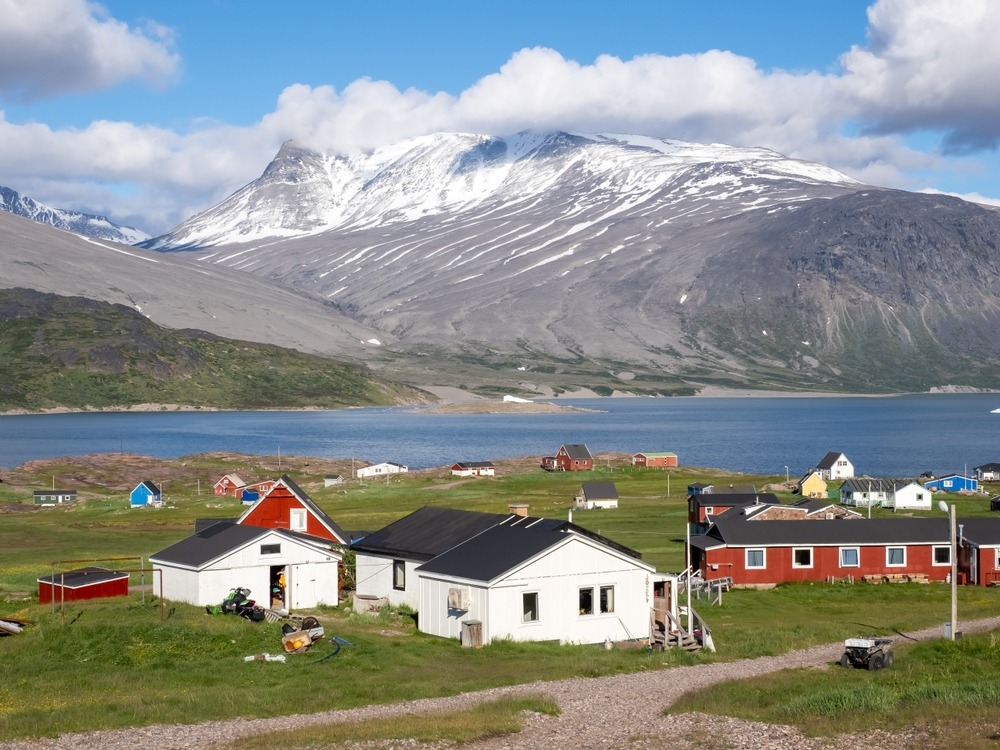
Kujataa is best experienced as a living landscape rather than an open-air museum. Visitors can hike between settlements, kayak through iceberg-filled fjords, join guided tours to Norse ruins, or participate in cultural evenings that combine storytelling with traditional food.
Photography, wildlife viewing, and quiet reflection are all part of the experience, with long summer days and golden Arctic light enhancing every visit.
A Living World Heritage Landscape
Kujataa and the surrounding settlements of Qassiarsuk, Sissarluttoq, Qaqortoq, and Hvalsey represent an extraordinary convergence of Norse exploration, Inuit adaptation, and enduring agricultural tradition. More than a collection of ruins, this UNESCO World Heritage site tells a deeply human story of settlement, survival, and continuity at the edge of the inhabitable world.
For travelers seeking history, culture, and authentic Arctic life, South Greenland offers an experience unlike anywhere else on Earth.