





These grand suites include a host of special features and services. Curl up in your lounge with a kindle e-book from your in-suite library and sip your favorite aperitif, personally delivered by your butler – all before enjoying an intimate dining experience, in the plush and private surroundings of your suite. Even from the comfort of your bedroom, you’ll never miss a photo opportunity – access the outside world through your drop-down balcony window, with the gentle touch of a button, and with your in-suite binoculars.
The Stone Lanterns of Kasuga Shrine: A Living River of Light in Nara
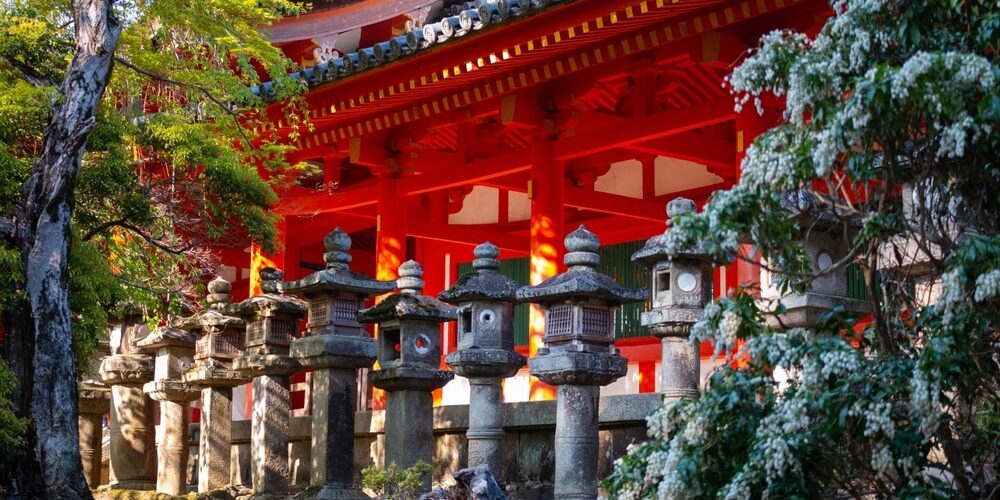
Walk the approach to Kasuga Taisha in Nara and you’ll notice something unusual: the path doesn’t simply lead to the shrine—it feels guided there by thousands of stone lanterns, many softened by moss and time. These lanterns are not decorative leftovers from the past. They are offerings, memorials, prayers made solid, and—on two nights each year—an ocean of flames that turns the shrine precinct into one of Japan’s most iconic sacred nightscapes.
Origin: Why Kasuga Taisha Became a Lantern Shrine
Kasuga Taisha was established in 768 CE as the tutelary shrine of the Fujiwara clan, one of the most powerful families in classical Japan. Over time, the shrine’s prestige and the devotion it inspired helped create a culture of gifting and dedication—where people expressed reverence by donating objects tied to ritual and protection. Lanterns became one of the most enduring forms of those offerings, eventually shaping the shrine’s identity so strongly that Kasuga is often described as Nara’s “lantern shrine.”
Kasuga’s traditions also root the shrine in sacred landscape: the deity Takemikazuchi is associated with arriving at Mt. Mikasa (the holy mountain behind the shrine) and taking residence there, reinforcing the sense that Kasuga is not just a set of buildings, but a sanctified environment where the boundary between worship space and nature is intentionally blurred.
What the Stone Lanterns Are and What They Represent
The stone lanterns lining Kasuga’s approach exist alongside the shrine’s many hanging bronze lanterns, and together they form one of the most recognizable devotional landscapes in Japan. The lanterns are widely understood as votive gifts—acts of devotion meant to honor the kami, express gratitude, ask for protection, or commemorate the dead. Many were dedicated across centuries by people from different levels of society, from elites to everyday worshippers, turning the collection into a kind of historical record written in stone and metal.
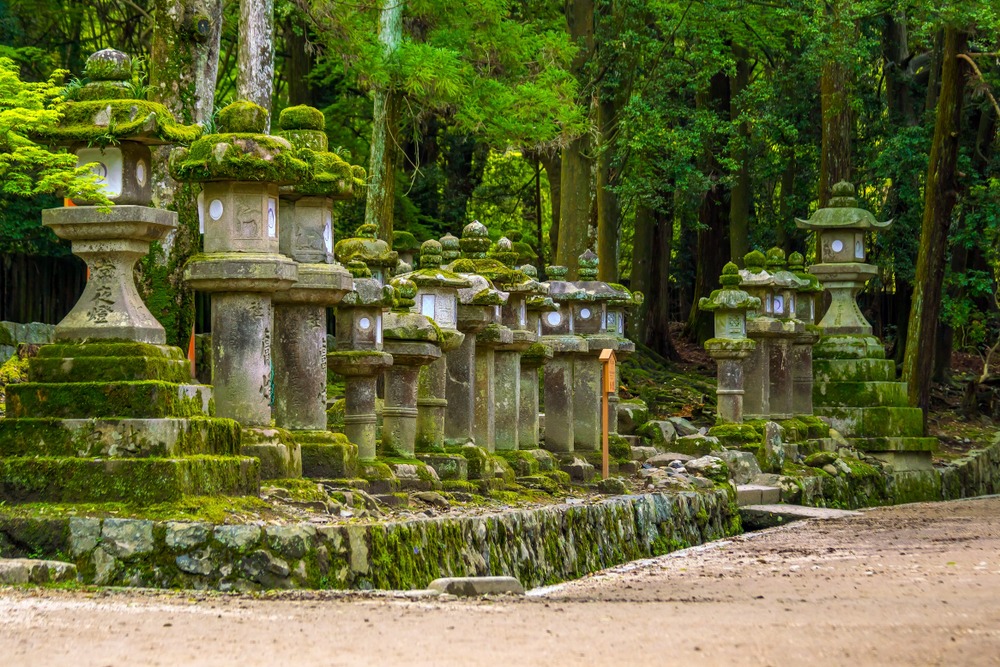
Part of what makes the stone lanterns so powerful visually is that they age in place. Moss, lichen, and weathering aren’t treated as flaws; they become part of the lanterns’ character, emphasizing continuity—new generations walking the same route, passing the same forms, under the same trees.
Notable Events That Define Their Impact
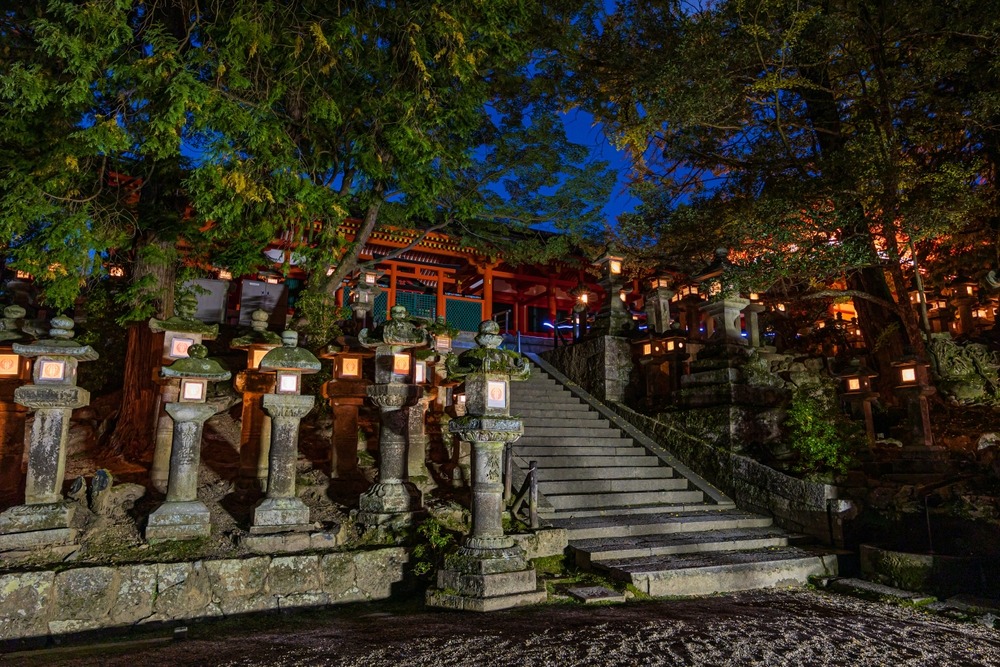
Kasuga Taisha’s lanterns are famous year-round, but their cultural impact peaks during the shrine’s two major lantern-lighting events, when the normally unlit stone and bronze lanterns are illuminated together. These nights transform the precinct into a rare fusion of ritual atmosphere and historical imagination, allowing visitors to experience the shrine in a way that feels closer to how sacred spaces were encountered before modern lighting.
Setsubun Mantōrō: Early February’s Lantern Night
Each year around Setsubun, commonly observed on February 3, Kasuga Taisha holds Setsubun Mantōrō, when roughly 3,000 lanterns are lit across the grounds. This includes the stone lanterns along the paths and the hanging lanterns in the shrine’s corridors. The effect is intentionally old-world: candlelight, shadow, and warm flicker create a solemn beauty that makes the walk toward the inner areas feel ceremonial, even for first-time visitors.
Chūgen Mantōrō: Obon Season, Mid-August (August 14–15)
In mid-August, Kasuga Taisha hosts Chūgen Mantōrō on August 14 and 15, aligning with the Obon season of honoring ancestors. More than 3,000 lanterns are illuminated across the shrine precinct, and the atmosphere is often complemented by traditional performances that reinforce the sense that this is both a devotional observance and a living cultural event. For many travelers, it becomes one of the most memorable ways to encounter Nara’s spiritual heritage after dark.
The Lanterns and Kasuga’s Place in History
Kasuga Taisha is part of the UNESCO World Heritage inscription known as the Historic Monuments of Ancient Nara. The lantern traditions strengthen the shrine’s significance because they show continuity of practice rather than simply preservation of structures. The lanterns are not a static museum display; they remain tied to a cycle of donation, care, seasonal ceremony, and community participation that continues into the present.
How the Lanterns Are Visited and Honored Today
Most visitors encounter Kasuga’s stone lanterns first along the approach through Nara Park, where the shrine’s forested setting and the presence of Nara’s deer reinforce the feeling that you are entering sacred space rather than simply walking toward a landmark. In daylight, the lanterns create rhythm and direction, marking your progress step by step toward the shrine precinct.
To honor the lantern culture respectfully, the most important approach is behavioral rather than technical: treat the lantern-lined paths as part of worship space, not just a photo corridor. During the lantern festivals, crowds can be dense and movement may be guided for safety and ritual flow, and certain areas may restrict photography to protect the atmosphere and keep the experience meaningful for worshippers.
For travelers who want to experience the lanterns at their fullest meaning, timing matters. Plan your tours to Japan in advance. On an ordinary day, the lanterns appear as enduring offerings—quiet, mossy, architectural, and timeless. During Setsubun Mantōrō or Chūgen Mantōrō, you see what those offerings were always meant to become: light, shared in the dark, turning an approach road into a ceremonial stream of flames that people have returned to for generations.