Hadrian’s Wall, Rome, and the Making of Britain and Scotland
A Frontier That Became a Historical Fault Line
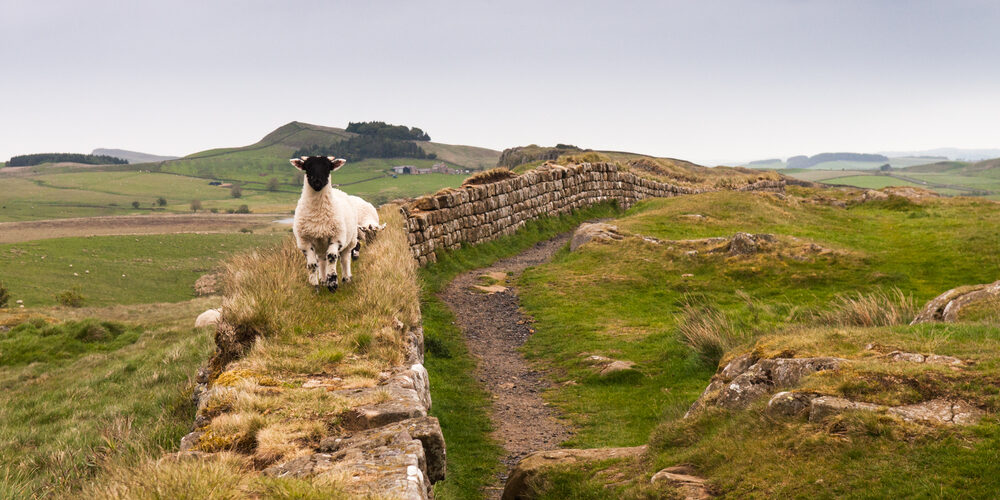
Hadrian’s Wall was more than a military barrier. Built on the orders of Emperor Hadrian beginning in AD 122, it stretched roughly 73 miles from the River Tyne to the Solway Firth and served as the northwestern frontier of Roman Britain for nearly three centuries. It marked not simply the edge of imperial administration, but the point where two very different historical paths began to harden: to the south, a land more deeply shaped by Roman government, roads, urbanization, trade, and law; to the north, a world where native power remained outside permanent Roman control and where societies later identified with the Picts continued to develop on their own terms.
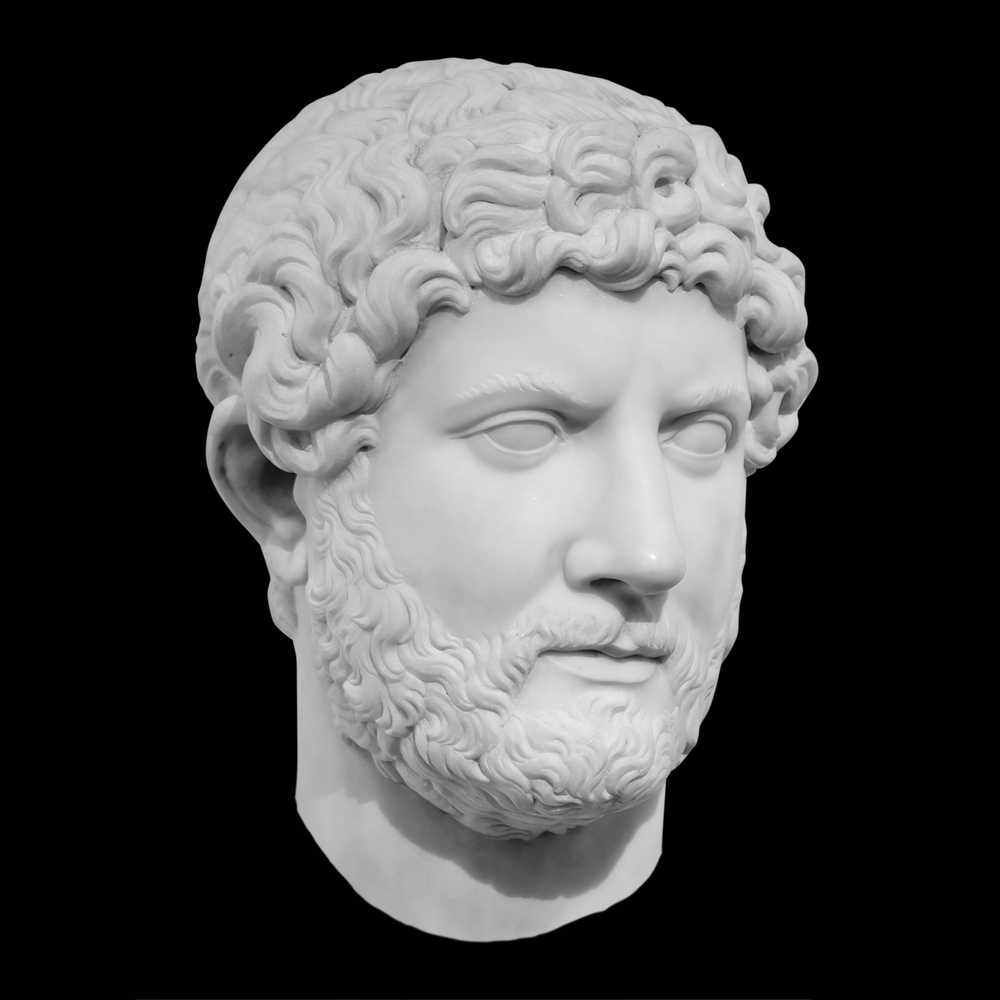
The importance of that line is difficult to overstate. Hadrian’s Wall did not create Scotland or England in any immediate modern sense, and it was never an eternal or impenetrable border. Yet it helped define a political and cultural contrast that would echo long after the Roman legions were gone. Rome could project force northward, invade, raid, and even briefly occupy parts of what is now Scotland, but it never converted most of northern Britain into a stable Roman province. That enduring difference mattered. South of the main frontier, local peoples were drawn into the institutions of empire; north of it, native polities preserved greater autonomy and developed political traditions less shaped by direct Roman rule.
Rome in Britain: Occupation as Transformation
Roman rule in Britain was not just about armies and forts. Across much of the south, it brought roads, taxation, military zones, market towns, villas, baths, imported goods, coinage, and a provincial administrative order tied to the wider Mediterranean world. Roman Britain became part of an imperial system that linked the island to continental Europe, North Africa, and the Near East. Even in frontier regions, soldiers and civilians from many parts of the empire mixed with local populations, traded goods, adopted customs, and introduced religious practices that fused Roman and local traditions.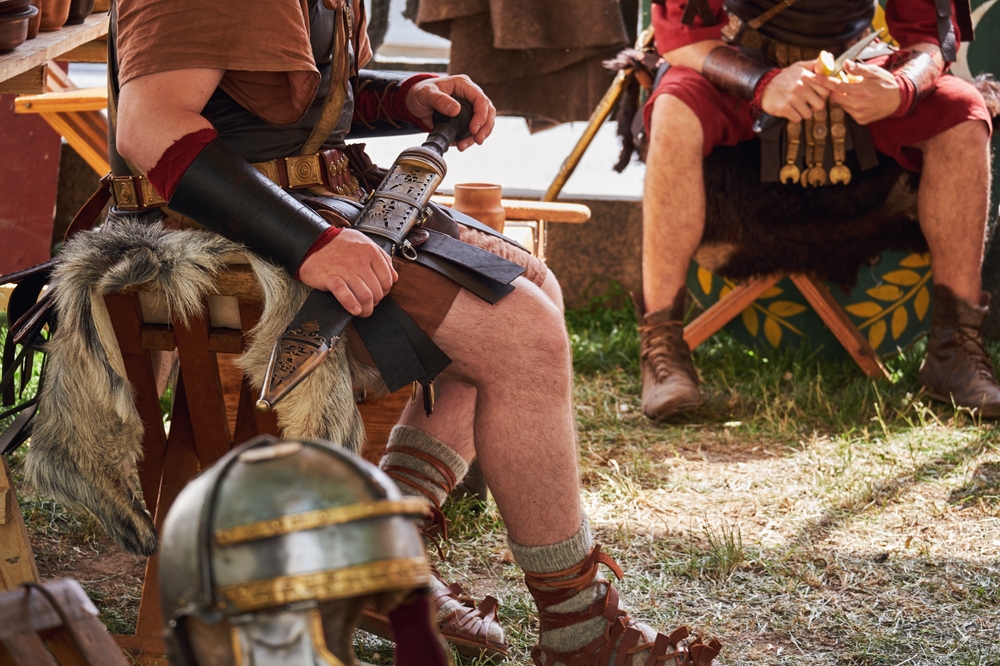
That transformation did not touch all of Britain equally. The farther north one moved, the more military and less urban Roman rule became. In the far north, Rome’s presence was dominated by forts, marching camps, roads, and supply systems rather than by dense civilian settlement. This matters because the Roman imprint south of the frontier was cumulative. Even after Rome’s eventual withdrawal, the memory and remains of Roman administration lingered in southern Britain in ways that they did not across most of northern Scotland. That imbalance helped shape later political evolution: the south inherited the debris of empire, while the north inherited the experience of resisting or outlasting it.
Hadrian’s Wall Was Never Just a Wall
It is easy to imagine Hadrian’s Wall as a simple defensive barricade meant only to keep northerners out. In reality, it was a sophisticated frontier system. It included forts, milecastles, turrets, roads, garrisons, gates, and customs-like points of control. It was designed not merely to stop movement but to manage it. Rome wanted surveillance, taxation, intelligence, and symbolic domination as much as defense. The wall announced where imperial order began and where the unconquered world started.
That symbolism mattered as much as the stone. Frontiers in the Roman world were statements of power. Hadrian’s Wall proclaimed that the empire was choosing to define, regulate, and monumentalize its northern edge. To the peoples beyond it, Rome was saying both “this far” and “we are here to stay.” Yet the very need for such a monumental frontier also revealed a limit. Rome was not effortlessly absorbing the whole island. It was drawing a line because complete and permanent domination of the north had proven elusive, expensive, and strategically debatable.
The Roman North and the Problem of Scotland
The Romans did not ignore Scotland. They campaigned there repeatedly. Rome attempted to conquer Scotland three times, but each occupation was relatively brief and each ended in withdrawal. The Roman story in Scotland is therefore not one of settled provincial success, but of invasion, pressure, and retreat. The empire could strike deep into the north, but holding it was another matter. Geography, logistics, local resistance, and shifting imperial priorities all worked against lasting conquest.
This is one of the central turning points in the history of the British Isles. Had Rome fully incorporated what is now Scotland, the later history of the island might have been radically different. Instead, most of the north remained outside long-term Roman administration. The result was not an empty wilderness beyond the frontier, but a landscape of native societies adapting, trading, fighting, and evolving beyond the direct structures of empire. In historical terms, Scotland was not “behind” Roman Britain; it was developing along a different path, one less urbanized in the Roman fashion but no less politically important.
The Antonine Advance and Rome’s Unfinished Northern Ambition
Hadrian’s Wall was not even Rome’s final northern line. In the years after AD 140, under Antoninus Pius, the empire pushed farther north and built the Antonine Wall between the Firth of Forth and the River Clyde. This more northerly frontier in central Scotland was both a military installation and a statement of imperial ambition. It served as a physical barrier, but also as a symbol of Rome’s desire to dominate and order lands farther into the north.
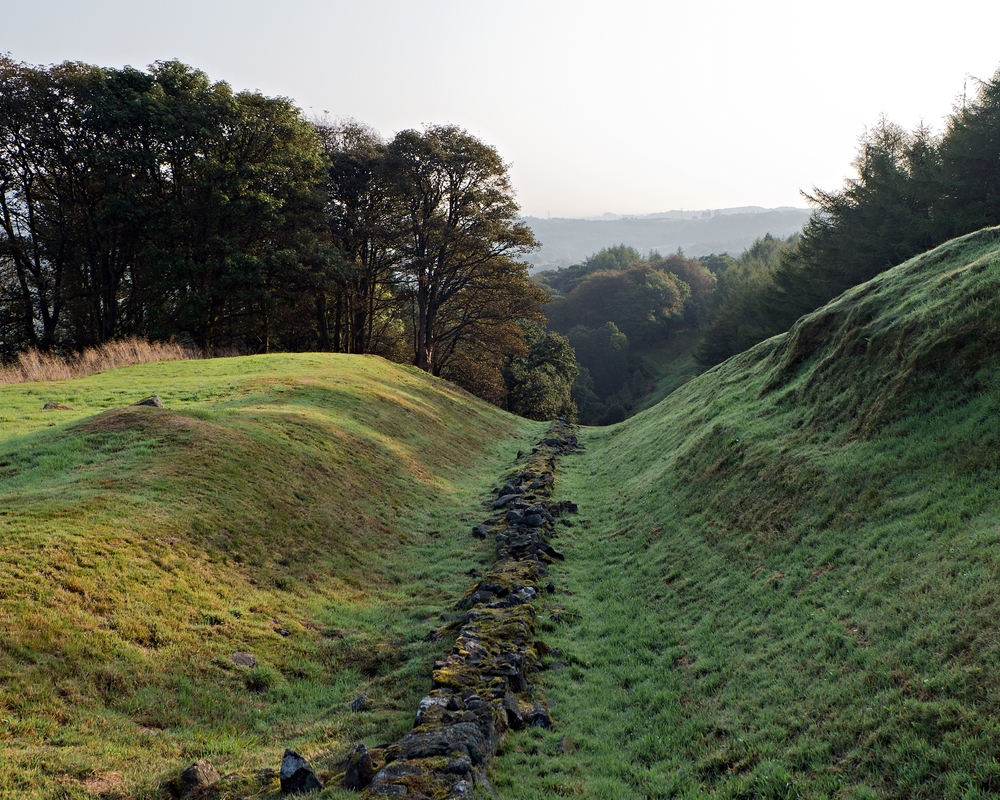
Yet the Antonine experiment did not last. The Romans eventually fell back again to Hadrian’s Wall. That retreat was historically revealing. It suggested that Scotland could be entered but not cheaply or permanently integrated on the same terms as the south. The repeated creation and abandonment of northern frontiers taught an important lesson to both rulers and subjects: the island was not naturally destined to become one Romanized political whole. The future distinction between the lands that became England and those that became Scotland was not invented in the Middle Ages out of nowhere. It had ancient roots in the different degrees of Roman success, settlement, and staying power.
North of the Frontier: The Picts and the Persistence of Native Power
The people later known as the Picts emerged in late Roman sources as northern groups beyond the frontier. Modern scholarship and archaeology increasingly stresses that they were not a bizarre civilization detached from Britain, but part of the native Brittonic world that had not been conquered by Rome in the same way as the south. The Picts went on to dominate northern and eastern Scotland until the late first millennium, and the Pictish kingdoms were fundamental to the creation of medieval Scotland.

This is crucial for understanding the later shape of Scotland. North of Rome’s durable frontier, political authority did not disappear. It remained local, martial, regional, and adaptive. The Picts developed kingdoms, elite centers, artistic traditions, and power structures that survived the Roman age and helped build the medieval kingdom that followed. Rather than being erased by empire, northern Britain preserved a native political trajectory. That continuity gave Scotland’s later formation a different foundation from that of the more Romanized south, where post-imperial society had to reorganize around the collapse of provincial Roman order.
South of the Wall: Rome’s Legacy Survived Its Collapse
When Roman authority in Britain weakened and finally ended in the early 5th century, the empire did not leave behind an untouched landscape. South of the frontier, it left roads, fortified towns, military habits, administrative memories, Christian communities, and a concept of territorial rule on a large scale. Even as Roman institutions decayed, the south had been reshaped by centuries of incorporation into a vast imperial network.
That legacy influenced what came next. In post-Roman Britain, the vacuum of imperial authority gave rise to fragmentation, warfare, and migration, including the growth of Anglo-Saxon power in the lands that would eventually become England. Early traditions even remembered British rulers seeking help against the Picts and Scots. Whether every detail of those traditions is reliable or not, the underlying reality is clear: after Rome, southern Britain became a contested post-imperial zone whose future was shaped by the ruins of Roman order and by new incoming powers.
After Rome, the Divide Grew Rather Than Faded
One might assume that once the Roman Empire left Britain, the meaning of Hadrian’s Wall disappeared with it. In fact, the opposite happened. The end of Rome made the old frontier more historically significant, not less. Roman Britain fragmented into successor societies, while northern Britain continued under non-Roman political traditions. Southeastern Scotland eventually came under the influence of Anglian Northumbria, while southwestern Scotland saw the persistence of the Brittonic kingdom of Strathclyde, and the north and east remained associated with Pictish power. Rather than dissolving into one shared post-Roman identity, Britain became a mosaic of rival peoples and kingdoms.
This patchwork is one of the keys to the future of the British Isles. The lands south of the old frontier were pulled into the making of Anglo-Saxon England. Much of the north was not. Scotland’s heartland would emerge not from a Roman provincial core, but from the fusion and contest of Pictish, Gaelic, Brittonic, and Norse worlds. That difference in political ancestry explains why the island would not become a single medieval kingdom by natural inheritance from Rome. Instead, separate centers of power evolved, and those centers would one day harden into separate kingdoms.
The Birth of Alba and the Deep Roots of Scotland
By the 9th century, the union of Picts and Scots under Kenneth I MacAlpin, traditionally dated to 843, became central to the rise of Alba, the kingdom that formed the historical core of medieval Scotland. Alba emerged from the union of the Picts and Scots and became one of the few parts of the British Isles able to withstand Viking pressure comparatively effectively. Its heartlands lay in what had been former Pictland.
That development was not born in a vacuum. It was made possible by the survival of powerful northern societies outside the deepest reach of Roman provincialization. The Pictish north had not been culturally erased or fully reorganized by Rome, and so it could become the backbone of a later kingdom. Scotland, in this sense, was not simply a northern extension of Roman Britain that matured later than England. It was the product of a different historical inheritance. Hadrian’s Wall, and Rome’s inability to turn the whole island into one enduring province, helped preserve the conditions in which that inheritance could survive.
Why Britain to the South Followed a Different Course
The lands south of the old frontier did not become “Britain” in the modern political sense overnight, but they did move along a different arc. There, Anglo-Saxon kingdoms expanded across terrain already transformed by Rome. Roman roads, ruined towns, and preexisting territorial frameworks shaped movement, strategy, and state formation. Over time, kingdoms such as Northumbria, Mercia, and Wessex emerged in a region whose political geography had been deeply altered by imperial occupation. The south was therefore post-Roman in a different way than the north: it was not merely outside Rome looking in, but inside Rome and then coping with its collapse.
This distinction helps explain why England and Scotland grew from different medieval foundations. England’s early kingdoms arose in a landscape saturated with Roman precedent and post-Roman migration. Scotland’s core arose from native northern kingdoms, especially Pictish and Gaelic ones, that had retained more continuity outside long-term Roman rule. The contrast was never absolute, since borderlands overlapped and peoples mixed, but it was still profound. The old frontier had become a historical gradient: the farther south, the stronger the Roman provincial legacy; the farther north, the stronger the survival of unconquered native traditions.
Hadrian’s Wall and the Making of Historical Memory
Hadrian’s Wall also endured as a symbol. Even when its military use faded, it remained a monumental reminder that Rome had drawn a line across the island and had recognized difference there. Later generations could look back on the wall not only as archaeology, but as proof that Britain’s internal divisions were ancient. It became part of the mental geography of the island: a marker of imperial reach, of resistance beyond empire, and of the limits of outside control in the north.
That symbolism has often been simplified in popular imagination, but the deeper truth is more interesting. Hadrian’s Wall did not permanently divide England from Scotland in a legal sense, and it was not the final border between later states. What it did do was preserve and dramatize a profound historical contrast. South of it, empire changed society from the inside. North of it, Rome never held power long enough to produce the same transformation. That unequal experience became one of the deep background conditions from which the separate histories of Scotland and the lands to its south emerged.
A Wall, a Failure of Conquest, and the Future of the Isles
Hadrian’s Wall mattered because it stood at the meeting point between conquest and limitation. It represented Rome’s greatest confidence in Britain and, at the same time, Rome’s admission that the whole island would not be remade on equal terms. South of the frontier, Roman occupation changed settlement, politics, economy, religion, and the framework of power. North of it, Pictish and other native societies preserved political autonomy and carried their own traditions into the early medieval world. When Rome fell, these differences did not vanish. They widened.
The future of the British Isles was therefore shaped not only by invasions and kings after Rome, but by the uneven reach of Rome itself. The wall, the failed permanent conquest of Scotland, the survival of Pictish power, the rise of Anglo-Saxon kingdoms in the south, and the eventual emergence of Alba all belong to one connected story. That story explains why the island developed more than one center of nationhood. In the long shadow of Hadrian’s Wall, the historical paths that became Scotland and England began to diverge in ways that would define Britain for centuries to come.
Today, travelers who tour Scotland and the British Isles can still walk the steps of the Roman soldiers who once held the walls for centuries.