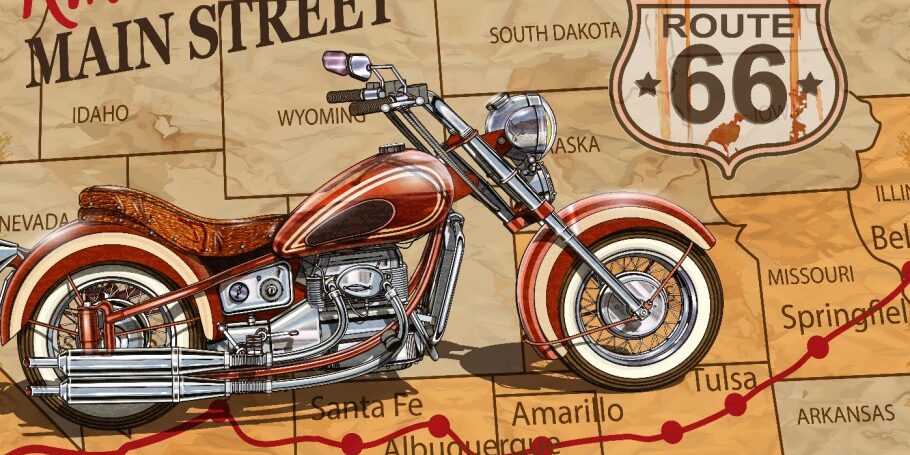
How Route 66 Was Built: The Early History of the Mother Road and the Local Materials That Paved It
Route 66 has long been celebrated as the Mother Road, but its earliest history is even more compelling than the legend that grew around it. Before it became a symbol of freedom, migration, roadside travel, and American reinvention, Route 66 was a practical transportation project shaped by local economies, regional road systems, and the hard realities of construction in the early automobile age. The highway was not created all at once as a single, uniform road. It was assembled from existing roads and then improved over time, which meant that its identity was national while its construction remained deeply local.
That tension between national purpose and local execution is one of the most important ways to understand the early years of Route 66. Officially designated in 1926, the highway connected Chicago to Los Angeles by weaving together a wide range of earlier alignments. Instead of cutting a brand-new road from end to end, planners relied on roads that already existed, then widened, paved, and improved them as funding, labor, and engineering capacity allowed. This gave Route 66 an immediacy that helped it become useful very quickly, but it also meant that the road varied dramatically from one state to the next and sometimes even from one county to the next.
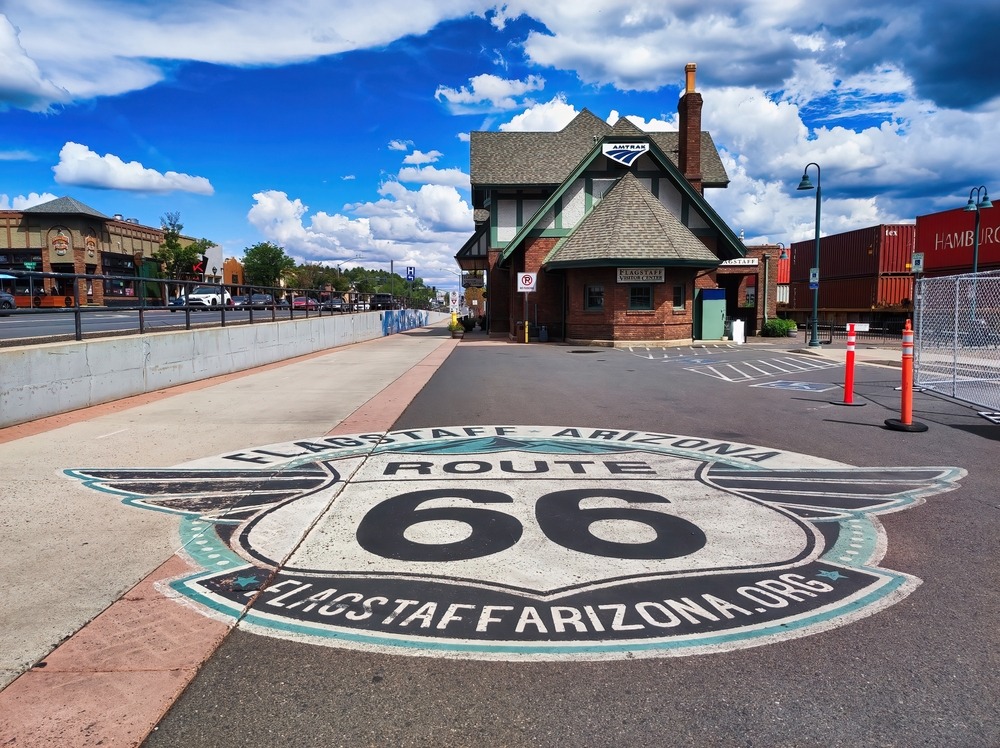
In those first years, Route 66 was an economic road as much as a travel road. It helped link farming regions, trading towns, and growing communities to larger commercial centers, especially Chicago. It offered truckers and motorists a more favorable transcontinental path than some northern routes, and over time it grew into one of the most heavily recognized highways in the United States. But the Route 66 of the late 1920s was still a road in transition. Some portions were already modern for their time, while others remained partly improved, rough, or unpaved. Its future fame was built on a landscape that was still under construction.
The Early Route 66 Was Not One Road, but Many
One of the most useful ways to rewrite the popular story of Route 66 is to move beyond the idea that it was ever a single, uniform highway. Early Route 66 was really a corridor of many surfaces, widths, construction eras, and engineering standards. In one stretch a traveler might find concrete pavement. In another, brick. Elsewhere, the road might be gravel, dirt, or an older alignment that had only been partly upgraded. That inconsistency was not a flaw in the story of Route 66. It was central to the story.
Because the highway drew from older local and state roads, it inherited the physical character of those roads. Some were built before modern traffic volumes had been imagined. Some had been designed for local travel rather than national through movement. Some had already been hard surfaced, while others awaited funds and labor for improvement. As a result, Route 66 did not emerge as a finished masterpiece. It matured through gradual revision. Curves were softened, lanes were widened, surfaces were strengthened, and dangerous or inefficient stretches were replaced over time.
This piecemeal development also reflected the realities of state and local finances. Not every portion of Route 66 improved at the same speed. Illinois moved quickly and had fully paved its portion early, while Kansas was known for concrete paving and Missouri and Oklahoma were still in varying stages of transition. Farther west, long stretches through Texas, New Mexico, Arizona, and California took longer to fully hard-surface. The complete paving of Route 66 from end to end did not arrive until 1938. That date matters because it marks the moment when the Mother Road truly became the dependable all-weather route Americans would later remember so vividly.
Brick Roads and the Physical Memory of Early Route 66
Among the most striking surviving reminders of early Route 66 are its brick road segments. These remnants matter because they preserve a road-building culture that predates the standardized highway era. Brick paving was once seen as a respectable and durable solution, especially in places where the raw materials and manufacturing facilities existed nearby. Unlike later pavement, brick visibly preserves the labor of its making. It reveals the hand-set, carefully aligned, intensely local character of early road construction.
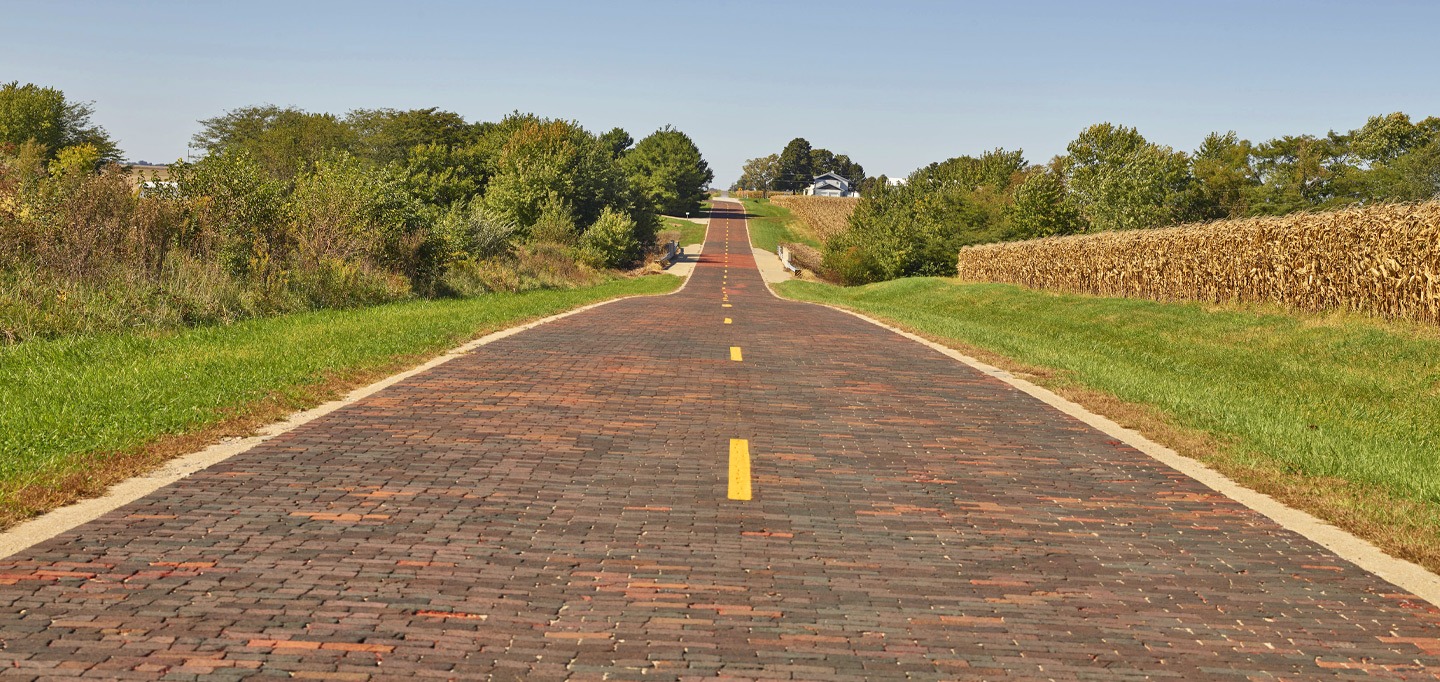
The brick section near Auburn, Illinois, is one of the best known examples. Built in 1921 before Route 66 was officially designated, it later became part of the famous highway when the new route was organized in 1926. That surviving stretch offers a rare glimpse into what early motorists experienced on a hard-surfaced road in the years when the nation was still learning how to build for automobiles at scale. The road was laid with a prepared base and then surfaced by hand with brick, creating a durable roadway whose texture remains unmistakable today.
Brick mattered not merely because it was sturdy, but because it was part of a transitional era in American road building. It stood between older local-road traditions and the more industrial paving systems that would later dominate long-distance highways. As traffic grew heavier and speeds increased, brick became less practical for many major routes than concrete and asphalt. Yet where brick survives along Route 66, it preserves a chapter of the Mother Road that is often more revealing than later improvements. It shows the highway before it became streamlined, before the road was standardized, and before its surface became less tied to the specific industries of the towns through which it passed.
Concrete, Width, Engineering, and a Highway in Transition
Concrete gradually became one of the defining materials of Route 66 as the road developed into a more reliable long-distance corridor. Its growing use reflected changes in traffic, engineering, and public expectation. As more automobiles and trucks used the highway, road builders needed surfaces that could endure heavier loads and extend over longer distances with greater consistency. Concrete helped answer that need, but the early concrete of Route 66 was far from standardized by modern expectations.
Some historic concrete stretches were remarkably narrow. Others show earlier practices in grading, slab design, or jointing. Some were later overlaid with asphalt, while others were patched or widened as the needs of the road changed. These surviving segments are valuable because they show that Route 66 was constantly being revised. It was not simply built and left alone. It was maintained, improved, corrected, and reimagined as traffic patterns evolved and engineering standards advanced.
The story of these surfaces makes Route 66 more interesting, not less. It reveals the highway as a living piece of infrastructure rather than a static monument. The old road changed because the nation around it changed. Vehicle numbers rose. Freight became heavier. Tourism expanded. Safety expectations improved. Communities wanted straighter alignments, smoother surfaces, and roadbeds that could withstand new demands. Each improvement left behind evidence of an earlier stage, and those layers are part of what make the history of Route 66 so physically rich.

How Local Materials Helped Pave Route 66
One of the most important and often overlooked parts of early Route 66 history is the way paving materials were sourced. In the 1920s and 1930s, the construction of a major road was still strongly tied to the landscape around it. Heavy materials were expensive to move long distances, and that reality made local sourcing a practical necessity. The history of Route 66 pavement is therefore also a history of local clay, local sand, local gravel, local crushed stone, and local labor.
This was especially true where brick paving was involved. Brick roads required access to clay suitable for firing, a manufacturing facility capable of producing paving brick, bedding materials such as sand, and a workforce able to lay the surface carefully by hand. In places where local brick plants already existed, brick could become a logical paving choice. That means old brick stretches of Route 66 are more than remnants of an old road. They are evidence of local industry literally built into the highway.
Davenport, Oklahoma, offers one of the clearest examples of that local relationship. There, bricks used on the roadway came from the Davenport Brick and Tile Company, a hometown manufacturer. That detail is significant because it shows how a Route 66 community could contribute materially to the road that passed through it. The town was not merely adjacent to the highway. Its own industrial production helped shape the highway’s surface. This is one of the clearest illustrations of how Route 66 was often built from the ground up with what local communities could provide.
Concrete worked in a different way but followed the same local logic. Concrete depends heavily on aggregate such as sand, gravel, and crushed stone, and these materials make up most of its bulk. Because aggregate is so heavy, transportation costs strongly favored nearby sources whenever possible. That means a concrete stretch of Route 66 often reflected regional geology and supply networks even if the finished road looked modern and uniform. Beneath the surface, the Mother Road often carried the material character of the places through which it ran.
This local sourcing helps explain why Route 66 improved unevenly. Communities and highway agencies did not all have equal access to raw materials, money, contractors, or labor. Some places could pave sooner because they had stronger industry or better financing. Others had to wait. The road’s development was therefore shaped not just by national designation, but by the ability of local regions to produce or obtain what was needed to transform a route into a dependable highway.
The Local Labor Behind the Mother Road
The same local reality applied to labor. Brick paving required handwork. Concrete paving required grading, forming, pouring, finishing, and curing. None of this happened abstractly. It took place in towns and counties, on alignments where crews worked directly with the materials at hand. Even when broader state and federal programs later supplied funds or work-relief manpower, the road still had to be built by people on site. Route 66 was planned through institutions, but it was physically made by workers in the communities it served.

The Great Depression brought a major turning point in this process. Work-relief programs helped accelerate road construction and improvement, allowing Route 66 to move closer to full end-to-end pavement. So influential was the highway to the Great Depression era that its nickname “Mother Road” was coined in John Steinbeck’s The Grapes of Wrath. By 1938, the route was finally paved from Chicago to Los Angeles. That completion strengthened the road’s role not only in ordinary travel, but in freight movement, migration, and eventually wartime transportation. The Mother Road was becoming more than a patchwork route. It was becoming a dependable national corridor.
Why Route 66 Became More Than a Highway
Route 66 became legendary because it served practical needs so well. It carried commerce, migration, freight, and military movement. It linked small towns to larger markets and offered motorists a route that felt both useful and accessible. During the Dust Bowl years and into World War II, it gained an emotional and historical importance that far exceeded its engineering origins. But those origins still matter because they explain why the road felt so grounded in the places it crossed.
The mythology of Route 66 often emphasizes freedom, motion, and adventure, and those themes are essential to its identity. Yet beneath that mythology was a road built from local decisions and local materials. Brick plants, gravel pits, quarries, cement supply chains, road crews, county engineers, and town-level improvements all contributed to the highway’s physical form. What later became a national icon began as an accumulation of practical acts of building.
That is why the surviving pavement of Route 66 remains so meaningful. A brick road segment or old concrete alignment is not only a nostalgic attraction. It is a physical record of how Americans built infrastructure during the early automobile era. It preserves evidence of the materials used, the workmanship required, and the conditions under which the road evolved. These pieces of old pavement tell a story that maps and legends alone cannot fully convey.
The Lasting Legacy of How Route 66 Was Built
To understand Route 66 history, it is not enough to see the road only as a cultural symbol. It must also be understood as a construction story. The Mother Road was assembled from older roads, improved over time, and physically shaped by what local communities could supply. Its brick stretches show the influence of local manufacturing. Its concrete sections reveal the importance of nearby aggregate and evolving highway design. Its completion reflects the interplay of state planning, federal support, and regional labor.
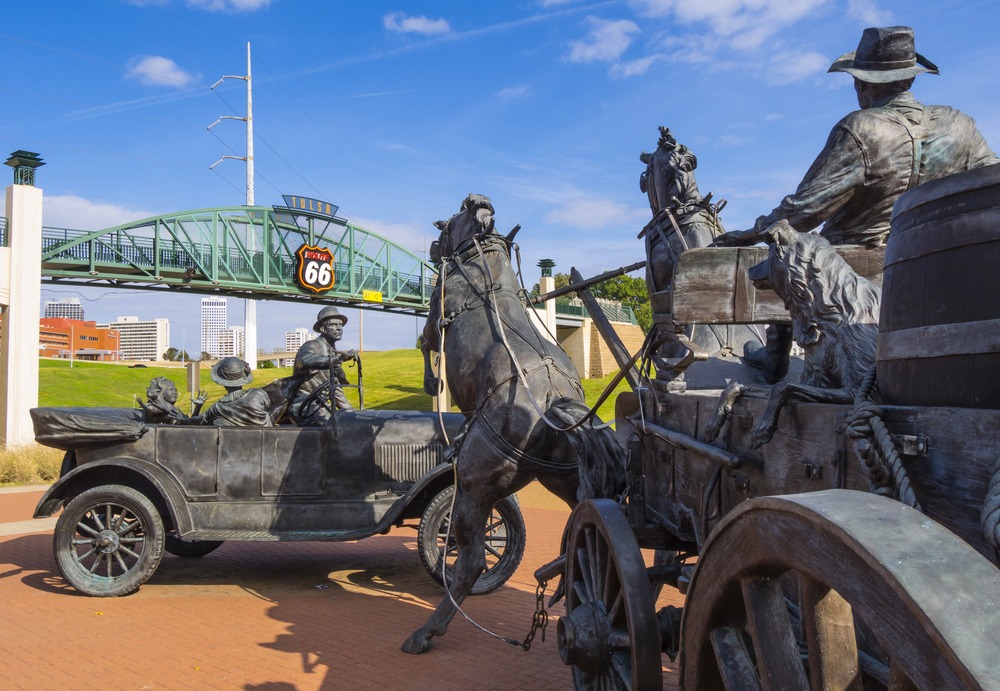
In the end, one of the most original and revealing ways to tell the story of Route 66 is to begin beneath the tires. The road became famous for where it led, but it was equally defined by what it was made of and by who made it. Route 66 endures because it was both national and local at once. It crossed the country, but it was built by communities, with community materials, in community landscapes. That combination gave the Mother Road its durability, its character, and its lasting place in American history.