Rhine Wine Country River Cruises: Germany’s Vineyard Landscape Along the River of Castles
The Rhine River has always been more than a waterway. For centuries it has served as Germany’s cultural backbone, linking Alpine foothills to the North Sea while shaping language, architecture, cuisine, and most famously, wine. Long before modern tourism, monasteries, merchants, and noble estates cultivated vines along its slopes, discovering that the steep riverbanks created a natural greenhouse where grapes could ripen despite northern latitudes.
Today, a Rhine River cruise passes through one of the most distinctive wine environments in the world — a landscape where vineyards climb dramatic hillsides beneath medieval castles and half-timbered towns. Unlike Mediterranean wine regions defined by sun and heat, the Rhine Valley is defined by balance. Here, sunlight reflects off the water, stone terraces store warmth overnight, and cool air preserves acidity. The result is a wine culture centered on elegance rather than power.
Cruising the Rhine therefore becomes a journey through how geography solves climate challenges. Each bend of the river introduces a different growing condition, and each region produces wines with a clearly recognizable personality.
Why the Rhine Produces Unique Wines
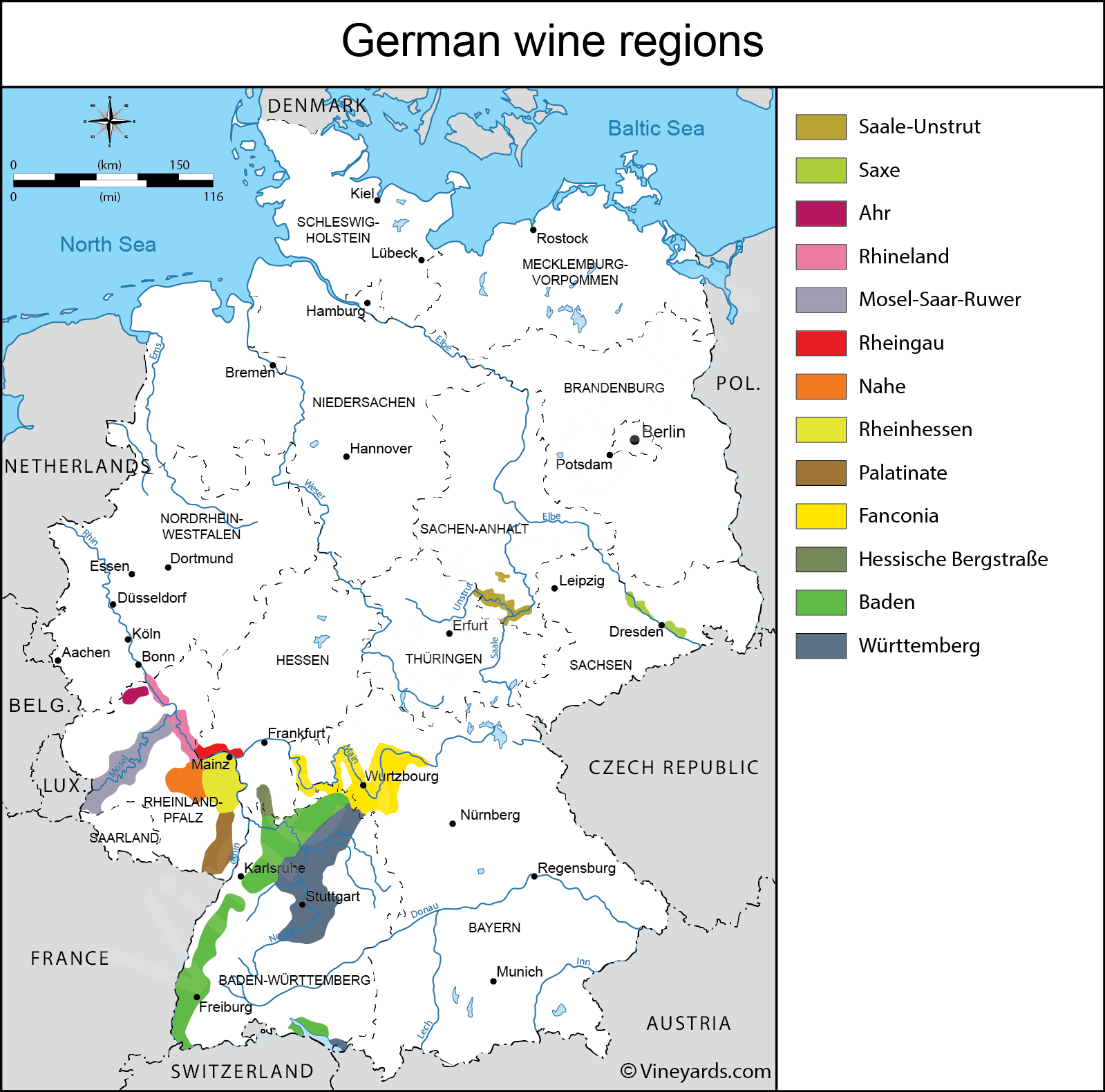
Germany sits near the northern edge of viable grape growing. On flat land, grapes would struggle to ripen consistently. The Rhine Valley compensates through natural engineering. Steep south-facing slopes maximize sun exposure, while the river moderates temperature by reflecting light and storing warmth. Slate and mineral-rich soils absorb daytime heat and release it at night, extending the ripening season.
Because grapes mature slowly, they retain acidity while developing delicate aromatics. Instead of heavy tannins and high alcohol, Rhine wines emphasize clarity, fragrance, and precision. This balance made them historically prized among European royal courts, where refinement mattered more than intensity.
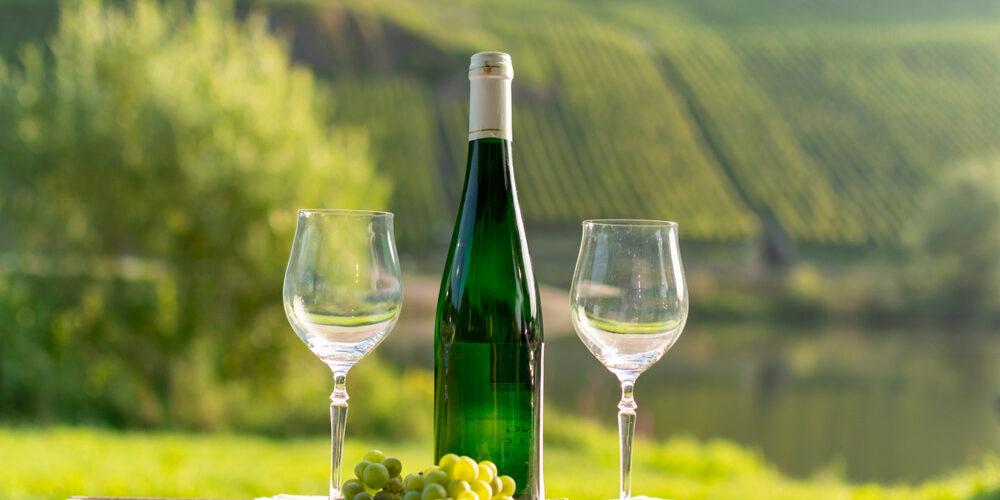
Travelers quickly notice a defining visual characteristic: vineyards rarely spread across flat plains. They cling vertically to mountainsides, forming terraces that required centuries of manual construction. The difficulty of cultivation directly contributes to the finesse of the wines.
Rheingau: The Birthplace of Structured Riesling
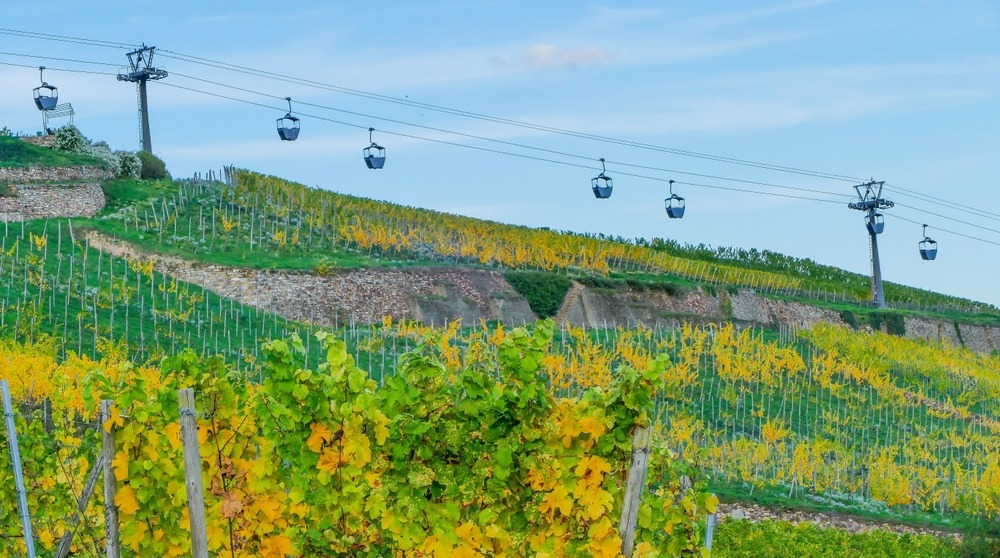
West of Frankfurt, the Rhine briefly flows westward before turning north. This geographic shift creates one of Germany’s most ideal vineyard orientations. South-facing slopes capture prolonged sunlight while the Taunus Mountains shield the vines from cold winds.
The Rheingau became one of the earliest regions to formally identify grape varieties and harvesting styles. Riesling dominates here, producing wines with remarkable structure and longevity. These wines combine bright acidity with flavors of green apple, citrus, stone fruit, and mineral notes that often resemble wet stone after rain.
Historically, monasteries cultivated many of these vineyards, documenting harvest conditions and refining production methods. Their influence shaped European winemaking practices and established Germany’s reputation for precision viticulture.
For river cruisers, the Rheingau introduces the intellectual side of German wine — where classification, vineyard mapping, and careful ripening decisions define quality.
Mittelrhein: Vineyards Beneath the Castles
The Middle Rhine Valley presents perhaps the most iconic scenery of the cruise. Here the river narrows dramatically, cutting through slate mountains crowned with castles and fortified towns. The terrain is so steep that mechanical farming is nearly impossible; vines must be maintained by hand.
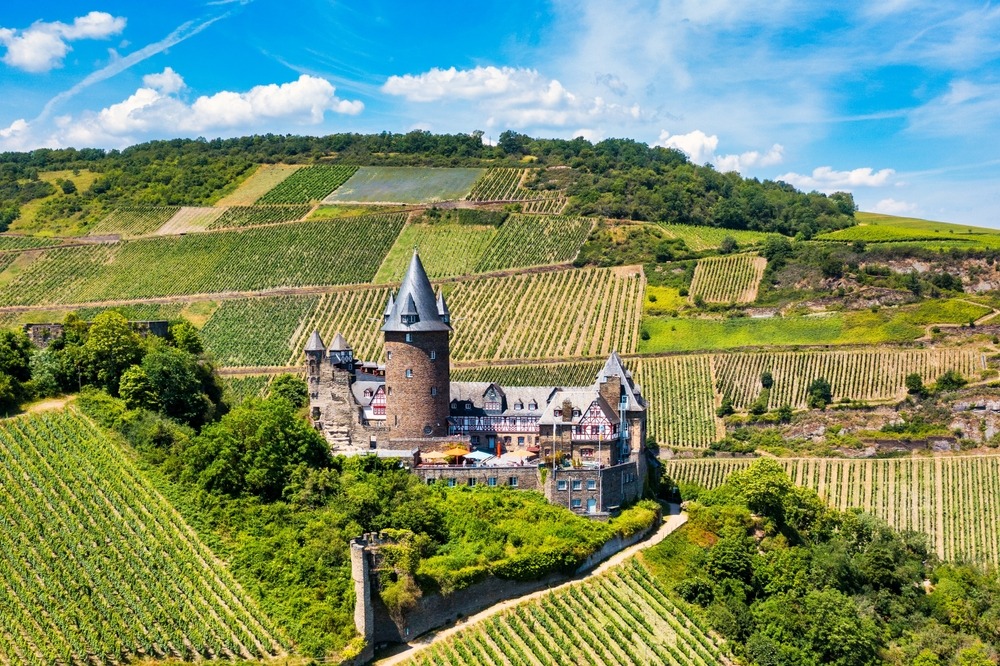
These slate soils create intensely aromatic wines. Riesling from this region tends to be lighter in body but sharper in expression, emphasizing floral notes, citrus peel, and pronounced minerality. The wines mirror the dramatic landscape — precise, energetic, and vivid.
Because the valley’s slopes vary greatly in sun exposure, even neighboring vineyards produce noticeably different profiles. The result is a patchwork of microclimates, each contributing to the Rhine’s reputation for terroir-driven wine.
Traveling by ship allows a rare perspective: guests view vineyards exactly as growers designed them centuries ago — aligned with the river’s curves to maximize sunlight.
Moselle Confluence: Extreme Slopes and Delicate Wines
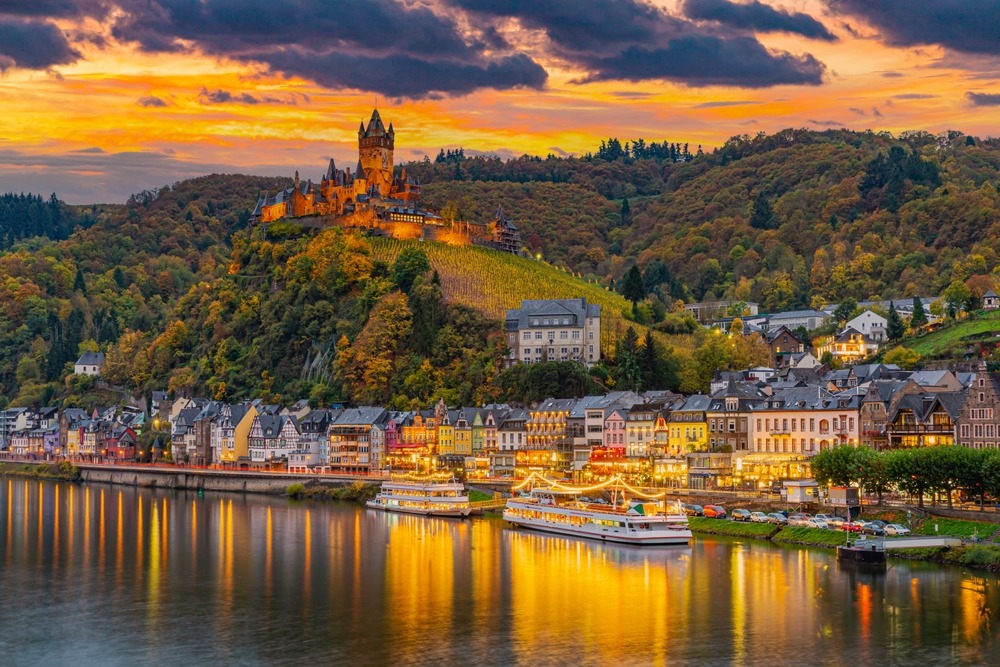
Where the Moselle meets the Rhine in Koblenz, the viticultural character becomes even more distinctive. The Moselle Valley contains some of the steepest vineyards on Earth, often planted on blue and grey slate. These slopes capture light efficiently while retaining cool nighttime temperatures.
The wines here are among the most delicate produced anywhere. Lower alcohol levels, vibrant acidity, and aromatic purity define the style. Instead of weight, they deliver precision — flavors of lime, white peach, and floral perfume layered over mineral depth.
Historically, these wines became favorites of aristocratic Europe because they paired effortlessly with food and remained refreshing even after long meals. The balance between sweetness and acidity allowed them to age gracefully for decades.
Cruise itineraries that explore the Rhine and Moselle together reveal how subtle changes in latitude and geology create entirely new expressions of the same grape.
Pfalz and Rheinhessen Influence: Warmer Expressions
Further south along connected Rhine regions, the climate grows warmer and more sheltered. Here, wines develop fuller fruit character while maintaining Germany’s hallmark freshness. Alongside Riesling, additional varieties such as Silvaner, Müller-Thurgau, and Pinot family grapes appear more frequently.
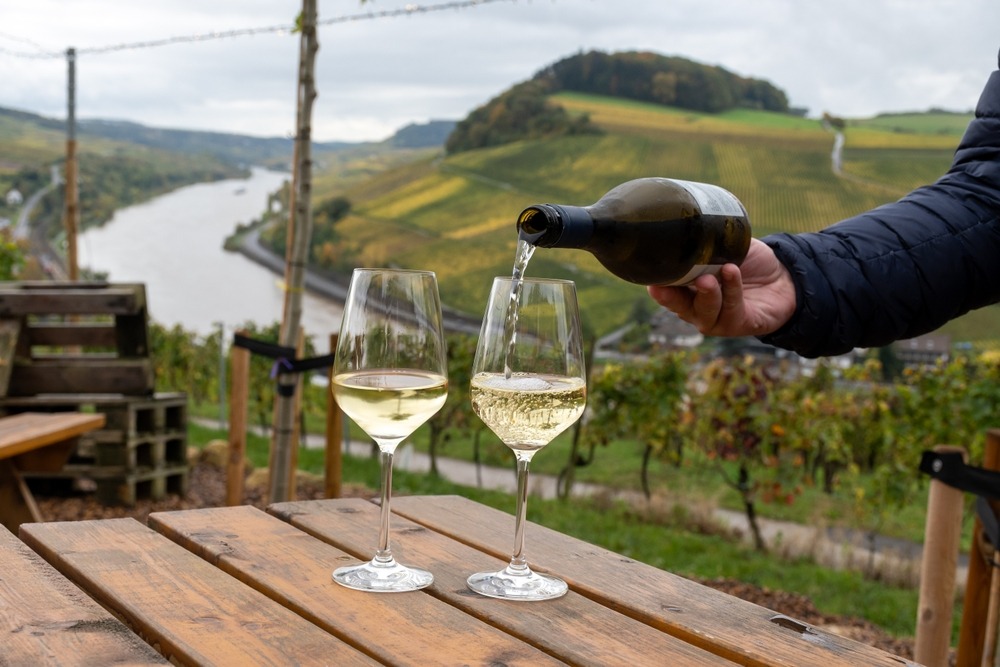
These areas historically supplied everyday table wines to local populations and travelers along the river trade routes. Their approachable style demonstrates another dimension of German wine culture — not only prestigious cellar bottles but also versatile wines meant for daily enjoyment.
On a cruise, guests experience the transition from delicate northern expressions to rounder southern profiles, reflecting gradual climatic change along the river corridor.
The Role of Tradition in German Wine
German wine culture places exceptional importance on ripeness levels at harvest. Instead of focusing primarily on grape variety, classification often depends on how mature the grapes are when picked. This system developed because climate variation strongly influences each vintage.
As a result, wines range from dry and crisp to gently sweet while maintaining natural acidity. Sweetness in these wines is not heaviness but balance — acidity prevents them from feeling dense, making them especially food-friendly.
River towns celebrate this heritage through festivals, seasonal markets, and vineyard taverns where wines are served alongside regional cuisine. The experience emphasizes harmony between agriculture and daily life rather than luxury alone.
Experiencing the Rhine by River Cruise
A road journey visits destinations individually. A river journey connects them historically. The Rhine functioned as Europe’s commercial highway for centuries, and vineyards developed precisely because transport was possible. Sailing this route recreates that historical movement.
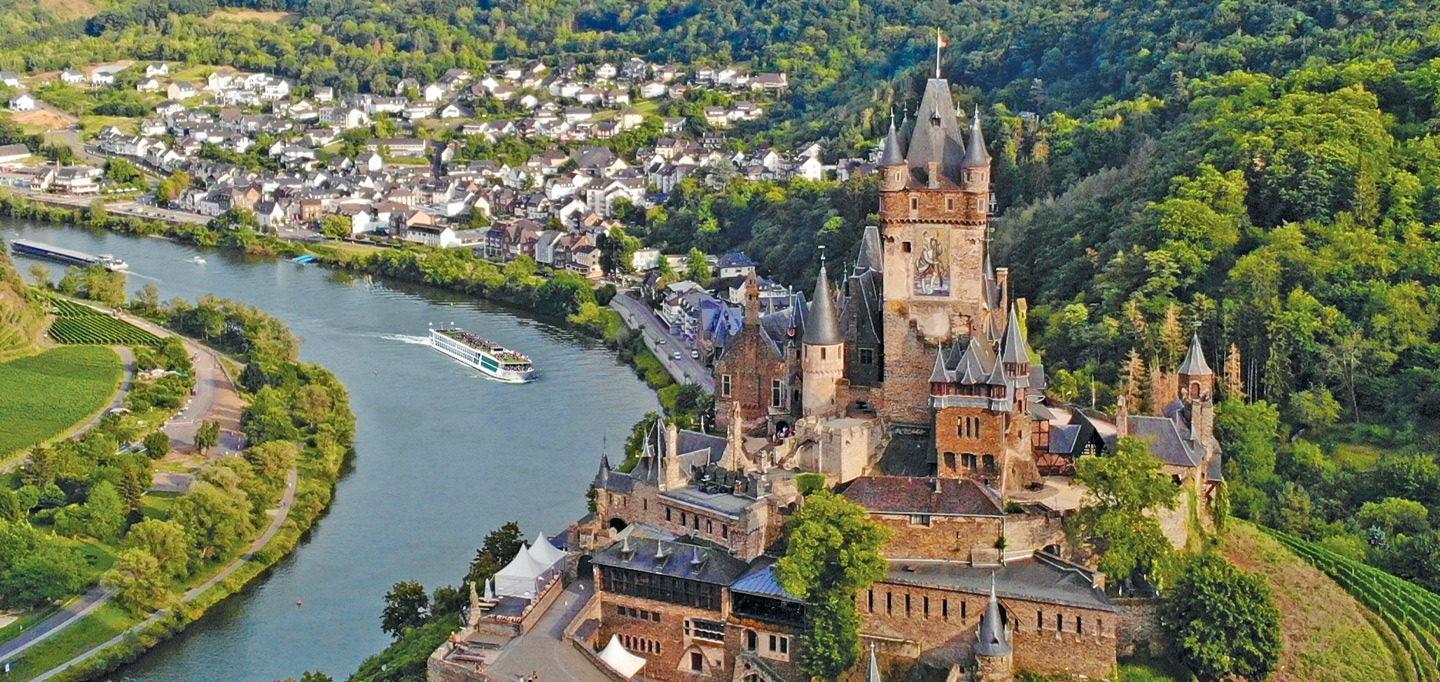
Each day presents a different expression of the same grape shaped by geology, slope orientation, and climate. Travelers begin to recognize patterns: steeper slate slopes yield sharper minerality, sheltered valleys produce softer fruit, and wider sections of river allow fuller ripening.
Rather than isolated tastings, the cruise becomes a gradual education in how environment influences flavor.
Wine, Culture, and Landscape United
German Rhine wine regions demonstrate that great wine is not only about climate but adaptation. Farmers engineered terraces, studied sunlight angles, and classified harvest ripeness to succeed in a marginal growing environment. Their efforts created wines defined by balance, longevity, and elegance.
The surrounding towns reflect this same philosophy — practical yet beautiful, shaped by trade but rooted in tradition. Half-timbered houses, castle ruins, and riverside markets all developed alongside viticulture, forming a cohesive cultural landscape.
Why the Rhine Offers Some of the World’s Great Wine Cruises
The Rhine offers something rare in travel: visible cause and effect. Guests see why vineyards exist where they do and taste the result immediately afterward. Geography explains flavor in real time.
From structured Rheingau Rieslings to the delicate wines near the Moselle and the warmer southern expressions, the river presents a continuous narrative of European winemaking evolution.
For travelers sailing Rhine itineraries, the journey becomes more than sightseeing. It becomes an understanding of how people transformed challenging terrain into one of the most refined wine cultures in the world — a tradition still alive along every bend of the river.