The 13 Main Galápagos Islands: How Their Differences Helped Shape Darwin’s Thinking on the Origin of Species
The Galápagos are often spoken of as though they are a single place, but one of the most important truths about the archipelago is that no two major islands are truly alike. Some are young, black, raw, and volcanically active. Others are old, eroded, flatter, and more ecologically weathered by time. Some rise high enough to catch garúa, the cool season mist that nourishes humid uplands, while others remain low, dry, and austere for most of the year. Some stand beside nutrient-rich western upwellings, where cold currents feed penguins, cormorants, sea lions, and whales, while others are better known for seabird cliffs, cactus zones, or isolated reptile populations. Those differences in age, elevation, moisture, soils, and ocean exposure are exactly what make the Galápagos such an extraordinary natural laboratory.
For Charles Darwin, the islands were not merely beautiful or strange. They were revealing. After the voyage of the Beagle, he learned that mockingbirds collected on different islands were not just varieties but distinct island-associated species. That realization, along with the pattern of related island finches and the broader geographic relationship between Galápagos life and South American life, became part of the evidence that pushed him away from the idea of fixed, separately created species and toward descent with modification. In other words, the Galápagos Islands mattered because similarity and difference appeared together: the islands’ animals were clearly related, yet each island’s environment seemed to nudge life in a different direction.
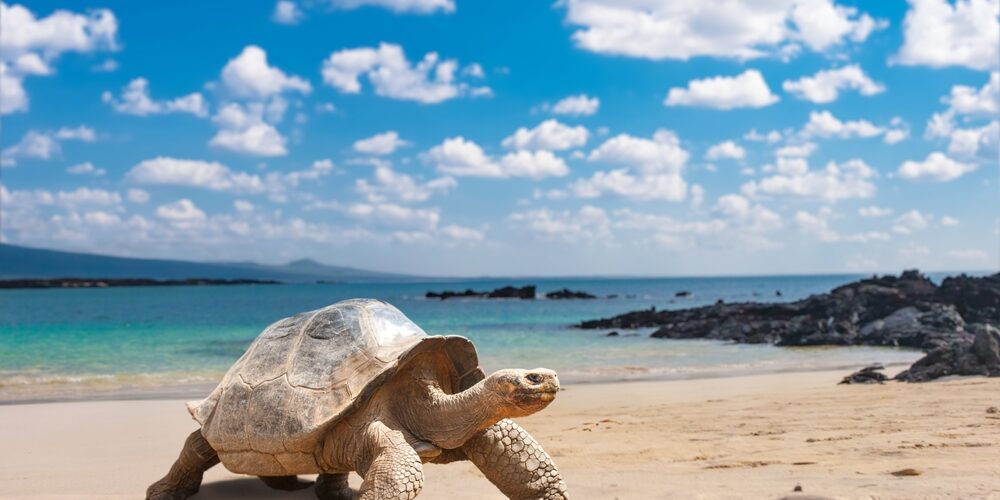
That is why the Galápagos remain so important to discussions of evolution. They show how isolation does not simply preserve life; it reshapes it. A tortoise on one island, a mockingbird on another, a finch on a third, or an iguana adapted to different vegetation, terrain, and water availability all point toward the same grand idea: species are not static. They respond to place, to pressure, to food, to climate, and to time. To understand that, it helps to look closely at the islands themselves, because each one tells a slightly different biological story.
Isabela Island
Isabela is by far the largest island in the archipelago, a massive seahorse-shaped landform created by the merger of six shield volcanoes: Ecuador, Wolf, Darwin, Alcedo, Sierra Negra, and Cerro Azul. It is one of the youngest and most volcanically active major islands, with lava fields that are still geologically fresh enough in many places to disrupt the usual Galápagos pattern of vegetation zones. Its sheer scale gives it enormous ecological variety, from black coastal lava and mangroves to volcanic slopes, high calderas, and isolated tortoise habitats associated with individual volcanoes.
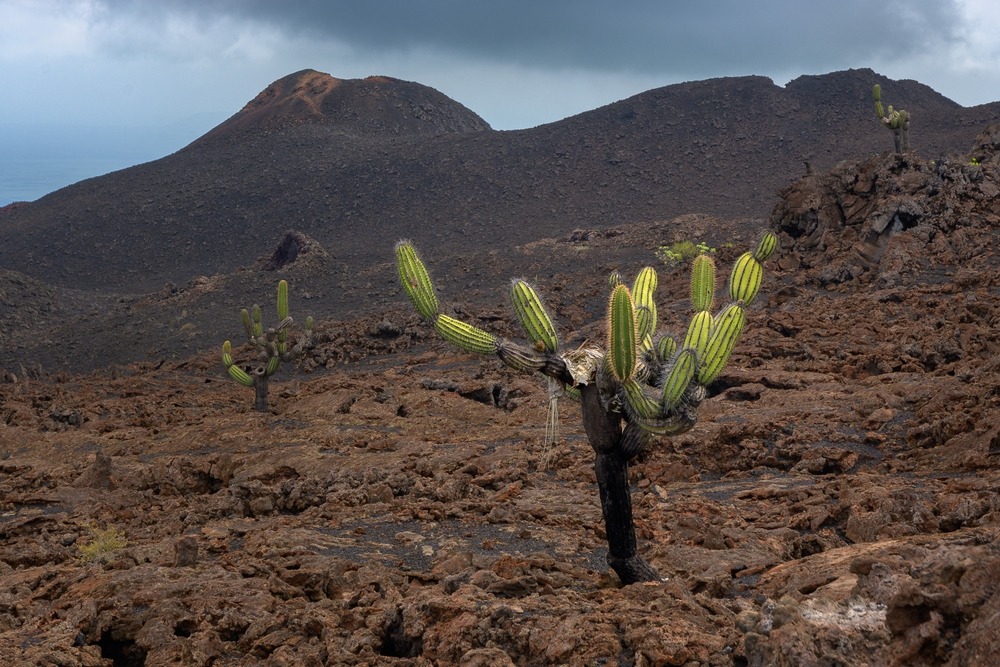
Its micro-climate is unusually complex. Parts of Isabela remain stark and dry because young lava has not yet developed rich soils, while the highest volcanoes rise above the cloud layer, creating arid upper zones even where one might expect cooler, wetter conditions. On the western side, however, the Cromwell Current wells up from below, bringing cold, nutrient-rich water that transforms the surrounding sea into one of the richest feeding grounds in the archipelago.
Because of that combination of landform and oceanography, Isabela supports one of the broadest wildlife assemblages in Galápagos. It is especially associated with giant tortoises, including distinct populations tied to different volcanoes, and with marine life concentrated along the west coast. Galápagos penguins, flightless cormorants, marine iguanas, flamingos, land iguanas, Darwin’s finches, and even numerous whale species are all part of Isabela’s ecological identity, making it less a single habitat than a whole archipelago in miniature.
Santa Cruz Island
Santa Cruz, the second-largest island, occupies a central geographic and practical position in the archipelago. Volcanic activity there ceased long ago, and that greater geological age has allowed the island to develop more mature soils and clearer transitions between ecological zones than many younger islands. Santa Cruz is therefore one of the best places to understand the vertical layering of Galápagos habitats, from coastal aridity to greener interior uplands.
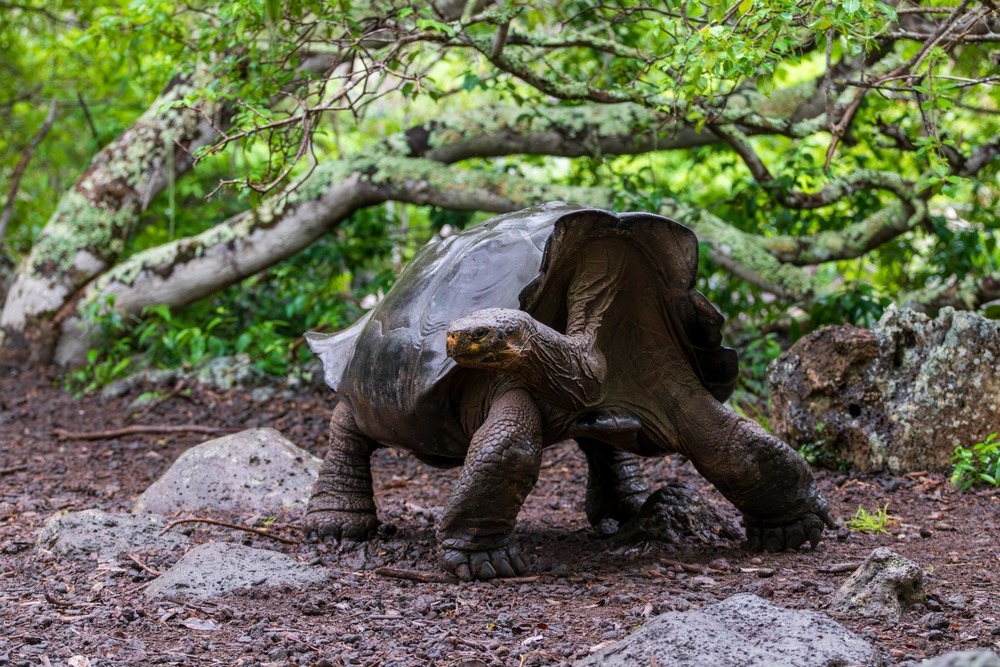
Its micro-climate is shaped by altitude more than by extreme volcanic youth. Because visitors can travel from the coast up into the humid highlands, Santa Cruz offers one of the clearest demonstrations of how mist and elevation alter Galápagos ecology. Low areas remain dry and cactus-dotted, while the interior supports more agriculture, denser vegetation, and the kinds of moisture-dependent environments that are rare on smaller, lower islands.
Santa Cruz is best known today for giant tortoises, for the Charles Darwin Research Station, and for serving as the human and scientific heart of the islands. Yet biologically it matters because it brings together wild tortoise country, lava tubes, coastal marine iguanas, seabirds, and a highland environment shaped by garúa and settlement. It is one of the islands where the contrast between natural adaptation and human modification is most visible.
Fernandina Island
Fernandina is the youngest major island in the Galápagos and the most volcanically active, a place where geological creation still feels immediate rather than remote. The island is dominated by La Cumbre Volcano, whose eruptions and caldera changes have repeatedly altered the landscape in historical time. Unlike the more settled islands, Fernandina remains essentially pristine, with no permanent human population and no introduced mammals recorded on the larger island.
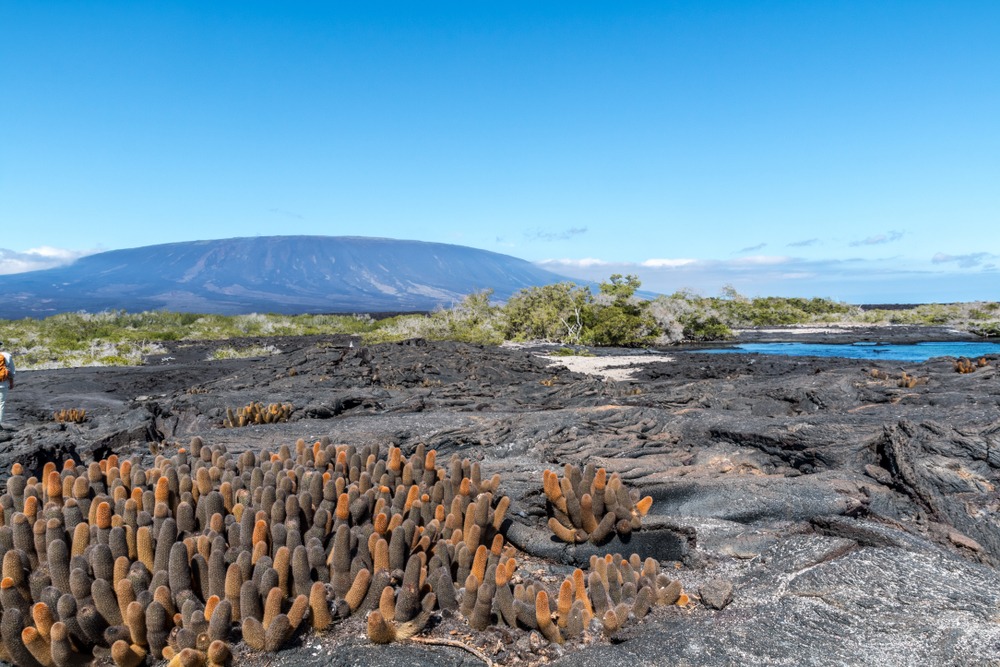
Its micro-climate is strongly defined by the cold upwelling waters of the western archipelago. Those waters cool the surrounding environment and create exceptionally productive marine conditions. On land, the surfaces are young, black, and sparse, favoring pioneering species such as lava cactus; at sea, the cold water makes Fernandina one of the best habitats in the islands for species that depend on abundant marine food.
Fernandina is especially associated with marine iguanas, flightless cormorants, Galápagos penguins, sea lions, lava cactus, and nesting land iguanas. Few places in the world show so clearly the meeting point of eruptive geology and adaptive wildlife. The animals that dominate Fernandina are not merely surviving on a harsh island; they are specialized for it, and that specialization is exactly the sort of pattern that made the Galápagos so important to evolutionary thought.
Santiago Island
Santiago is a large uninhabited island with a complex human and ecological history. Darwin visited it in 1835, and the island later endured long periods of exploitation, invasive mammals, and environmental damage before major restoration efforts began reversing some of those changes. It combines broad lava surfaces, dry lowlands, and more elevated interior country, making it one of the more varied islands in the central archipelago.
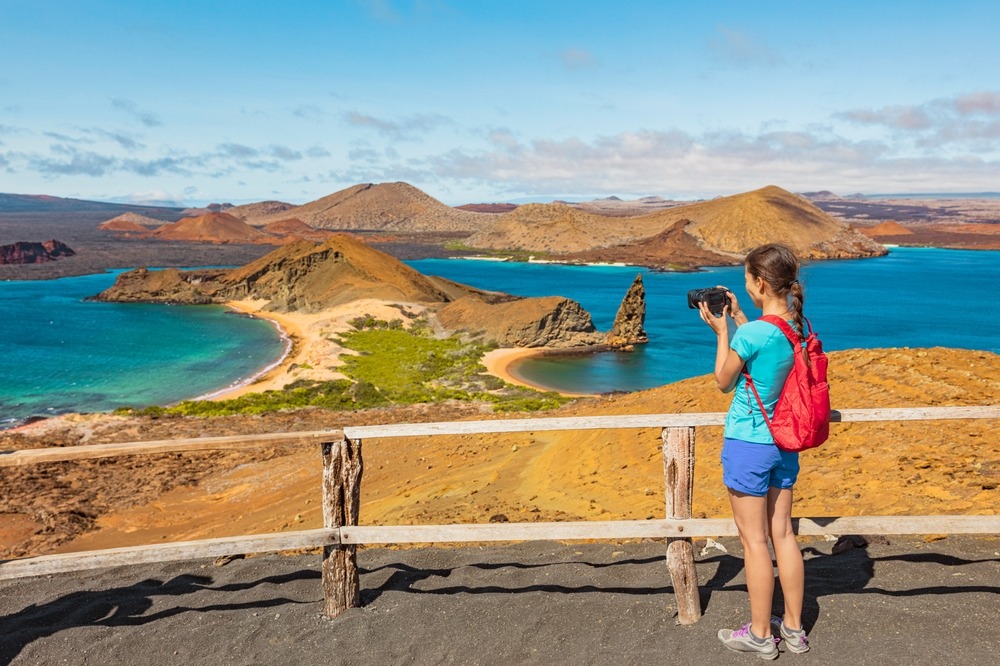
Its micro-climate is transitional rather than extreme. Santiago is not as oceanically cold and productive as the far western islands, nor as uniformly low and dry as some of the smaller northern islands. Instead, it presents a mosaic of arid coastal zones and somewhat more vegetated inland areas, though invasive species historically altered those communities dramatically by converting woodlands and damaging native nesting habitats.
Today Santiago is especially noted for Galápagos fur seals at Puerto Egas, marine shorelife, recovering native vegetation, and the legacy of tortoise restoration. Historically Darwin also recorded land iguanas there, though that population later disappeared. In ecological terms, Santiago is a story of both natural selection and ecological recovery: an island where native systems were badly disrupted, yet the underlying Galápagos character has proved resilient when destructive pressures were removed.
San Cristóbal Island
San Cristóbal is the easternmost major island and the one where Darwin first went ashore in 1835. It is formed from several fused extinct volcanoes and has long played an outsized role in human settlement because it contains El Junco, the only permanent freshwater lake in the archipelago. That alone makes it ecologically and historically distinctive.
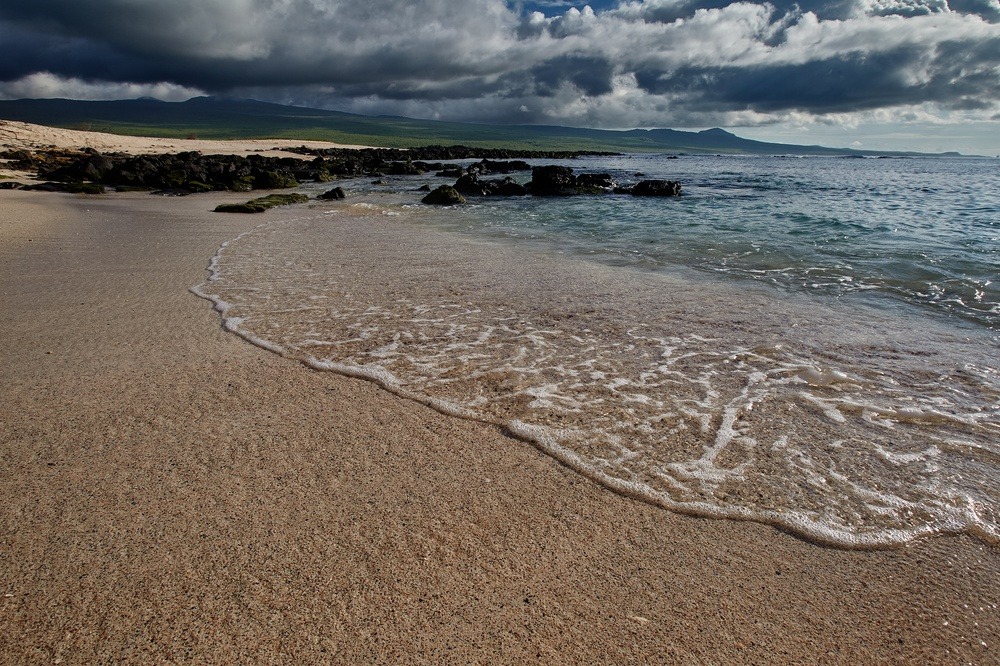
Its micro-climate reflects both its age and its elevation. The coasts remain dry in the classic Galápagos manner, but the higher interior is wetter and more agriculturally useful than many islands because dependable moisture has long been available. This is one reason San Cristóbal became an early center of settlement, farming, and administration.
The island is especially associated with sea lions, coastal birdlife, highland freshwater ecology, and a strong overlap between human life and native biodiversity. Its modern fishing fleet, airport, and capital city make it one of the least isolated of the large islands, yet it still retains the ecological contrasts that mattered so much to Darwin: one environment at the shore, another inland, and species distributions shaped by that divide.
Floreana Island
Floreana is much smaller than the first five islands, yet it is one of the most famous because its ecological story is inseparable from its human story. It was the first island colonized by Ecuadorians, site of the famous post office barrel, and later the scene of settlement failures, agricultural experiments, and the well-known disappearances of the 1930s. That long human presence altered Floreana more deeply than almost any other island.
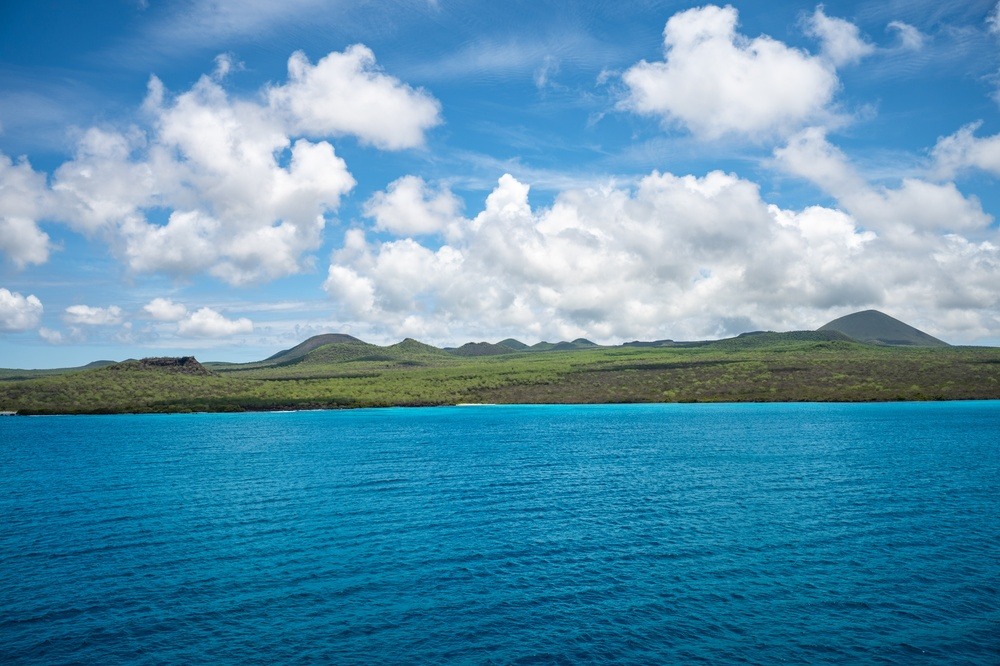
Its micro-climate is precarious. Floreana depends heavily on rain-fed freshwater storage, and drought can become a serious problem for residents. At the same time, local variation creates specialized habitats such as brackish lagoons, plant-rich highland zones, and beaches where turtles nest. This means Floreana can feel ecologically richer than its size might suggest, but also more fragile.
Floreana is especially known for flamingos in brackish lagoons, green sea turtles, Galápagos petrels in the highlands, and above all the Floreana mockingbird, now extinct on the main island and surviving only on nearby satellite islets. That last fact carries enormous symbolic weight. Darwin’s mockingbirds helped sharpen his thinking about speciation, and on Floreana one of those emblematic birds became a conservation warning: island specialization can produce uniqueness, but it can also produce vulnerability.
Marchena Island
Marchena is the largest of the northern islands and remains closed to regular tourism, which has helped preserve its relative isolation. It is volcanic, dry, and little disturbed by direct human settlement, though like many Galápagos islands it is not entirely free from conservation concerns. A recorded eruption in 1991 underscored that Marchena, though not usually grouped with the most dramatic western volcanoes, is still geologically alive.
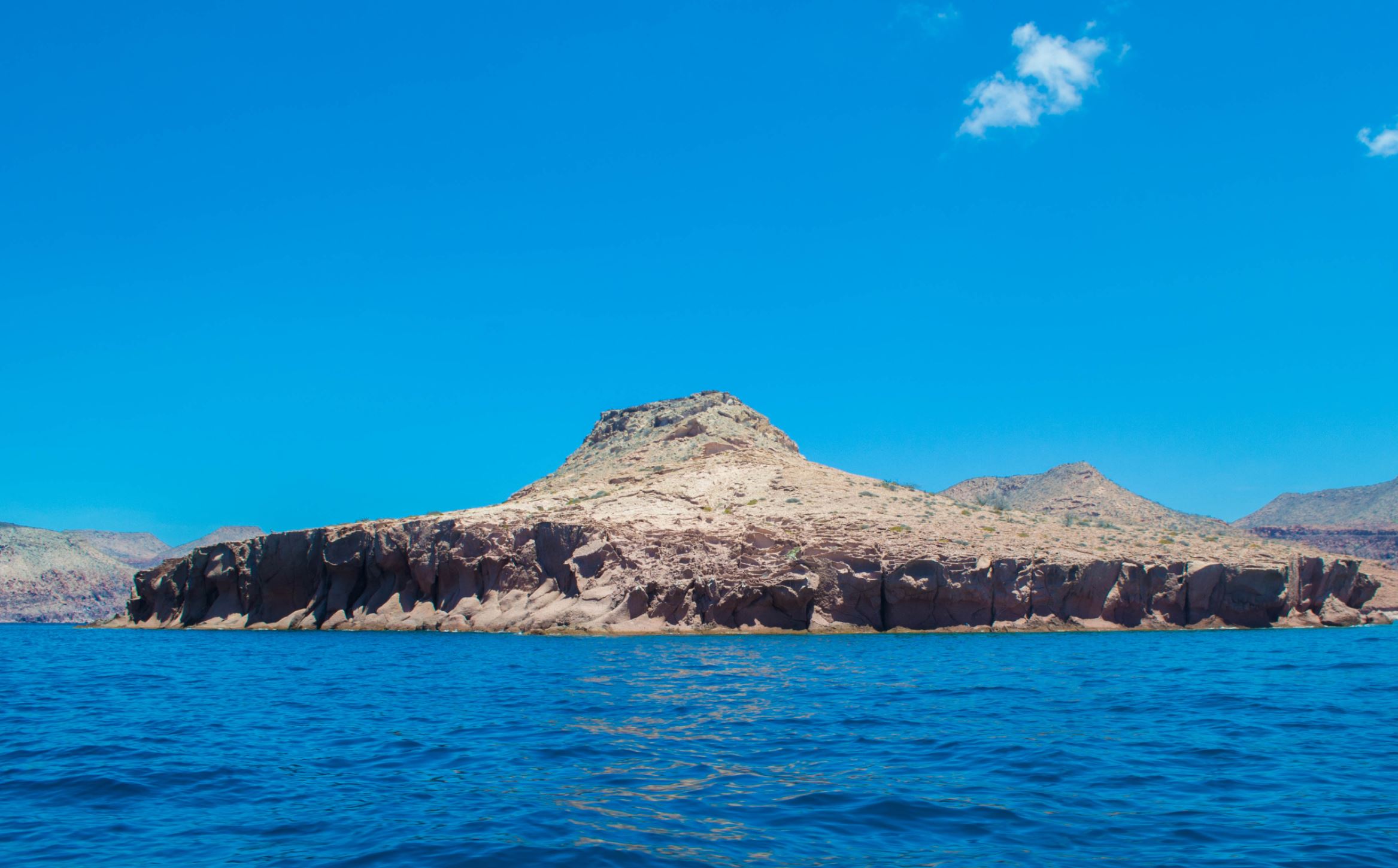
Its micro-climate is characteristically northern and relatively dry, lacking the high humid zones that define some larger islands. The landscape is therefore harsher and less vertically varied, with coastal grottos, sparse vegetation, and strong marine influence. That environmental simplicity helps certain specialist species stand out more sharply.
Marchena is best known for the endemic Marchena lava lizard, for fur seals along its grottos and coves, and for rich surrounding waters. Rather than overwhelming visitors with habitat transitions, Marchena expresses the more austere side of the archipelago: sparse land, strong endemism, and wildlife that depends as much on the sea as on the island itself.
Española Island
Española is one of the oldest islands in the archipelago and the southernmost of the major islands. Because it has been exposed to erosion for millions of years, it is relatively flat and low compared with younger volcanic giants. Its geology tells a story opposite to Fernandina’s: not of active creation, but of long weathering, thinning soils, and landscape aging.
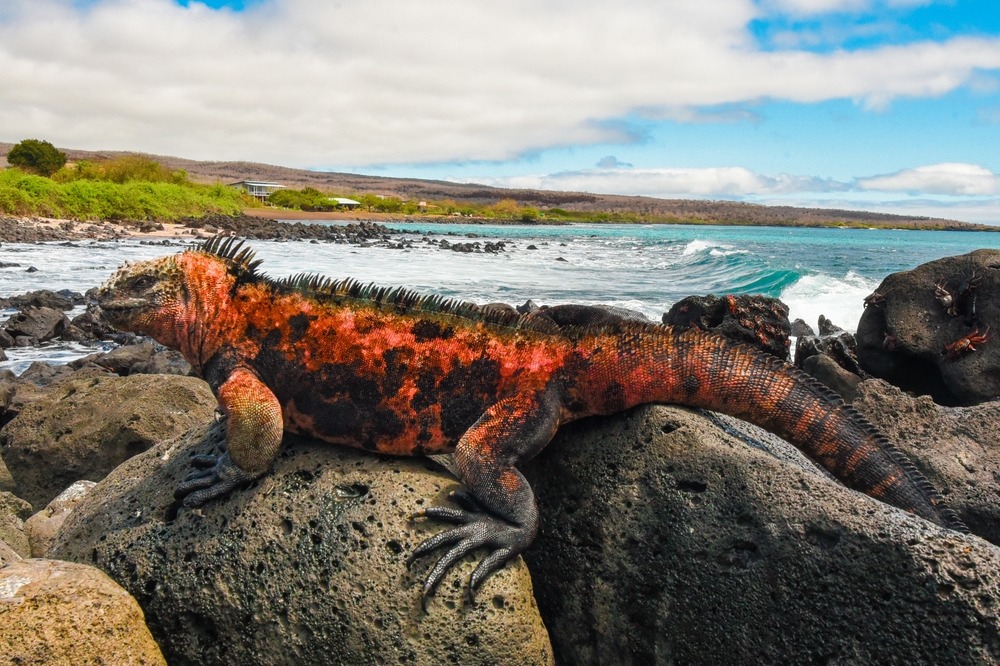
Its micro-climate reflects that age and low relief. Without lofty highlands to trap much moisture, Española tends toward aridity, especially outside the seasonal rains. Yet its isolation has helped create one of the most distinctive ecological identities in the archipelago, particularly for seabirds and reptiles.
Española is famous above all for the waved albatross, which nests there in great numbers, as well as for endemic mockingbirds and marine iguanas with striking coloration. It is an island where age and isolation, rather than altitude or freshwater, have been the great ecological sculptors. That makes it especially valuable in an article about Darwin, because it shows how even an older, flatter island can generate its own signature community of life.
Pinta Island
Pinta is the northernmost of the larger major islands and one of the more isolated. It is a shield volcano marked by young cones and lava flows, and in the modern imagination it is inseparable from Lonesome George, the last known tortoise of his lineage, whose story became a global symbol of extinction and conservation urgency.
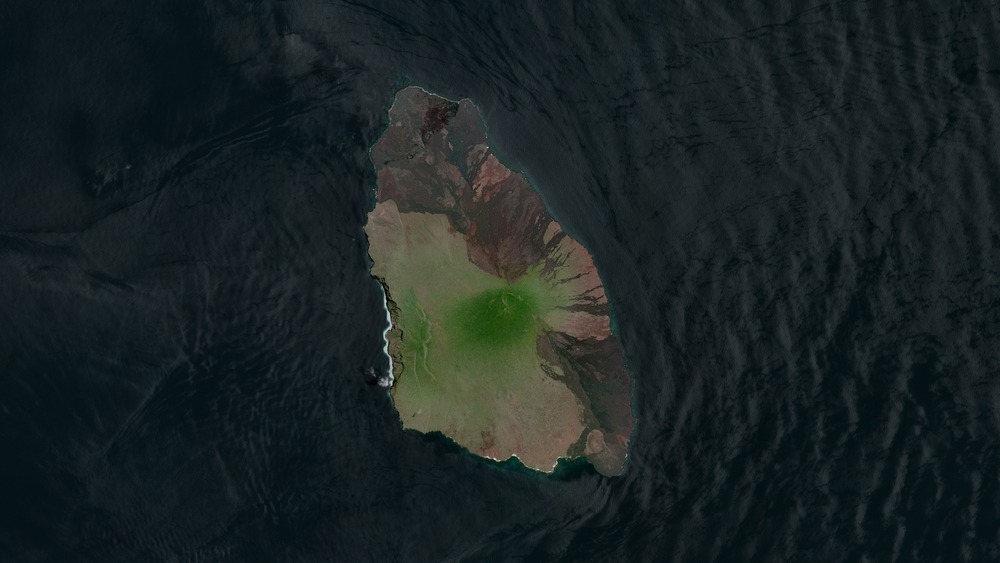
Its micro-climate is shaped by isolation and moderate elevation. While much of Pinta is dry and rugged, its higher ground creates somewhat more varied moisture conditions than one might expect from an island of only about 60 square kilometers. Even so, it never develops the kind of broad humid highland systems seen on Santa Cruz or parts of San Cristóbal.
Pinta is best known for its tortoise legacy, Galápagos hawks, marine iguanas, and sea lions, but ecologically it also stands as an example of how a single island lineage can become globally significant. In Darwinian terms, Pinta helps show the power of isolation; in conservation terms, it shows the cost when isolation is overwhelmed by introduced pressures and tiny populations can no longer recover.
Santa Fe Island
Santa Fe is one of the oldest islands in the Galápagos and geologically very ancient beneath the sea, despite its modest present form. It lies near the center of the archipelago, relatively flat and low, and long occupied a kind of quiet middle ground between the larger islands and the more remote outer ones. Evidence suggests giant tortoises once lived there, though they no longer do.
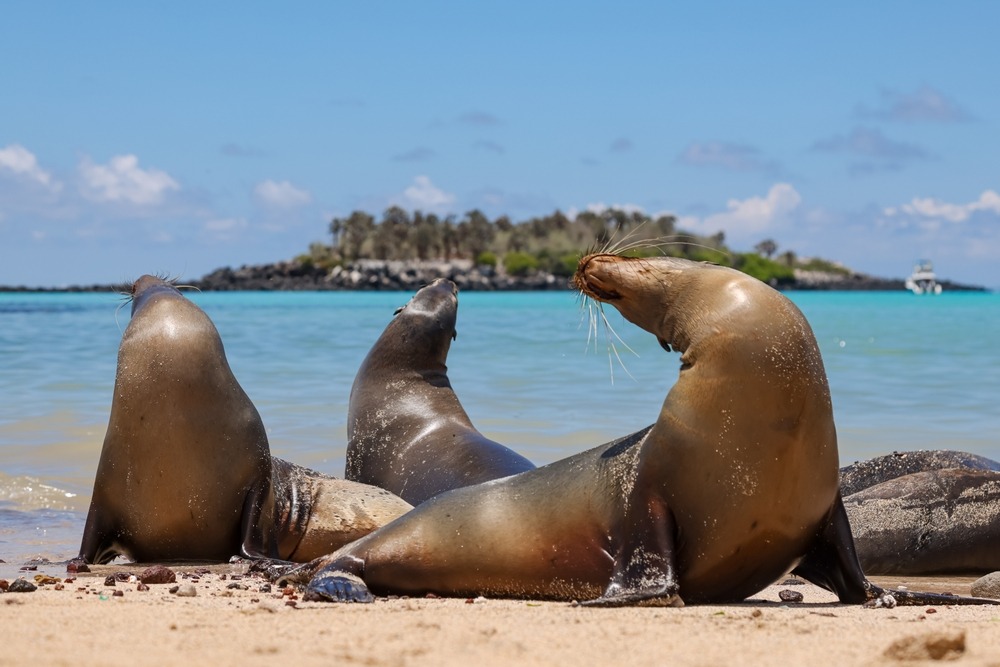
Its micro-climate is predominantly arid. With limited elevation, Santa Fe lacks extensive humid uplands, and its vegetation is shaped by dryness, exposure, and old terrain rather than recent volcanism. The resulting landscape favors cacti, low shrubs, and reptiles adapted to heat and sparse cover.
Santa Fe is most strongly associated with the endemic Santa Fe land iguana, one of the island’s signature animals, along with sea lions and arid-zone vegetation. It is a good reminder that an island does not need to be large, wet, or volcanically dramatic to be evolutionarily important. Sometimes a long-isolated, low island produces its own distinctive biological masterpiece.
Baltra Island
Baltra, also known as South Seymour, is small, flat, and geologically unusual because it was formed by uplifted submarine lava rather than by the towering shield volcano profile associated with the biggest Galápagos islands. It is now best known as the location of the archipelago’s main airport, which makes it a gateway rather than a wilderness icon in the popular imagination.
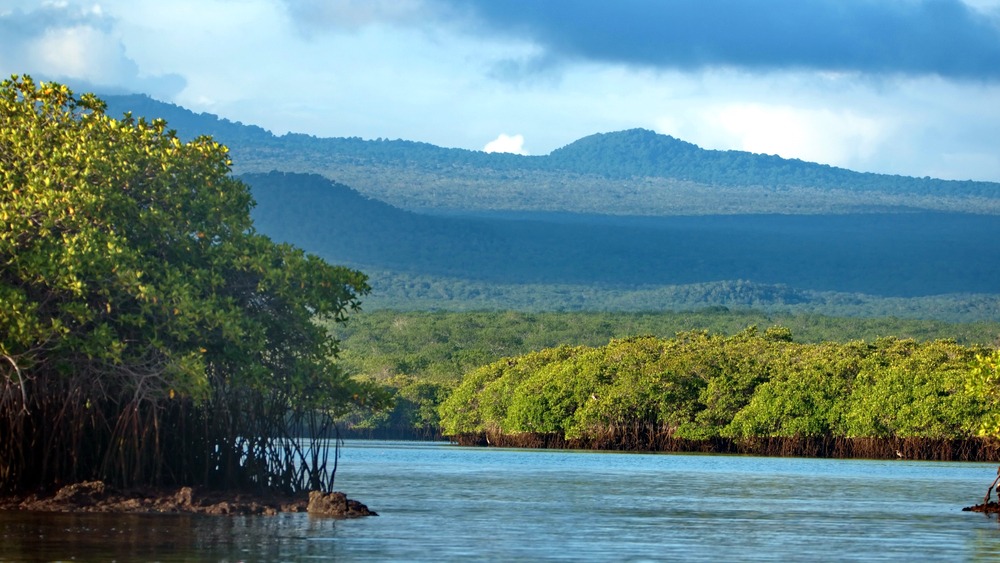
Its micro-climate is decidedly arid. With low elevation and a broad, flat profile, Baltra does not trap moisture in the way larger islands can. That means its ecology is closer to a dry coastal zone than to a vertically layered island system, and its human infrastructure has further distinguished it from more pristine islands.
Wildlife on Baltra is therefore not dominant in the same spectacular way seen on Española or Genovesa, but Darwin’s finches and other hardy dry-zone species remain part of its identity. Baltra’s value in a comparative article lies in contrast: it shows how low relief, uplift geology, and human use produce an island experience very different from the cloud-catching interiors or seabird citadels elsewhere in the archipelago.
Pinzón Island
Pinzón sits near the center of the archipelago but has remained remarkably isolated due to the deep waters around it. That isolation helped preserve distinct ecological patterns, even though invasive species later caused serious problems. The island is rocky, steep in places, and more elevated than many comparably small arid islands.
%3Aformat(webp)%2Fgal%2Fdestination%2Fpinzon.jpg&w=1920&q=75)
Its micro-climate is especially interesting because, despite its small size, its summit is high enough to receive garúa during the dry season. That means Pinzón is not uniformly parched from top to bottom. Instead, it has a dry lower character with a mist-influenced upper zone, a miniature version of the ecological layering seen more fully on larger islands.
Pinzón is best known for giant tortoises, sea lions, and its broader restoration story. In the evolutionary logic of the Galápagos, it demonstrates that even a relatively small island can support distinctive populations when isolation, topography, and moisture variation interact over long periods.
Genovesa Island
Genovesa is the smallest island on this list, but it has one of the strongest ecological identities of any in Galápagos. Formed by a collapsed shield volcano, it is famous for its horseshoe shape and for Darwin Bay, the submerged remains of that geological collapse. The steep surrounding cliffs create ideal nesting terrain for seabirds, giving the island its reputation as the bird island.
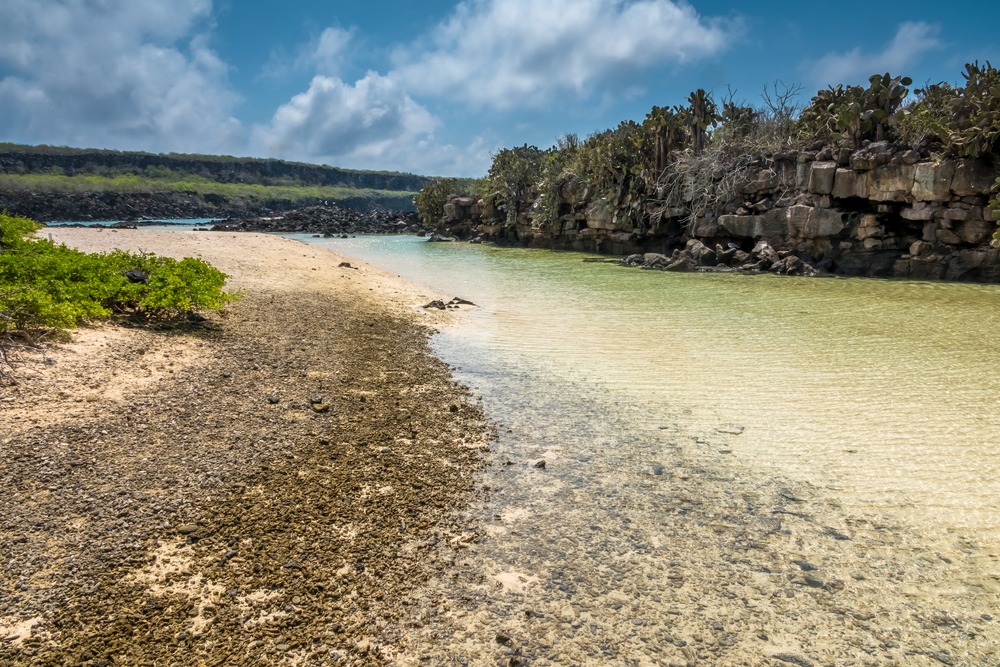
Its micro-climate is dry, low, and marine-dominated. Genovesa lacks extensive uplands and therefore does not develop the humid vertical vegetation zones of larger islands. Instead, wind exposure, cliff habitat, and ocean access define much of its ecological character. That narrowness of habitat helps explain why bird life so thoroughly defines the island.
Genovesa is especially known for red-footed boobies, Nazca boobies, frigatebirds, swallow-tailed gulls, storm petrels, and other nesting seabirds. It is one of the clearest examples in the archipelago of how form creates function: a collapsed caldera and ring of cliffs became not just a geological feature, but a specialized breeding world. For a Darwin-themed article, Genovesa is powerful because it shows how place can channel life into very particular forms of abundance.
Closing Perspective
Taken together, these thirteen islands reveal why the Galápagos were so intellectually powerful for Darwin. The archipelago is not simply a collection of beautiful islands; it is a pattern of repeated variation. Young volcanoes stand beside ancient eroded lands. Mist-fed interiors rise above lava deserts. Cold western seas support penguins and cormorants, while low eastern and northern islands become kingdoms of seabirds, cactus, and reptiles. Species remain recognizably Galápagos, yet they are never distributed in exactly the same way from island to island.
That pattern is the heart of the matter. Darwin did not need the islands to be identical. He needed them to be related but different. The Galápagos provided exactly that evidence, and these thirteen largest islands still do. Each one is a variation on a common volcanic theme, and each one demonstrates that life changes when environment, isolation, and time work together. That insight helped transform natural history forever.