The Greek Cities of the Gods: Where Ancient Worship Still Shapes the Traveler’s Experience
In ancient Greece, gods were not just abstract divine figures. They were woven into the identity of cities, sanctuaries, coastlines, and mountain valleys. A traveler moving through the Greek world would not simply visit Athens or Delphi or Olympia as political places. They would enter landscapes believed to belong, in a special way, to Athena, Apollo, Zeus, Demeter, or Poseidon. Festivals, games, sacrifices, processions, and artistic performances turned those places into living centers of devotion. Even now, long after the old religion faded, many of these destinations still carry the personality of the god or goddess once honored there.
That makes Greece uniquely rewarding for travelers today. Its archaeological sites are not isolated ruins; they are the physical remains of civic identity. In some places, the ancient festival survives only in memory and monument. In others, its spirit persists through modern ceremonies, cultural festivals, theatrical traditions, or the continued prestige of the site itself. For a traveler interested in mythology, history, and place, these cities offer a way to see how religion once shaped daily life and how those sacred associations still influence the atmosphere of the destination now.
Athens and Athena
No pairing in Greek mythology is more iconic than Athens and Athena. The city took its name from the goddess, and the Acropolis became the monumental expression of her role as patroness of wisdom, civic order, skill, and strategic intelligence. The most important festival in her honor was the Panathenaia, the great Athenian celebration that brought the city together in a grand procession to the Acropolis, along with contests, sacrifices, and ceremonial offerings. The festival was not a minor observance. It was one of the defining expressions of what it meant to be Athenian.
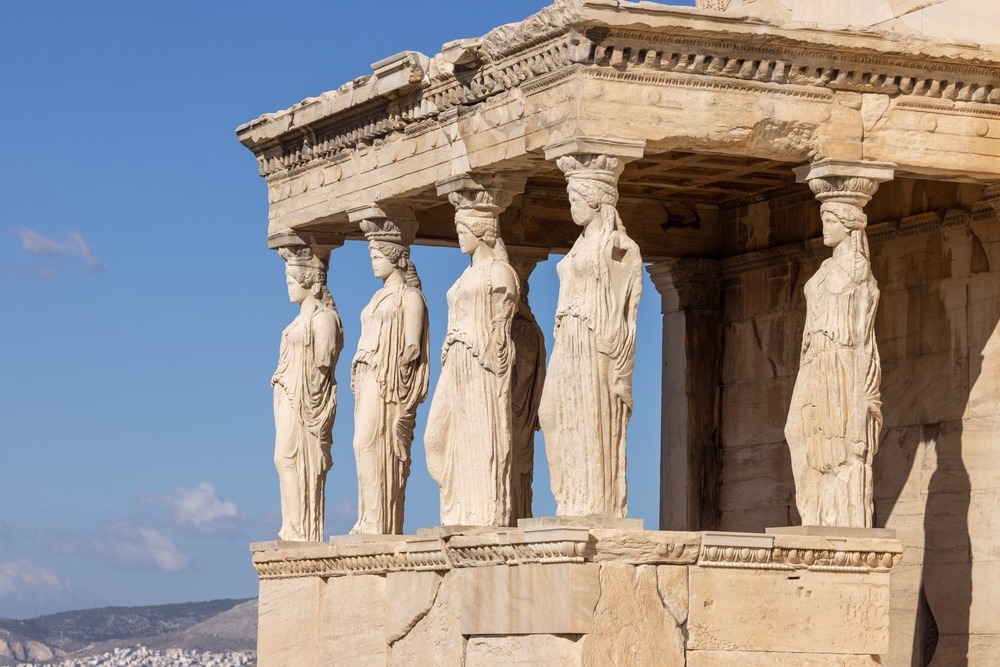
For travelers today, Athens remains the best place to begin a mythology-centered journey through Greece because the city still feels inseparable from Athena. The Acropolis, the Parthenon, and the Acropolis Museum make her presence easy to understand not as a story alone, but as a civic reality that shaped architecture, artistic ideals, and political identity. Walking through the historic center, visitors can still sense how religion and public life once merged into one grand visual program. Athena was not hidden away in private devotion. She defined the city’s image of itself.
Athens is also one of the clearest examples of how an ancient sacred legacy still survives in modern cultural form. The Panathenaia no longer exists as an unbroken religious festival, but the city’s public celebration of classical heritage remains exceptionally strong. The Athens Epidaurus Festival continues to make ancient performance spaces and classical tradition central to contemporary life. That does not make it the same as an ancient festival for Athena, but it does show how Athens still lives through the artistic and ceremonial prestige built in antiquity. For modern travelers, that means Athens is not just a place to inspect ruins. It is still a city that performs its classical identity.
Olympia and Zeus
If Athens belonged to Athena, Olympia belonged to Zeus. This was not a typical urban center in the same sense as Athens, but it was one of the most important sacred places in the Greek world. Here, in honor of Zeus, the Greeks gathered for the Olympic Games, which combined athletic competition with sacrifice, ritual, and a sacred truce that gave the festival a pan-Hellenic importance far beyond sport. Olympia was where the Greek world periodically came together under the authority and prestige of Zeus.
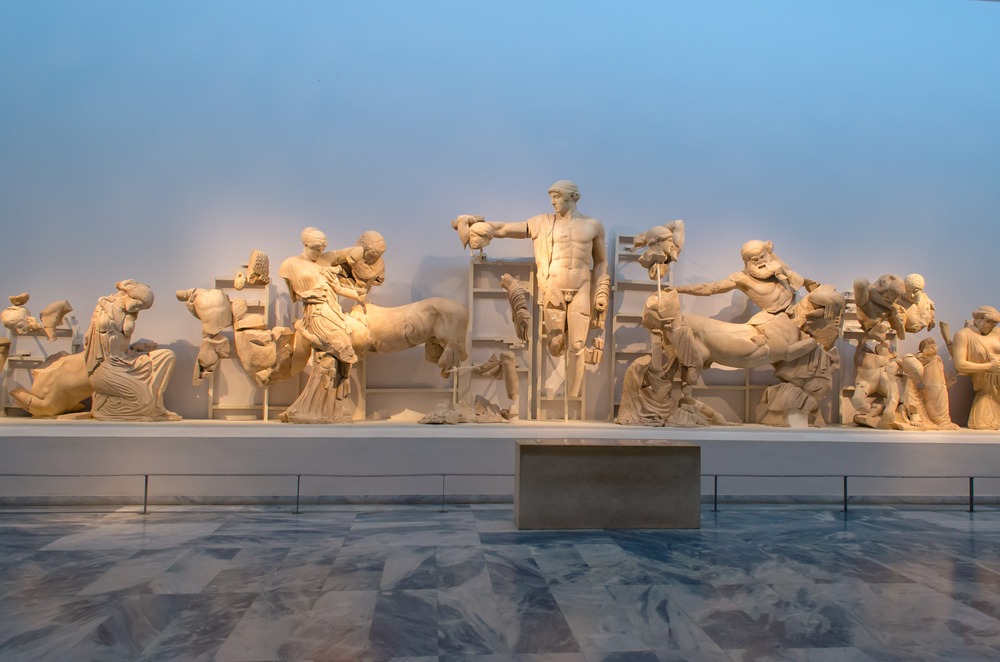
For travelers today, Olympia offers a different kind of experience from Athens. It is quieter, greener, and more solemn, with the atmosphere of a sanctuary rather than a dense urban capital. That works in its favor. The site helps visitors imagine how religion, athletics, and diplomacy once operated together in a single place. Olympia is not simply about the origin of competition. It is about the way the Greeks turned physical excellence into a sacred offering under the gaze of Zeus.
Among all the ancient Greek festivals, the one at Olympia has perhaps the clearest modern survival. The ancient religious rites do not continue in original form, but the modern Olympic flame-lighting ceremony at Ancient Olympia directly preserves the site’s symbolic authority. The flame for contemporary Olympic Games is still lit there before beginning its relay, explicitly linking the modern event to the sanctuary of Zeus and the birthplace of the ancient games. For travelers, that continuity gives Olympia unusual power. It is one of the few places where the ancient ceremonial function of the site still echoes in a globally recognized ritual today.
Delphi and Apollo
Delphi was the great sacred center of Apollo, and in many ways it remains the most atmospheric mythological destination in Greece. The sanctuary was home to the famous oracle, and it also hosted the Pythian Games, a major festival that honored Apollo through music, athletic events, and ceremonial display. If Athena’s Athens expressed civic intelligence and Zeus’s Olympia expressed pan-Hellenic competition, Delphi expressed sacred authority, prophecy, and artistic prestige.
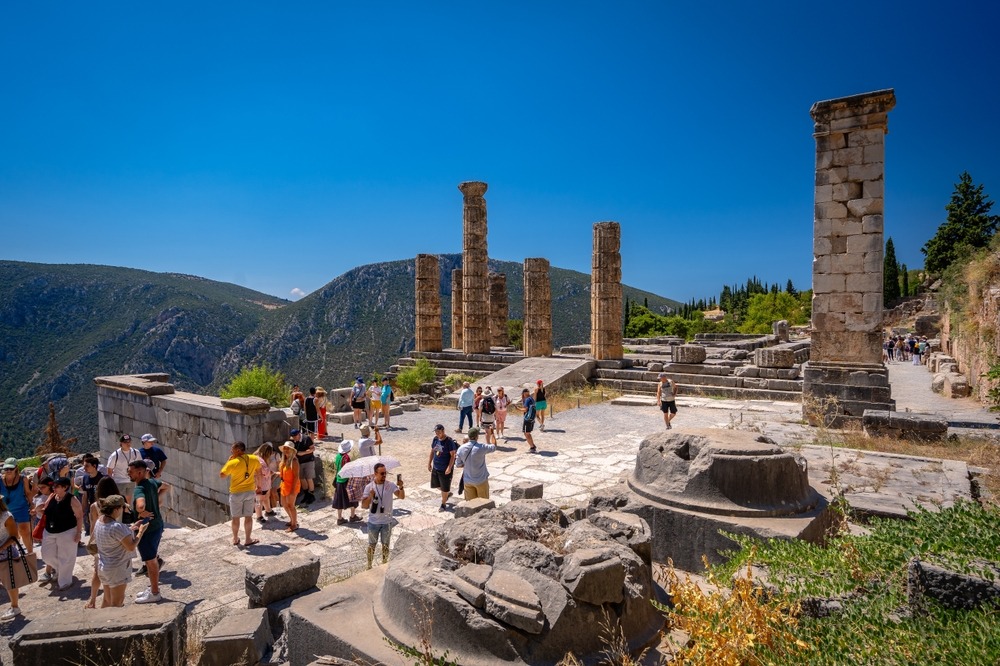
For travelers today, Delphi is extraordinary because its dramatic mountain setting still feels appropriate to Apollo. The site’s terraces, temple remains, theater, and surrounding landscape create a sense that this was always meant to be more than an ordinary sanctuary. It was a place of consultation and revelation, where city-states and individuals alike sought divine guidance. Even modern visitors who arrive for archaeology often leave with the stronger memory of Delphi’s setting, which still helps explain why the Greeks treated it as a spiritual center of the world.
The ancient Pythian festival does not survive as an uninterrupted act of worship, but Delphi continues to host modern cultural programming inspired by its classical prestige, and the old Delphic identity remains alive in artistic and educational efforts tied to the site. That matters for travelers because Delphi is not frozen into silence. It continues to be interpreted as a place where music, performance, and ideas belong. In that sense, Apollo’s city still rewards visitors not only as a ruin, but as one of the most intellectually and visually compelling destinations in Greece.
Eleusis and Demeter with Persephone
Eleusis, now Elefsina, was the sacred city of Demeter and Persephone. It was here that the Eleusinian Mysteries, among the most famous initiation rites of the ancient Mediterranean, centered their theology of loss, return, agriculture, and renewal. The myth of Demeter searching for Persephone gave Eleusis a spiritual identity unlike anywhere else in Greece. This was not merely a place for public celebration. It was a place of initiation, transformation, and sacred knowledge.
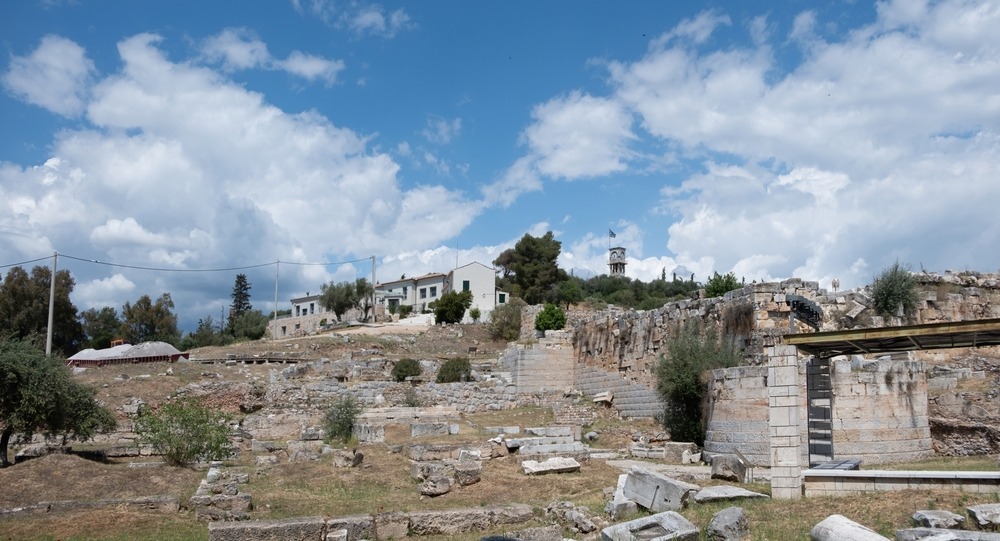
Elefsina Archaeological Site, destinaton Attica Greece. Ancient Telesterion of Eleusinian Mysteries in honor the goddess Demeter and Persephone.
For travelers today, Eleusis is a rewarding destination precisely because it is different from the postcard image of classical Greece. Its importance is not built on a single monumental skyline like Athens, but on the depth of meaning attached to the sanctuary and the myths tied to it. Visitors interested in religion, symbolism, and the emotional side of myth often find Eleusis especially compelling, because Demeter and Persephone were gods of the human condition as much as of agriculture. Their story joined grief, hope, and seasonal renewal in a way that shaped one of the most enduring sacred traditions of antiquity.
The ancient mysteries do not survive as a continuous religion, yet Elefsina still publicly presents itself through that sacred inheritance. Modern cultural life in the city has drawn heavily on its ancient identity, and the city’s major contemporary arts programming has helped keep the memory of Demeter and Persephone in the public imagination. For travelers, this gives Eleusis a special appeal. It is a place where myth, ritual memory, and modern cultural reinvention have all overlapped, allowing the city to remain meaningful long after the original rites ended.
Athens and Dionysus
Athens belongs first to Athena, but it also became one of the greatest cities of Dionysus. The City Dionysia and related festivals turned the worship of Dionysus into one of the most influential cultural forces in world history. Drama, choral performance, public competition, and communal celebration all grew from Dionysian ritual life. The Theater of Dionysus on the south slope of the Acropolis is not simply an old venue. It is one of the places where tragedy and comedy entered civic life as sacred performance.
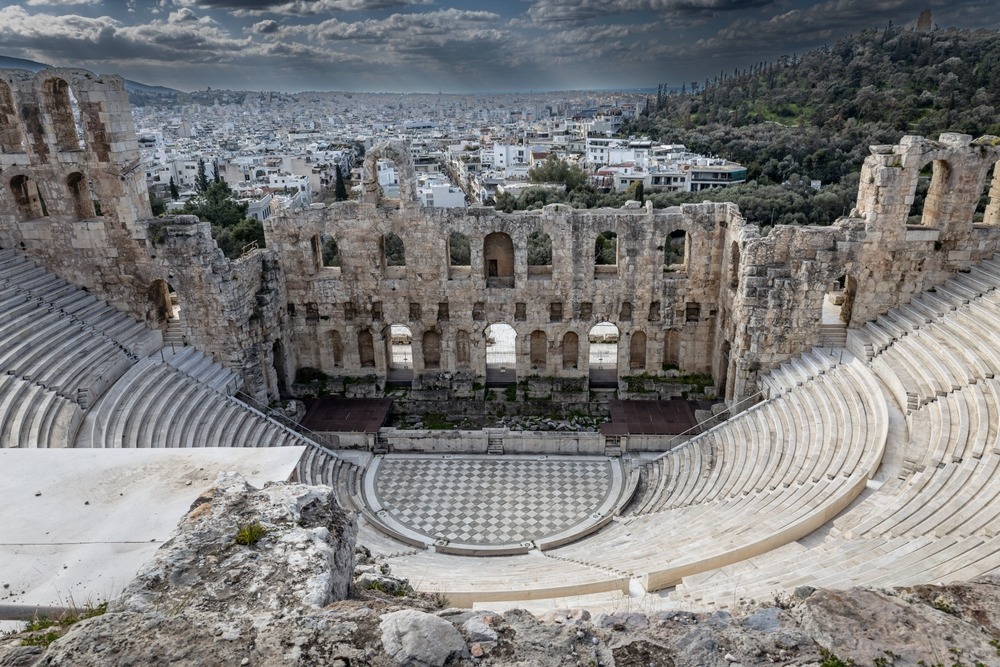
For travelers, this gives Athens a second mythological identity layered over the first. The city of Athena was also a city of theater, ecstasy, public performance, and seasonal festivity. That dual character makes Athens richer than a simple city of wisdom label suggests. Travelers interested in literature, stage history, and performance traditions can find in Dionysus a different route into the city’s past, one tied less to the austere grandeur of the Parthenon and more to the living energy of the stage.
This is one of the clearest cases where the ancient celebration’s legacy still feels alive. The City Dionysia no longer exists as a religious festival in its original form, but modern Athens remains one of the world’s most evocative destinations for classical theater. The Athens Epidaurus Festival continues to place dramatic performance at the center of the city’s cultural identity, giving modern visitors a real sense that the Dionysian connection is not dead at all. It has simply changed medium, from ancient cult to modern artistic institution.
Argos and Hera
Argos was one of Hera’s great cities, and the Heraion of Argos stood as one of the most important sanctuaries dedicated to her anywhere in Greece. Hera’s association with marriage, queenship, and civic dignity gave Argos a religious identity that differed from the more philosophically framed prestige of Athens or the pan-Hellenic ritual reach of Olympia. In Argos, Hera was not just revered. She was woven into the region’s historic self-image.
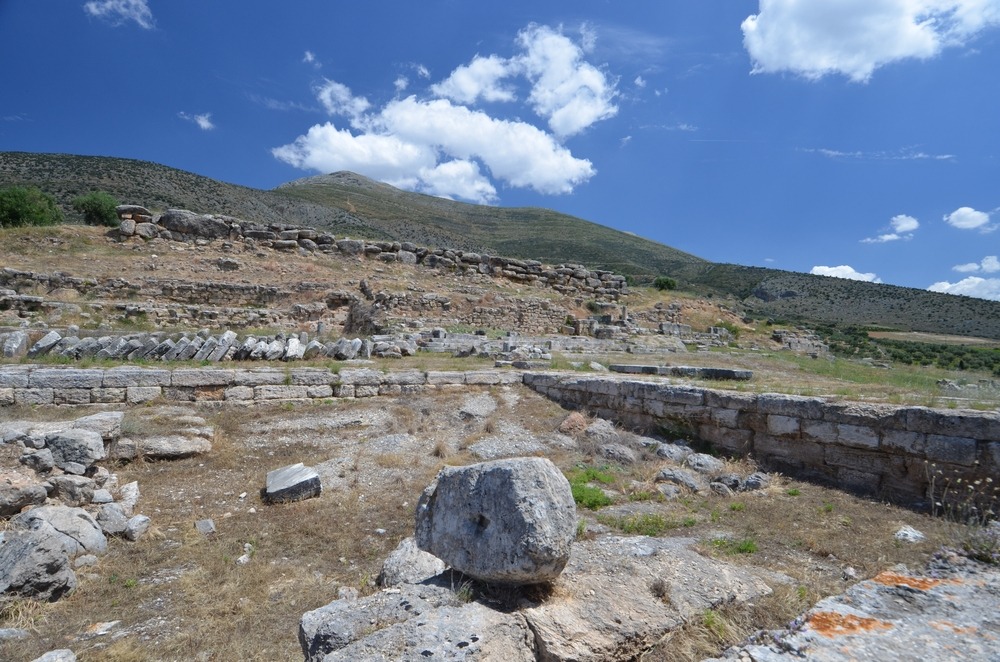
Heraion of Argos
For travelers today, Argos offers something quieter and more layered than Greece’s most famous headline destinations. It is ideal for those who want to move beyond the standard circuit and into the older heart of the Peloponnese, where myth, early history, and landscape still feel tightly linked. The sanctuary of Hera, the wider Argolid, and the proximity of Mycenae give the area remarkable depth for visitors interested in how mythic queenship, heroic legend, and early Greek power were imagined together. Hera’s presence helps frame Argos not just as an archaeological stop, but as a place where ideas of family, sovereignty, and divine protection once took monumental form.
The ancient Hera festivals no longer survive as a continuous religious institution, but the memory of Hera’s patronage has not vanished. For travelers, Argos remains rewarding because it preserves a more understated side of Greek sacred geography: less crowded, less theatrical, but deeply rooted in one of the oldest religious landscapes in the country.
Samos and Hera
If Argos was one of Hera’s great mainland homes, Samos was one of her most important island sanctuaries. The Heraion of Samos was indissolubly linked to the city and stood among the great sanctuaries of the Greek world. Processional routes, monumental building, and the long life of the sanctuary all point to just how important Hera was to Samian identity.
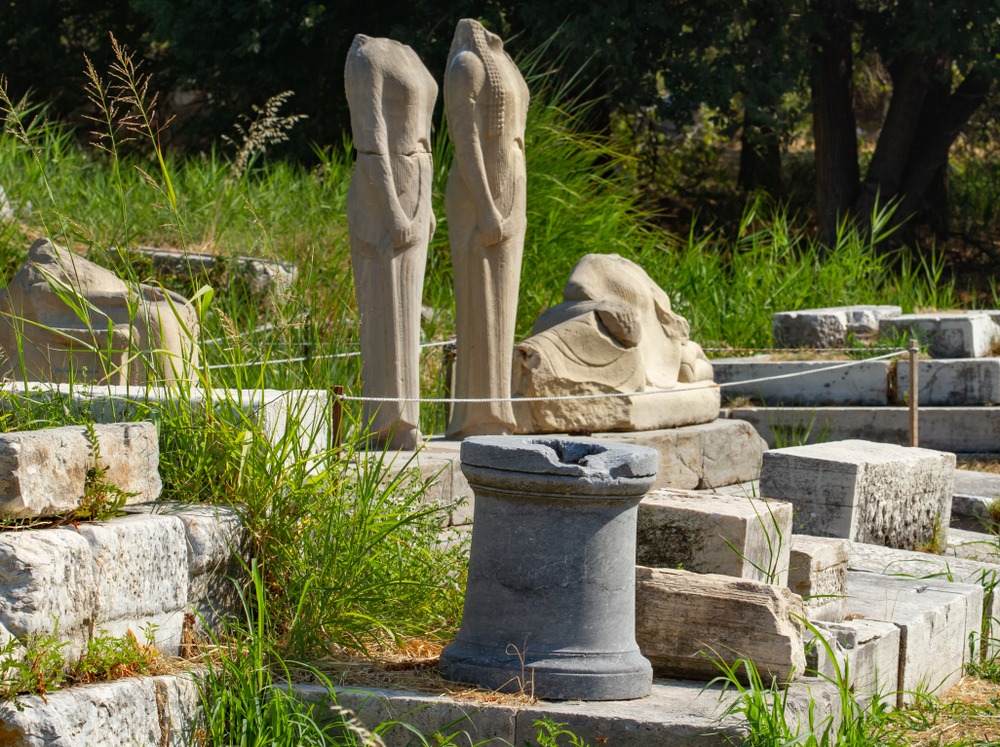
Archaeological site Heraion, home to the temple of Hera, mother of Gods
For travelers today, Samos combines mythology with one of the most appealing island environments in the eastern Aegean. That balance is part of its charm. Visitors can encounter major archaeological significance without losing the pleasures of an island destination. The Heraion gives the island historic gravity, while the surrounding landscape and the connection to ancient Pythagoreion make Samos attractive to travelers who want both cultural depth and scenic ease.
The ancient festivals of Hera no longer continue in their old form, but the site’s enduring link to the island’s historic identity ensures that Hera’s presence is still central to how Samos is understood. For a traveler, this matters. Samos is not just another beautiful island with ruins nearby. It is one of the places where the worship of Hera left a footprint large enough to shape the island’s long-term significance.
Corinth and Poseidon at Isthmia
Poseidon’s strongest civic-sacred association in mainland Greece is with the Isthmus near Corinth, where the Sanctuary of Poseidon hosted the Isthmian Games. These games, like the Olympics and Pythian Games, joined athletic and musical competition with cult devotion. For a maritime god associated with the sea, earthquakes, and horses, the location was fitting. The narrow land bridge of the isthmus made Corinth a place of movement, connection, and strategic importance.
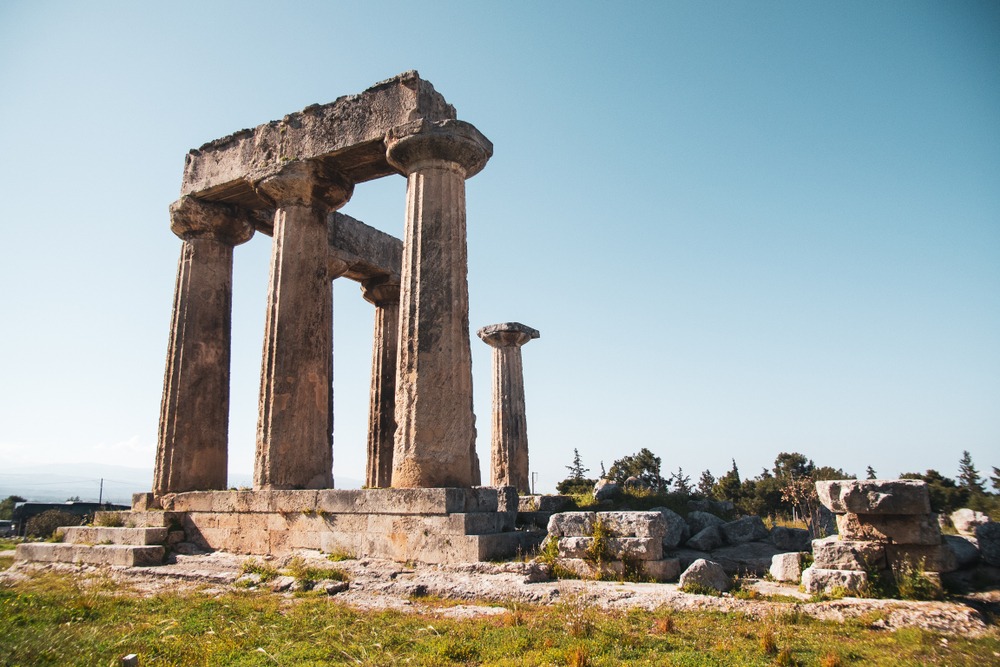
Poseidon Temple in Corinth, Greece
For travelers today, Corinth offers one of the most interesting combinations of geography and mythology in Greece. The area helps explain why Poseidon mattered there. This is a threshold landscape, a place where land and sea routes meet, and where the old Greek world would have felt the power of connection and vulnerability at once. Visiting Corinth and nearby Isthmia allows travelers to understand Poseidon not just as a sea god from myth, but as a deity whose power made particular sense in a place so dependent on passage, trade, and strategic control.
The Isthmian Games do not survive as a living ancient festival, yet the site still speaks clearly through its archaeological remains and historical interpretation. Travelers who enjoy destinations with fewer crowds but strong historical logic often find Corinth especially satisfying, because the sacred landscape is easy to connect with the natural one. Poseidon’s association still feels believable there, which is one of the best compliments a mythological travel destination can earn.
Brauron and Artemis
Brauron, in Attica, was one of the most important sanctuaries of Artemis in mainland Greece. Artemis Brauronia was especially associated with women, childbirth, children, and rites of transition. The sanctuary’s rituals, including those tied to girls’ participation in the cult, gave Brauron a distinctive place within Greek religion. This was not Artemis as only a huntress of wild spaces, but Artemis as a guardian of vulnerable stages of life.
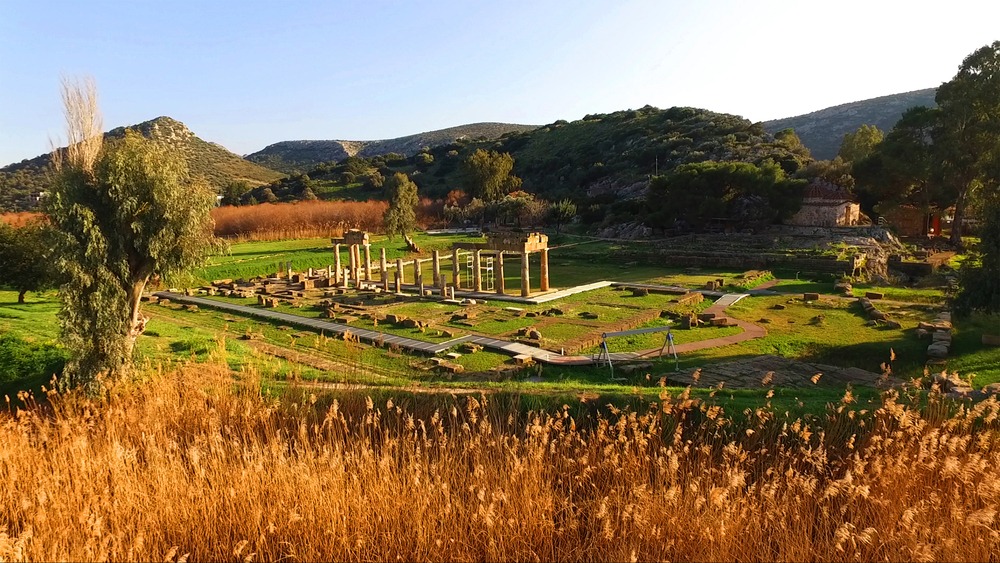
iconic Temple of Artemis in archaeological site of Vravrona or Brauron, Attica, Greece
For travelers today, Brauron has a gentler and more contemplative appeal than some of Greece’s grander classical sites. It is especially rewarding for visitors interested in the social history of religion, since the sanctuary opens a window onto how women, children, and family life were represented in sacred practice. The archaeological remains and museum context help make this one of the best places to see how Greek religion extended far beyond the monumental imagery of kings, warriors, and city-states.
The specific rites once celebrated here do not continue as a major civic religious tradition today, but Brauron remains important because it preserves a different emotional register of the Greek sacred world. For travelers, that makes the destination especially worthwhile as part of a wider Attica itinerary. It deepens the picture of Greek religion by showing that patronage could mean care and protection as much as power and spectacle.
Paphos and Aphrodite
Aphrodite’s most famous city was Paphos on Cyprus, where her sanctuary at Palaipafos became one of the best-known centers of her worship in the ancient world. The site’s antiquity and direct relationship to the cult and legend of Aphrodite helped secure its lasting significance, and it remains tied to the goddess’s identity in a way few ancient sanctuaries can match. Paphos was not only associated with Aphrodite in poetry. It was one of the places where her worship drew pilgrims for centuries.
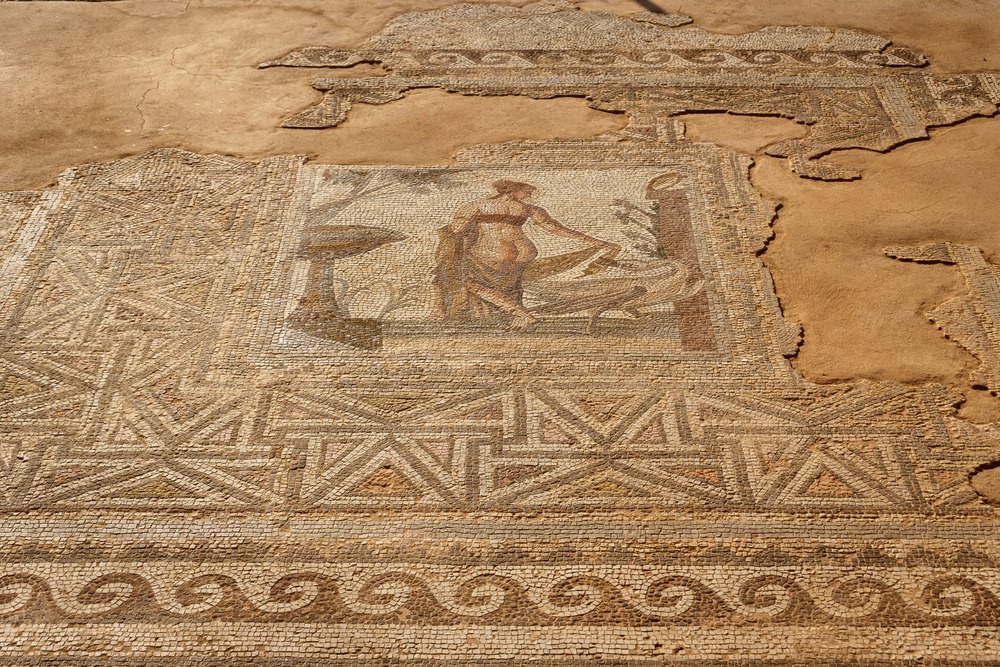
Ruins of the ancient Aphrodite sanctuary in Kouklia, near Pathos, Cyprus
For travelers today, Paphos offers one of the most immediately appealing blends of mythology and destination atmosphere. The connection to Aphrodite naturally brings themes of beauty, the sea, desire, and origin into the visitor’s imagination, and Cyprus’s coastal setting strengthens that association. This is one of those places where the myth and the landscape appear to support one another so naturally that the ancient cult feels easier to understand.
The ancient rites of Aphrodite do not survive in a continuous religious form, but her presence remains central to how the region is interpreted and presented to visitors. The sanctuary is still a major cultural and archaeological site, and the goddess remains one of the strongest mythological identities attached to any destination in the eastern Mediterranean. For travelers, that makes Paphos especially compelling. It is not merely a place where Aphrodite was once worshipped, but a destination whose historical and cultural identity still turns on her name.
Why These Cities Still Matter
What unites Athens, Olympia, Delphi, Eleusis, Argos, Samos, Corinth, Brauron, and Paphos is not simply that they were ancient places of worship. It is that each one translated divine power into a local identity. Athena made Athens think of itself as wise and ordered. Zeus made Olympia sacred through shared competition. Apollo made Delphi a destination of counsel and prestige. Demeter and Persephone made Eleusis a place of grief, hope, and renewal. Poseidon, Hera, Artemis, and Aphrodite each gave their cities and sanctuaries a distinct emotional and symbolic personality that modern travelers can still feel.
That is why these destinations still work so well in travel writing today. They are not important only because something once stood there. They are important because they continue to organize memory. In some places, the old festival survives as symbolic ceremony, as at Olympia. In others, the ancient tradition persists through theater, arts, museum interpretation, archaeological prestige, or the sheer force of the mythological association. For modern visitors, that means a journey through these cities is still a journey through the personalities of the Greek gods. The religion is gone, but the geography of belief remains.