Vatican City: A History of the World’s Smallest Sovereign State and the Top Attractions Within and Around It
Enclosed within the city of s the smallest independent state in the world—yet it holds an influence that spans continents and centuries. As the spiritual and administrative center of the Roman Catholic Church, it is home to the Pope, extraordinary artistic treasures, and architecture that has shaped Western civilization. To understand its attractions fully, one must first understand how this tiny enclave evolved from a Roman burial ground into a sovereign religious and cultural powerhouse.
The History of Vatican City
Ancient Rome and the Martyrdom of Saint Peter
The Vatican Hill in ancient times lay outside the formal boundaries of Rome. During the reign of Emperor Nero in the first century, Christians were persecuted here, and tradition holds that Saint Peter—the apostle and first Bishop of Rome—was martyred and buried nearby. In the 4th century, after Christianity was legalized under Emperor Constantine, the first Basilica of Saint Peter was constructed over what was believed to be Peter’s tomb. This marked the beginning of the site’s transformation into a major pilgrimage destination.
The Rise of Papal Authority and the Papal States
During the Middle Ages, the Bishop of Rome gradually gained both spiritual authority and temporal power. Large territories in central Italy came under papal control, forming what became known as the Papal States. From the 8th century until the 19th century, popes ruled not only as religious leaders but also as sovereign rulers over extensive lands.
Renaissance Glory and Artistic Patronage
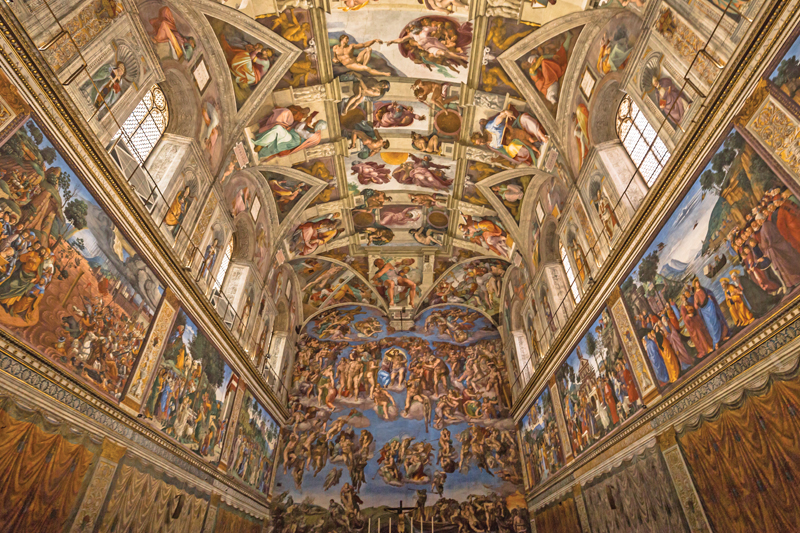
The 15th and 16th centuries marked a golden age of artistic patronage. Popes commissioned masters such as Michelangelo, Raphael, and Bramante to redesign and embellish the Vatican. The rebuilding of Saint Peter’s Basilica and the decoration of the Sistine Chapel turned the Vatican into a pinnacle of Renaissance art and architecture.
The Loss of the Papal States and the Lateran Treaty
In the 19th century, Italian unification led to the absorption of the Papal States into the Kingdom of Italy. For decades, the Pope considered himself a “prisoner in the Vatican.” This conflict was resolved in 1929 with the Lateran Treaty between the Holy See and Italy, which formally established Vatican City as an independent sovereign state.
Modern Vatican City
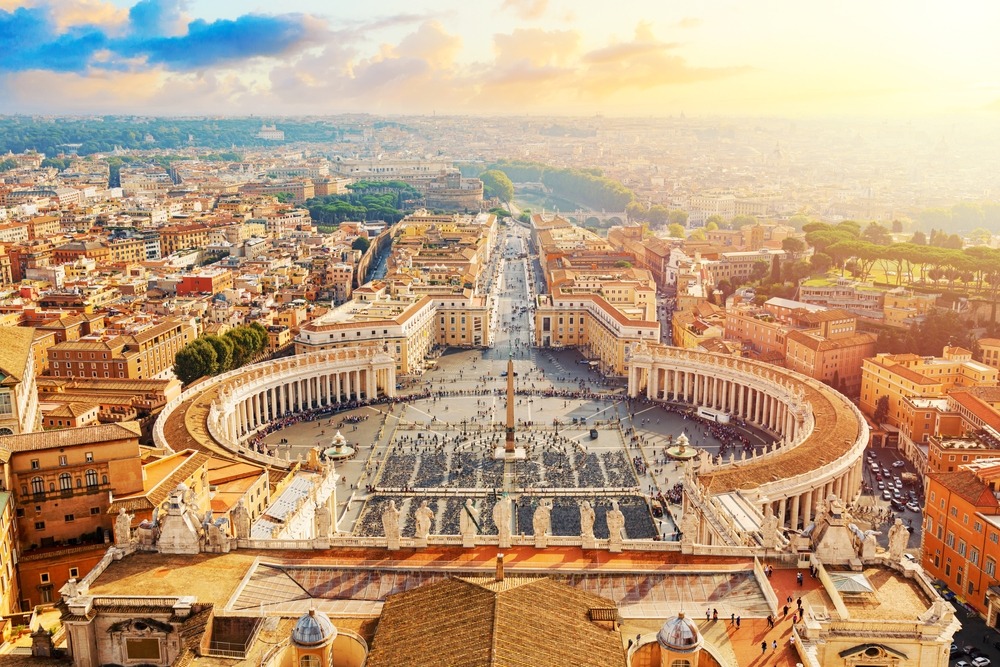
Today, Vatican City functions as an independent city-state governed by the Pope and the Holy See. It issues its own stamps and coins, maintains its own security force—the Swiss Guard—and serves as the global administrative center of the Catholic Church. Despite its small size, it attracts millions of visitors annually.
Top Attractions Within Vatican City
1. Saint Peter’s Basilica
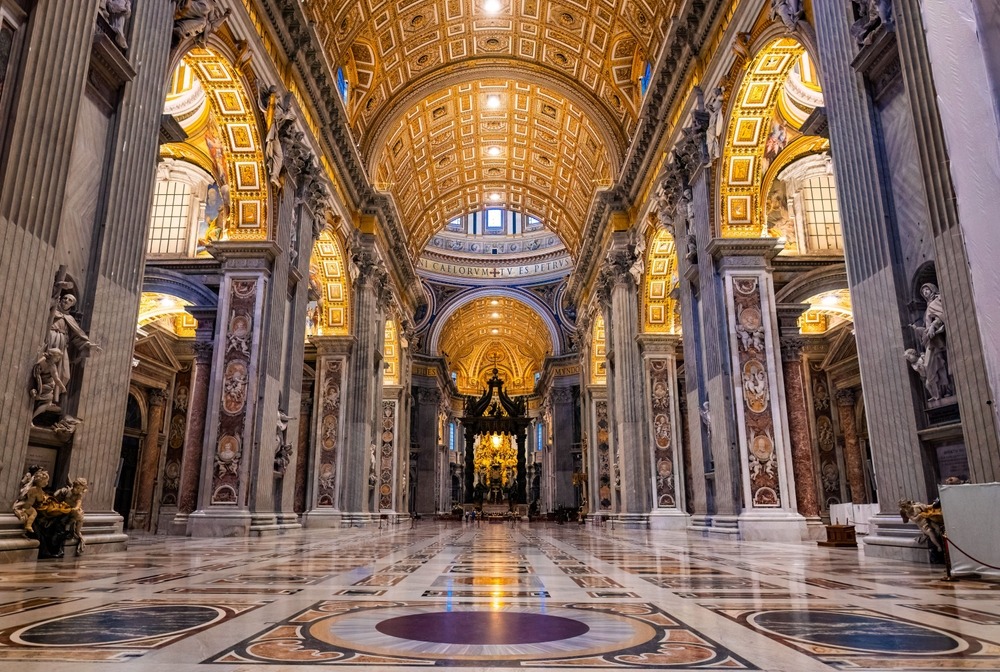
One of the most important churches in Christianity, Saint Peter’s Basilica is renowned for its immense dome, grand interior, and masterpieces including Michelangelo’s Pietà. Visitors can climb to the dome for panoramic views of Rome.
2. Saint Peter’s Square
Designed by Gian Lorenzo Bernini in the 17th century, the vast elliptical square welcomes pilgrims and visitors with sweeping colonnades symbolizing the embracing arms of the Church.
3. The Vatican Museums
A vast network of galleries housing one of the most important art collections in the world, including classical sculptures, Renaissance masterpieces, and priceless artifacts accumulated by the popes over centuries.
4. The Sistine Chapel
Famous for Michelangelo’s ceiling frescoes and The Last Judgment, the Sistine Chapel is also the site of the papal conclave where new popes are elected.
5. The Raphael Rooms
These papal apartments contain Raphael’s celebrated frescoes, including The School of Athens, which exemplifies Renaissance humanism.
6. Vatican Gardens
Occupying nearly half of Vatican territory, the landscaped gardens offer a peaceful retreat filled with fountains, sculptures, and carefully maintained greenery.
7. The Apostolic Palace
The official residence of the Pope, containing papal apartments and ceremonial rooms, though generally not open to the public.
8. St. Peter’s Dome Climb
The ascent to the top of the basilica’s dome provides one of the most breathtaking panoramic views of Vatican City and Rome.
9. The Vatican Necropolis
Beneath Saint Peter’s Basilica lies an ancient burial site, including what is traditionally believed to be the tomb of Saint Peter.
10. The Swiss Guard
Though not an attraction in the traditional sense, seeing the colorful Renaissance-style uniforms of the Swiss Guard is part of the Vatican experience.
Top Attractions Around Vatican City
11. Castel Sant’Angelo
Originally built as Emperor Hadrian’s mausoleum, this fortress later served as a papal stronghold and is connected to the Vatican by a secret passageway.
12. Borgo Pio
A charming street near the Vatican filled with traditional restaurants and shops.
13. Via della Conciliazione
The grand avenue leading from the Tiber River to Saint Peter’s Square, offering a dramatic approach to the basilica.
14. Ponte Sant’Angelo
A picturesque bridge lined with angel statues designed by Bernini, connecting central Rome to the Vatican area.
15. Piazza Navona
A short walk away, this vibrant Roman square showcases Baroque fountains and lively street life.
16. Campo de’ Fiori
A historic market square offering insight into daily Roman life.
17. Trastevere District
A nearby neighborhood known for its narrow streets, medieval churches, and authentic Roman atmosphere.
18. Pantheon
One of ancient Rome’s best-preserved monuments, reflecting the architectural grandeur that influenced later Vatican design.
19. Roman Forum
The ruins of ancient Rome’s political center, offering historical context to Christianity’s early development.
20. Colosseum
The iconic amphitheater symbolizes the Roman Empire that once persecuted early Christians.
21. Trevi Fountain
One of Rome’s most famous Baroque landmarks, drawing visitors from around the world.
22. Spanish Steps
A monumental staircase connecting Piazza di Spagna with the Trinità dei Monti church.
23. Piazza del Popolo
A grand northern gateway to Rome featuring twin churches and an Egyptian obelisk.
24. Galleria Borghese
A renowned museum housing masterpieces by Bernini and Caravaggio.
25. Janiculum Hill
Offering one of the best panoramic views of Rome, just across the Tiber River from the Vatican.
Conclusion
Vatican City stands as a paradox: the smallest nation on Earth, yet one of the most culturally and spiritually influential places in human history. From the martyrdom of Saint Peter to Renaissance brilliance and modern papal leadership, its story is interwoven with the broader history of Europe and Christianity. Whether exploring Saint Peter’s Basilica, gazing up at the Sistine Chapel ceiling, or wandering the surrounding streets of Rome, visitors encounter a concentration of history, art, and faith unmatched anywhere in the world.